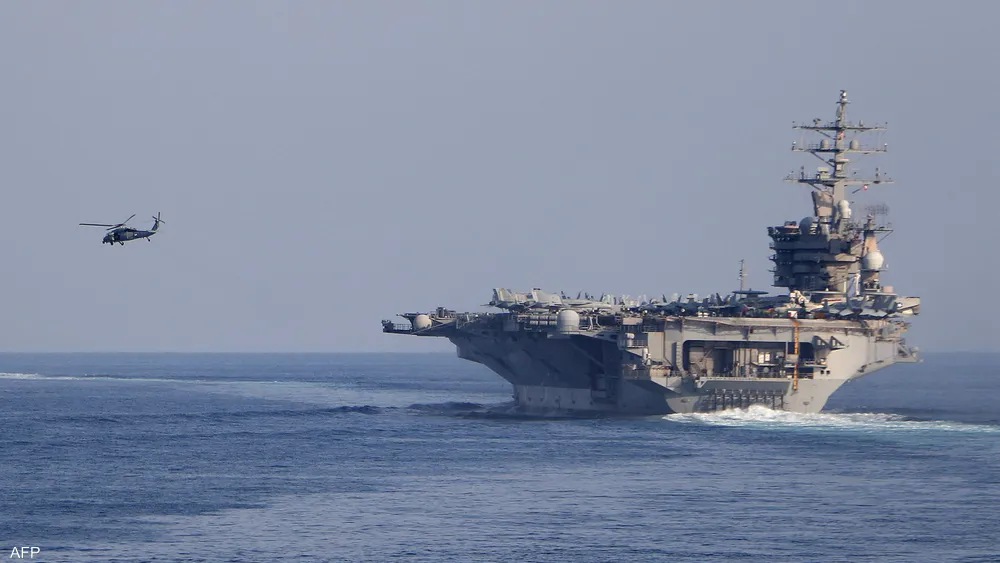
Washington, D.C. (Diplomat.so) – The United States Department of War confirmed on Monday, that it has deployed more than 15 warships to the Middle East to support enforcement operations in the Strait of Hormuz.
Senior U.S. officials, speaking to international media including The Wall Street Journal, stated that the naval deployment includes an aircraft carrier, multiple guided-missile destroyers, and an amphibious assault ship, alongside additional support vessels positioned across strategic maritime corridors.
According to officials from the U.S. Navy and U.S. Central Command, the deployed fleet is equipped with helicopters designed to conduct interception and inspection operations. Several vessels also possess advanced technical capabilities to direct commercial shipping traffic and regulate maritime movement within designated zones.
U.S. President Donald Trump announced that enforcement measures targeting Iranian maritime activity formally took effect on Monday. He stated that the United States would prohibit Iranian vessels, as well as any ships that have paid port fees to Tehran, from transiting key waterways under U.S. oversight.
"We will not allow hostile or non-compliant vessels to undermine maritime security,” Trump said during a public briefing, warning that any Iranian "fast attack” vessels attempting to breach the restrictions could face military action.
On-the-ground observations from maritime tracking data indicate increased naval activity near the Strait, with commercial vessels reportedly adjusting routes and waiting for clearance in designated holding areas. Shipping operators have expressed concern over delays and rising insurance costs tied to the heightened military presence.
A regional shipping analyst, Charbel Antoine, noted that "the concentration of naval assets in such a narrow and strategically vital waterway significantly raises the risk of miscalculation, especially under current political conditions.”
The escalation comes as a fragile ceasefire, which ended six weeks of conflict, approaches its expiration within one week. U.S. officials have stated that diplomatic efforts stalled after Iran rejected key demands during recent talks held in Islamabad.
The Strait of Hormuz remains one of the world’s most critical energy transit routes, handling approximately one-fifth of global oil shipments. Any disruption in the area has immediate implications for international energy markets and regional stability.
The current deployment signals a shift toward more assertive maritime enforcement by Washington, raising concerns among global stakeholders about the potential for escalation in an already volatile geopolitical environment.