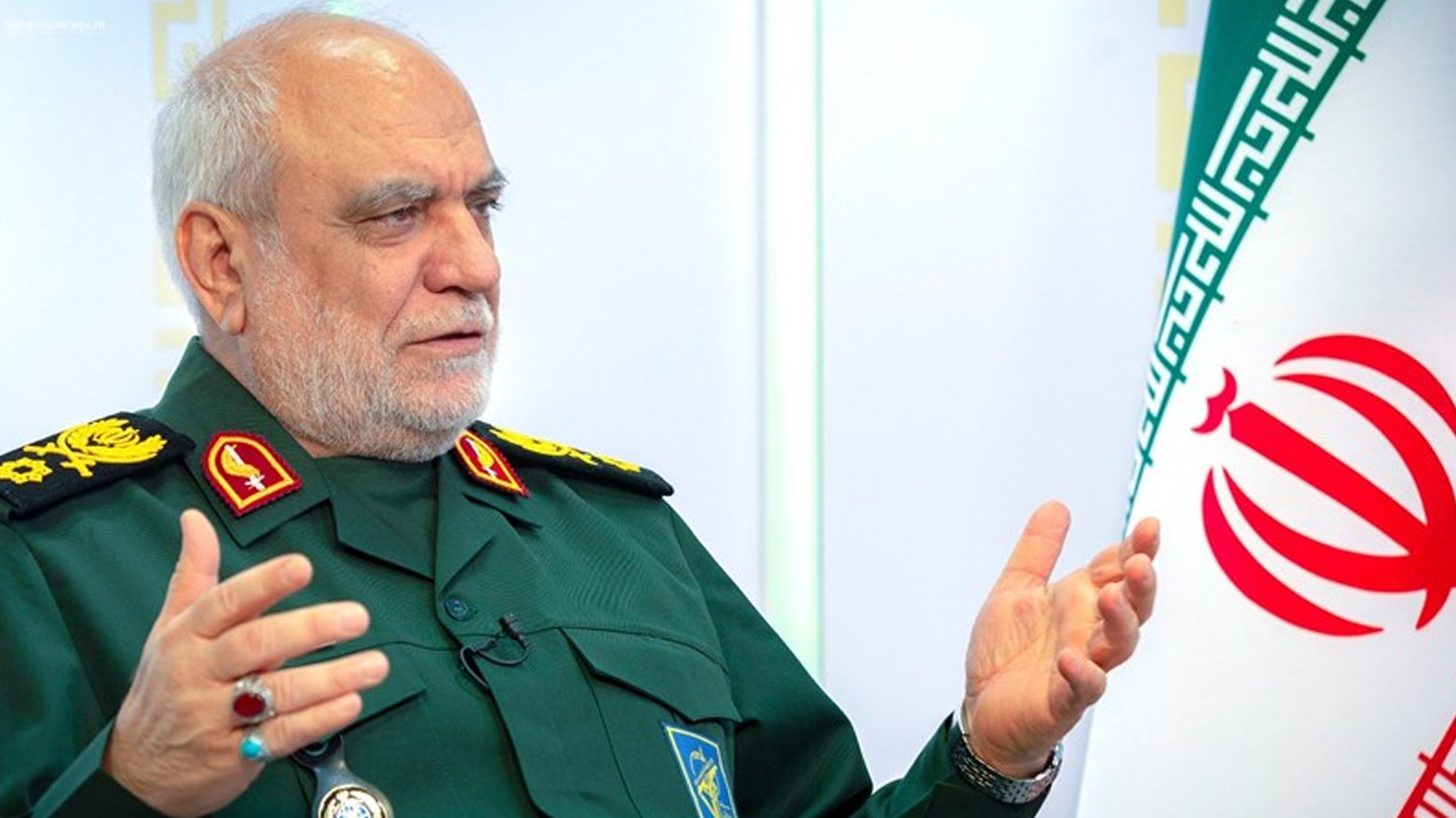
Tehran (Diplomat.so) – Israel's government confirmed on Monday, the targeted killing of Majid Khademi, head of the Islamic Revolutionary Guard Corps (IRGC) Intelligence Organization, in Tehran, Iran, attributing the operation to coordinated Israeli-American efforts.
Israeli Prime Minister Benjamin Netanyahu hailed Khademi’s assassination on the social media platform X, describing him as a key orchestrator of attacks against Israelis and Jewish communities worldwide. "Those who seek to kill our citizens, who direct terrorism against Israel, or build the Iranian ‘axis of evil’ will be held accountable,” Netanyahu wrote, pledging that Israel would "continue fighting with full force on all fronts until the threat is removed and all war objectives are achieved.”
The announcement followed a statement from the IRGC confirming Khademi’s death, describing the attack as a "criminal and terrorist act” carried out by the "U.S.-Zionist enemy.” The IRGC’s Telegram channel identified Khademi as the "executive and educated head” of its intelligence apparatus and noted that he succeeded Brigadier General Mohammad Kazemi, who was assassinated by Israel in June 2025 during the so-called Twelve-Day War.
Israeli Defense Minister Israel Katz further emphasized Khademi’s operational role, stating in a briefing that he was "one of the direct perpetrators of these war crimes and among the top three leaders in the IRGC structure.” Katz asserted that Israel’s counterterrorism operations target senior Iranian officials responsible for attacks on civilians. "Iranian leaders live under a constant sense of being targeted, and we will continue to pursue them one by one,” he said.
Eyewitness and On-the-Ground Observations
Local reports from central Tehran described heightened security in government and intelligence districts, with IRGC patrols increasing around strategic installations. Civilians reported traffic disruptions and unusual military activity near key military offices. One Tehran resident, speaking on condition of attribution, told Diplomat News Network that "helicopters circled the city, and checkpoints were reinforced, which is unprecedented for a normal weekday.”
Analysts noted that such assassinations often trigger both immediate retaliatory measures and longer-term operational recalibrations. Security consultant Bahareh Namazi observed, "The killing of Khademi is significant because he was directly involved in planning operations targeting Israeli and regional interests. This escalates the risk of proxy conflicts across the region.”
Background on Majid Khademi
Majid Khademi had led the IRGC Intelligence Organization since replacing Mohammad Kazemi in mid-2025. The IRGC Intelligence is widely regarded as Iran’s primary covert operations arm, responsible for orchestrating clandestine activities, including targeted strikes and cyber operations, against Israeli and Western interests. Khademi’s tenure was marked by intensified intelligence operations across the Middle East and increased coordination with IRGC Quds Force networks in Lebanon, Syria, and Iraq.
The IRGC’s statement emphasized that Khademi’s assassination was "a continuation of enemy aggression” and framed it within a narrative of enduring U.S.-Israeli hostility. Observers note that the assassination reflects Israel’s ongoing campaign to degrade Iran’s military intelligence capacity, a strategy that intensified following the 2025 regional confrontations during the Twelve-Day War.
Regional Implications
The killing of a senior IRGC intelligence figure is likely to heighten tensions across the Middle East. Analysts argue that it could provoke retaliatory strikes against Israeli or American assets in the region, particularly through proxy groups aligned with Tehran. Bahareh Namazi added, "Iran’s response may manifest in cross-border attacks or targeting of Israeli civilians abroad. The timing suggests an effort to send a signal ahead of potential diplomatic negotiations on nuclear and security matters.”
Israel has publicly linked Khademi to missile launches targeting its civilian populations. Katz reiterated that Israeli operations are aimed at systematically dismantling Iranian military infrastructure. "We have conducted severe strikes on steel and petrochemical facilities,” he said. "This is part of a sustained campaign to deplete Iran’s terrorist capacity and neutralize threats to our citizens.”
Forward Outlook
Although the United States has not officially confirmed participation in the operation, Israeli officials consistently frame such actions as cooperative intelligence efforts. Regional diplomats have cautioned against immediate escalation, calling for restraint while monitoring developments.
Military and security analysts emphasize that this event underscores Israel’s operational doctrine of proactive counterterrorism and targeted elimination of perceived high-value threats. It may influence Iran’s internal security posture, the operational behavior of regional proxies, and broader geopolitical alignments across the Middle East.
Khademi’s death represents both a tactical victory for Israel and a potential flashpoint for further confrontation. As security forces adjust in Tehran and surrounding areas, international observers remain attentive to signals that could indicate escalation or attempts at de-escalation in coming days.