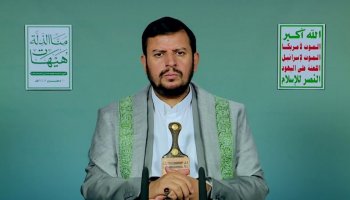
Sana'a (Diplomat.so) – Leader of the Ansarullah movement in Yemen, Abdul-Malik Badruddin al-Houthi, issued a statement in Sana'a on Friday, 15 May, condemning alleged repeated insults to the Quran and calling for what he described as coordinated Muslim mobilisation against Israeli and United States policies.
In the statement, al-Houthi said: "What the Jews are doing through their Zionist movement and its allies, the criminals and leaders of disbelief including America and Israel, constitutes repeated and systematic offences against the Quran and a declared hostile campaign against Islam and Muslims,” according to remarks circulated through movement-aligned media channels.
He further stated: "The duty of Muslims in every part of the world is to act seriously and truthfully in jihad in the path of God and to confront the Zionist plan targeting the Islamic nation,” adding that failure to respond, in his view, would encourage further escalation against Islamic sanctities. The statement was monitored and reviewed by Diplomat News Network through official Ansar Allah media releases.
Al-Houthi also referred to ongoing regional conflicts, including the war in Gaza, developments in the West Bank, and broader tensions involving Lebanon and Syria. He said the situation reflects what he described as a widening campaign against Islamic identity and sacred sites, including Jerusalem and Al-Aqsa Mosque, framing the issue as part of a broader regional confrontation.
Residents in Sana’a reported that the statement was widely circulated through loudspeaker broadcasts and local media outlets aligned with the group, with some public gatherings observed in central districts. "People here are following the speech closely, but daily life continues with visible economic strain,” said a shopkeeper in the Al-Sabeen area, who spoke on condition of anonymity due to security sensitivities. Another resident described the atmosphere as "politically charged but controlled, with increased attention to regional developments.”
A political analyst based in Sana’a, speaking to Diplomat News Network, said the messaging reflects "a consistent strategy of linking domestic legitimacy with broader regional conflicts,” adding that such rhetoric "reinforces internal cohesion while projecting political positioning beyond Yemen’s borders.” A university lecturer specializing in Middle Eastern politics noted that "these statements are typically aligned with periods of heightened regional tension and serve both ideological and mobilizational functions.”
The Ansar Allah movement, which controls Yemen’s capital Sana’a and significant areas of the country’s north, has remained in conflict with the internationally recognized Yemeni government and a Saudi-led coalition since the escalation of war in 2015. Over time, its public communications have increasingly framed the conflict within wider regional disputes involving Israel and Western powers.
Diplomatic observers say the continuation of strongly worded statements risks deepening polarization in an already fragmented regional environment, where multiple conflicts intersect across the Middle East. The evolving rhetoric also highlights how Yemen’s internal war remains closely tied to broader geopolitical rivalries, complicating prospects for sustained diplomatic de-escalation.