Beirut (Diplomat.so) – The Lebanese Ministry of Public Health reported on Wednesday, May 13, that Israeli airstrikes across the southern districts of Nabatieh and surrounding villages killed 10 civilians and injured 27 others amid escalating cross-border hostilities.
Civilian Casualties
The Lebanese Ministry of Public Health said multiple Israeli air raids struck the villages of Arab Salim, Harouf, Romine, and Zibqin, resulting in significant civilian casualties, including women and children.
"The Israeli strikes on Arab Salim, Harouf, Romine, and Zibqin resulted in 10 martyrs and 27 wounded,” the ministry said in an official statement cited by state media channels.
In a separate breakdown, the ministry reported that "a strike on the town of Arab Salim killed six people, including three children and two women, with 12 others injured,” while additional strikes on Harouf and Romine caused further fatalities, including a child and multiple injuries.
Residents in nearby areas described scenes of destruction, with damaged homes, shattered windows, and emergency teams rushing through narrow roads amid ongoing aerial activity. Ambulances were observed transporting victims to hospitals in Nabatieh and Tyre, while civil defense crews worked to clear debris from residential streets.
Continued Air Operations
Beyond the airstrikes, local reports confirmed ongoing artillery shelling targeting the towns of Srifa and the city of Khiam, alongside additional strikes on the coastal village of Mansouri and the town of Aita al-Shaab.
The Lebanese Ministry of Health also warned that casualty figures could rise as rescue operations continued in partially collapsed buildings.
Medical staff in southern hospitals reported increased pressure on emergency units. One field medic, speaking on condition of anonymity, said: "We are receiving continuous cases from multiple villages at the same time. The situation is beyond normal capacity.”
Hezbollah Military Claims
The escalation coincided with a series of military statements issued by Hezbollah’s Islamic Resistance, which announced 17 separate operations targeting Israeli military positions and vehicles across southern Lebanon.
In an official statement, Hezbollah said its actions were conducted "in defense of Lebanon and its people, and in response to Israeli violations and attacks on civilians and villages in the south.”
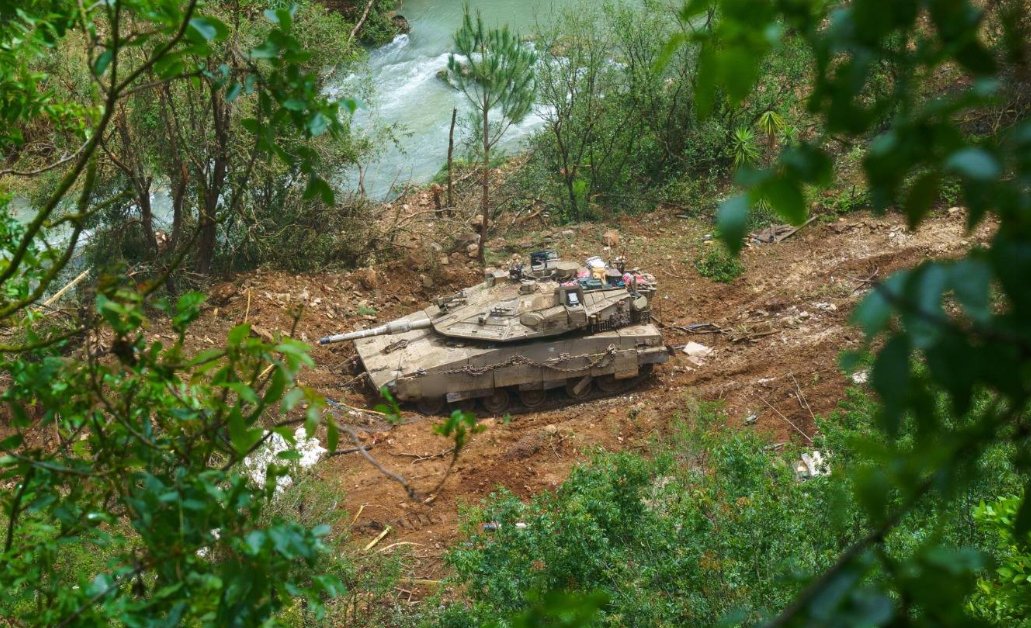
Among the operations claimed, Hezbollah reported targeting Israeli troop gatherings near Wadi al-Ayoun and the town of Rab Thalatheen, striking armored vehicles including Merkava tanks and Namer personnel carriers, and conducting drone and rocket attacks on military positions in border areas including Bint Jbeil, Aitaroun, and Hula.
The group also stated: "Our fighters continue to respond to Israeli aggression with appropriate means, including guided missiles, artillery, and explosive devices against advancing forces.”
A local resident in Bint Jbeil, describing the situation during one of the reported strikes, said the sound of explosions "shook the entire neighborhood and forced families to take shelter in lower floors,” while another witness in Hula reported "heavy drone activity overhead throughout the day.”
Israeli Military Operations
The Israeli military confirmed ongoing operations in southern Lebanon, stating that its forces had conducted what it described as "special operations to dismantle terrorist infrastructure in the Litani River area.”
According to an Israeli army statement, "forces operated to clear infrastructure used by Hezbollah, including underground tunnels and weapons storage sites,” adding that more than 100 targets were struck in coordinated air and ground actions.
The military also reported attempts to intercept a surface-to-air missile targeting an Israeli aircraft, stating that no damage or injuries were recorded.
Israeli military spokesperson Avichay Adraee issued evacuation warnings for several villages in southern Lebanon, urging civilians to leave areas identified as active combat zones.
An Israeli security official, quoted by local media, said operations were intended to "prevent Hezbollah from re-establishing military positions near the border,” though the claims could not be independently verified.
Context and Regional Escalation
The latest developments come amid sustained cross-border clashes following months of heightened tensions along the Israel-Lebanon frontier. Fighting has intensified since renewed exchanges of fire earlier this year, despite international calls for de-escalation.
Southern Lebanon remains a heavily contested zone, with repeated exchanges of artillery, drone strikes, and limited ground incursions reported over recent months. The Litani River area has emerged as a focal point of military operations due to its strategic depth and proximity to the border.
Diplomatic observers note that the escalation risks further destabilizing an already fragile security environment, particularly as civilian infrastructure continues to be affected.
Analysis
The widening cycle of strikes and counterstrikes underscores the entrenched nature of hostilities along the Israel-Lebanon border, where both military actors maintain active operational postures. The concentration of civilian casualties in populated villages highlights the increasing overlap between combat zones and residential areas, complicating evacuation and emergency response efforts.
The Israeli military’s focus on dismantling infrastructure north of the border, combined with Hezbollah’s sustained cross-border operations, indicates a continuation of high-intensity engagement despite reported political efforts to contain escalation. The absence of a stable ceasefire framework increases the likelihood of further localized confrontations expanding into broader regional spillover risks.
Both parties continue to frame their actions as defensive measures, leaving the situation highly unstable and offering few signs that tensions will ease in the near term.