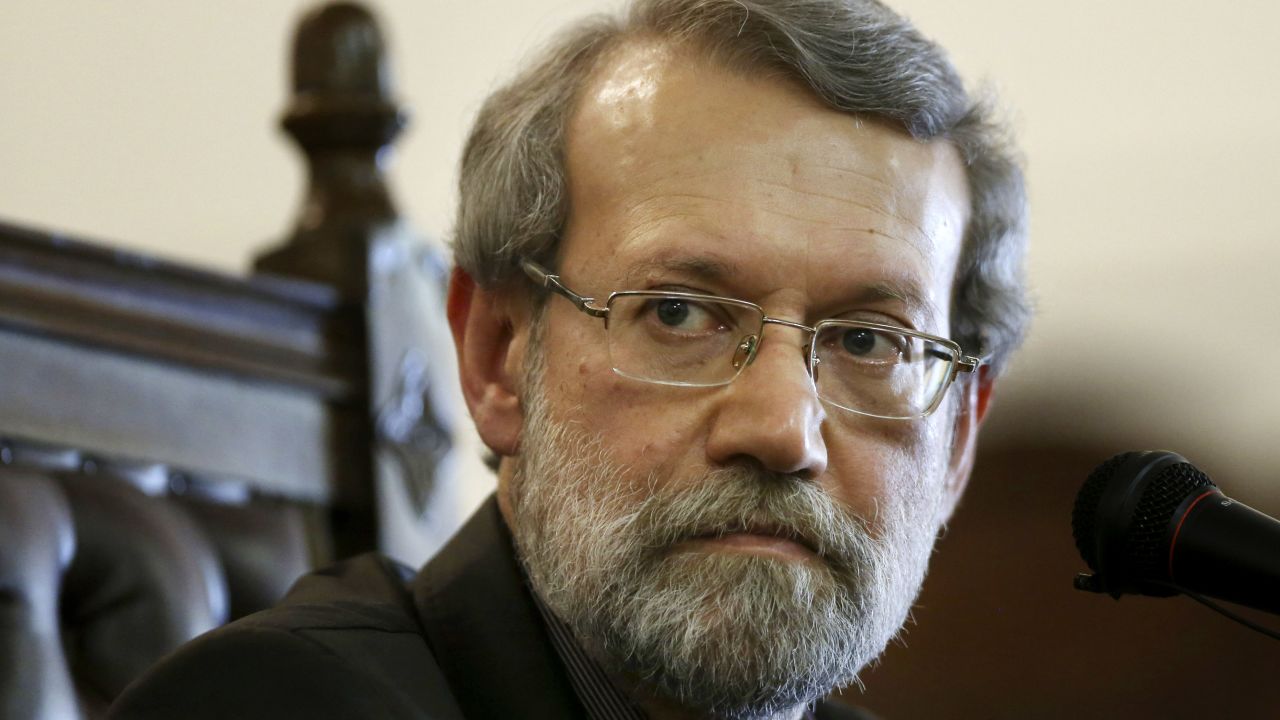
Tehran (Diplomat.so) - Ali Larijani, secretary of Iran's Supreme National Security Council, declared on Thursday evening, that the current conflict with the United States will not end until Washington acknowledges its mistakes and pays the price, signaling a prolonged standoff despite recent U.S. threats.
Posting on his official X account, Larijani directly countered statements by U.S. President Donald Trump, emphasizing that initiating hostilities is easy, but concluding them requires more than a few public statements.
Trump says he is looking for a speedy victory. While starting a war is easy, it cannot be won with a few tweets. We will not relent until making you sorry for this grave miscalculation. #TrumpMustPay
— Ali Larijani | علی لاریجانی (@alilarijani_ir) March 12, 2026
"Trump has said ‘we must win this war quickly,’” Larijani wrote. "But igniting wars is simple, while ending them is not done with a few tweets. We will not leave you until you acknowledge your mistake and pay its price.” His remarks underline Tehran’s insistence that any resolution must include recognition of what Iran views as U.S. miscalculations.
Larijani also addressed potential attacks on Iran’s electricity infrastructure. "Trump has said we can dismantle Iran’s electric capacity within one hour, but we have not done it,” he added. "If they do, the whole region will go dark in less than half an hour, and darkness provides ample opportunity to hunt down U.S. servicemen running for safety.” Analysts note that this statement implicitly references U.S. and Israeli forces stationed in the Gulf, highlighting the potential regional consequences of targeting power grids.
Residents in Tehran described a tense atmosphere on Friday, with streets quieter than usual and markets operating cautiously. A shopkeeper, requesting anonymity, said, "People are worried about blackouts affecting water, communications, and daily life. The uncertainty makes everyone uneasy.”
Egyptian liberal writer Samah Askar commented on the regional implications, noting that a power outage would disrupt water desalination plants, communication networks, and cybersecurity systems, potentially enabling attacks on U.S. forces and creating a humanitarian crisis. "Iran is effectively warning that any misstep by Washington or Tel Aviv could have severe consequences for the Gulf,” Askar said.
Regional security experts say Larijani’s statements serve both as a domestic show of strength and a deterrent against further escalation. "By emphasizing the blackout scenario, Tehran signals its strategic capabilities and underscores the risks of miscalculation,” said Noura Haddad, a Middle East security analyst.
The current conflict traces back to intensified U.S. and Israeli operations following Tehran-aligned proxy attacks in the Gulf. Analysts caution that without diplomatic engagement, entrenched positions on both sides could prolong hostilities, affecting regional security, energy supplies, and civilian infrastructure.