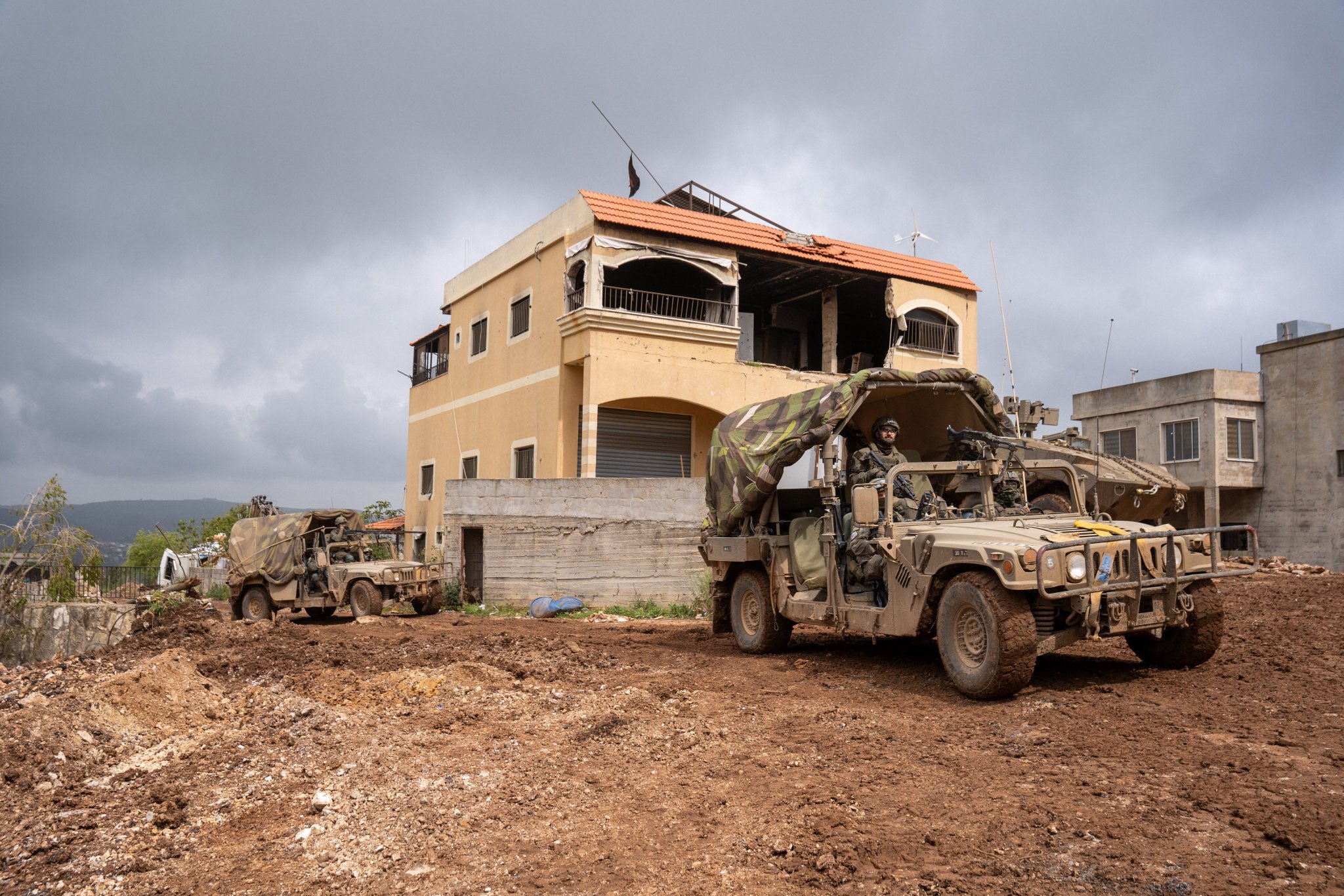
Beirut (Diplomat.so) - Israel Defense Minister Israel Katz warned on Sunday, that Israel will use full force across Lebanon's southern border areas against threats, stating that military operations would continue even under the current ceasefire framework.
Hezbollah claimed that Israeli forces carried out explosions in the border villages of Qantara and Rmeish in southern Lebanon, while Israeli media reports highlighted continued drone and fighter jet activity over Nabatieh and Zahrani at varying altitudes amid heightened surveillance.
Separately, Israeli newspaper Maariv quoted the commander of the Nahal Brigade describing heavy use of drones and anti-armour missiles that restricted troop movement during operations in southern Lebanon.
Israel warns of broader escalation
Israel Defense Minister Israel Katz reiterated on Sunday that Israel would intensify military operations along the Lebanese border, stating that forces had been instructed to respond with what he described as "full force on land and from the air" in the event of perceived threats, including during the current ceasefire arrangement.
He added that the military had received orders to target and demolish structures in border villages allegedly used for Hezbollah operations, describing them as positions that posed direct risks to Israeli communities near the frontier.
An Israeli security source, speaking on condition of attribution, said military planners are prioritizing rapid response capabilities in areas near the border, noting that "any perceived operational buildup is treated as an immediate threat requiring neutralization.”
Reported explosions and border activity
Hezbollah issued a statement claiming that Israeli forces had carried out explosions in the border villages of Qantara and Rmeish in southern Lebanon, describing the incidents as part of ongoing cross-border operations.
A resident of Rmeish, who requested anonymity for safety reasons, said villagers were awakened during the night by "multiple loud blasts followed by the sound of drones circling overhead,” adding that some agricultural areas were avoided due to security concerns.
Local municipal workers in the region reported intermittent disruptions to road access in rural zones, though no official casualty figures were immediately confirmed by Lebanese authorities.
Increased aerial surveillance
Israeli media outlets reported intensified aerial activity over southern Lebanon, including low-altitude drone flights over the Zahrani region and medium-altitude fighter jet patrols above Nabatieh, indicating sustained surveillance operations.
A regional defense analyst told Diplomat News Network that continuous drone presence suggests an emphasis on intelligence-gathering and target verification, stating that "persistent aerial coverage reduces operational surprise and increases pressure on ground movements in contested areas.”
Residents in southern Lebanon also reported visible drone activity throughout the day and night, with some describing a "constant presence in the sky” that has affected daily routines and agricultural work.
Prolonged border volatility
Tensions along the Israel-Lebanon border have persisted since the escalation of regional hostilities following the October 2023 Gaza conflict, with repeated exchanges of fire, drone incursions, and artillery strikes reported along the Blue Line.
Both sides have drawn parallels to earlier phases of conflict in southern Lebanon during the 1980s and 1990s, when guerrilla warfare and improvised explosive devices significantly shaped battlefield conditions.
The United Nations Interim Force in Lebanon (UNIFIL) has consistently called on both parties to avoid actions that could further destabilize the border region, emphasizing the importance of maintaining operational restraint to prevent broader escalation.
Strategic implications
The combination of reported explosions, intensified drone surveillance, and public military warnings reflects a continuing shift toward hybrid conflict dynamics along the border, where conventional military positioning is increasingly supplemented by intelligence-driven operations.
Security observers note that such developments complicate de-escalation efforts, particularly as both sides maintain readiness for rapid retaliation while avoiding full-scale war.
Civilians in border communities continue to face uncertainty, with agricultural activity, transport routes, and local commerce affected by intermittent security incidents and airspace activity.
The evolving situation also carries diplomatic implications, as international mediators seek to preserve fragile ceasefire arrangements amid competing security narratives and rising operational tempo.
Analysts caution that sustained escalation risks undermining ongoing stabilization efforts, particularly if cross-border incidents continue to be met with expanded military responses.
UNIFIL continues to monitor developments along the Blue Line as both surveillance operations and reported ground incidents persist across southern Lebanon.