Addis Ababa (Diplomat.so) - African Union Commission expresses deep concern and strongly condemns reports of Israel's decision to appoint a diplomatic envoy to the northwestern region of Somalia, the so-called "Somaliland," according to a press statement issued on Sunday, April 19, in Addis Ababa, warning the move could undermine Somalia's sovereignty and regional stability.
AU Rejects Any Step Toward Recognition
The African Union Commission stated that it firmly rejects any diplomatic engagement that could be interpreted as recognition of "Somaliland” as an independent state, reaffirming that Somalia remains a single sovereign state under international law and the African Union’s established frameworks.
"The African Union Commission expresses deep concern and strongly condemns reports of Israel’s decision to appoint a diplomatic envoy to the so-called Somaliland,” the statement said. It further emphasized that "any unilateral recognition is null and void” and inconsistent with the African Union Constitutive Act and principles governing sovereignty and territorial integrity.
The Commission referenced the African Union Peace and Security Council communiqué from its 1324th meeting held on 6 January 2026, which reaffirmed the Union’s position on Somalia’s unity and territorial integrity.
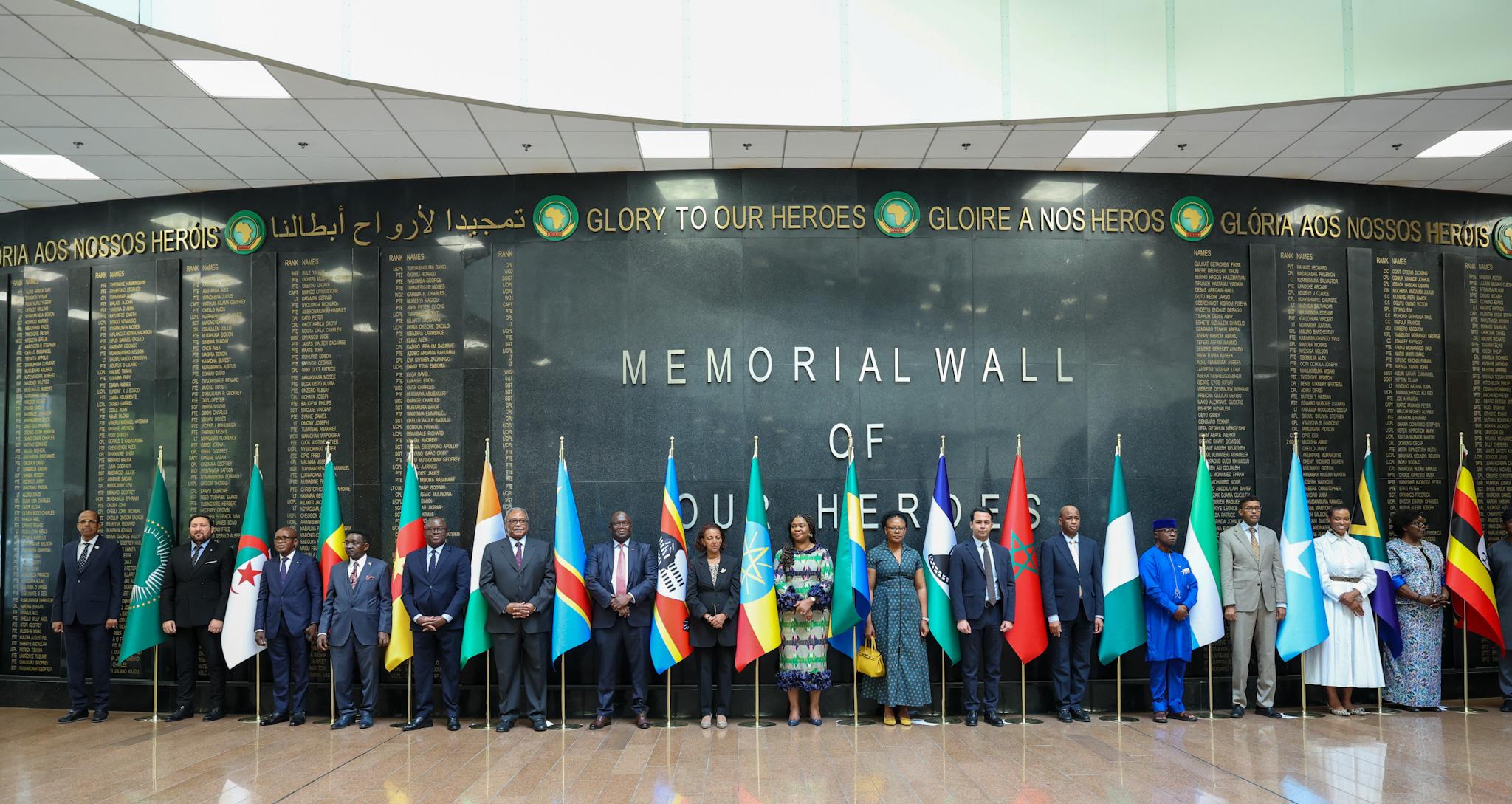
At the African Union headquarters in Addis Ababa, diplomatic staff were seen moving between briefing rooms shortly after the statement was circulated, while security presence remained steady. Several envoys attending scheduled consultations declined to comment publicly, directing questions to official AU communications.
Status of "Somaliland" in Northwestern Somalia
The entity calling itself "Somaliland” located in the northwestern region of Somalia, declared unilateral separation from Somalia in 1991 following the collapse of the central government of Somalia. It has since established its own governing institutions and administrative structures.
Despite its internal political arrangements, it remains unrecognized by any United Nations member state. The Federal Government of Somalia continues to assert sovereignty over the entire territory of the country, including the northwestern region where the separatist administration operates.
Most international institutions maintain recognition of Somalia’s territorial integrity within its federal framework. Within the northwestern region, six major clans are widely reported to reside there, with five of them generally supporting national unity and opposing separatism, while one clan forms the primary support base of the separatist administration. Members of these communities, including those from the separatist clan, are also represented across federal institutions, including both houses of Parliament, the Judiciary, and other branches of the Federal Government of Somalia.
These institutional and social linkages reflect continued integration within Somalia’s national framework. Efforts toward unity, reconciliation, and state-building remain central to Somalia’s political process, with successive administrations emphasizing inclusive governance, power-sharing, and the strengthening of federal institutions as key pillars for long-term stability, national cohesion, and sovereignty.
Regional Diplomatic Sensitivities
The Horn of Africa remains a geopolitically sensitive region marked by overlapping security concerns, maritime trade routes, and regional rivalries. Diplomatic engagement involving disputed territories often triggers strong reactions from regional and continental institutions.
A regional affairs analyst based in East Africa said the African Union’s response reflects long-standing principles of sovereignty protection. "Engagement with entities lacking international recognition is consistently viewed through the framework of territorial integrity and regional stability,” the analyst said.
He added that coordinated institutional responses are often aimed at preventing diplomatic precedents that could affect other unresolved territorial disputes across the continent.
In Mogadishu, a Somali government official speaking on condition of attribution said Somalia "welcomes the African Union’s clear reaffirmation of its sovereignty and unity,” adding that any external engagement outside federal channels risks complicating ongoing state-building efforts.
Sovereignty and Diplomatic Precedent
International relations experts say the African Union’s position underscores efforts to maintain established global norms regarding sovereignty and territorial integrity.
A senior regional analyst told Diplomat News Network that such coordinated responses are intended to preserve consistency in international law and prevent fragmentation of diplomatic practice. "The concern extends beyond a single case, as recognition issues can create ripple effects across multiple unresolved disputes,” the analyst said.
He added that Somalia’s federal state-building process remains central to regional stability efforts, with international support continuing to focus on governance consolidation, reconciliation, and institutional strengthening.
Broader Regional Stability Considerations
The Horn of Africa continues to face interconnected challenges, including counterterrorism operations, fragile political transitions, and strategic competition among external powers.
Diplomatic observers note that disputes over recognition and sovereignty can intersect with broader security and economic dynamics, particularly in regions linked to key maritime routes and cross-border cooperation frameworks.
The African Union reaffirmed its commitment to supporting Somalia’s peacebuilding, governance reforms, and national cohesion, emphasizing the importance of respecting internationally recognized borders as a foundation for long-term stability in the region.