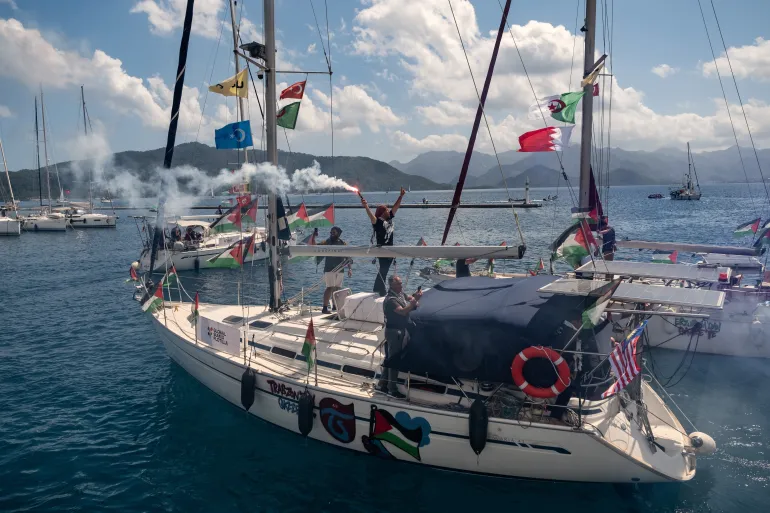
Tel Aviv (Diplomat.so) – The Israeli Navy on Tuesday, May 19, seized more than 40 vessels from the Global Sumud Flotilla and detained over 300 activists aboard boats bound for Gaza, according to Israeli security sources cited by local media and flotilla organizers.
A security source cited by the Israeli outlet Walla said forces had "taken control of more than 40 vessels and arrested over 300 participants from the flotilla heading to Gaza.” The source added that Israeli naval units had not yet completed operations against all boats, noting that several vessels remained at sea in the Mediterranean. Officials also said Defense Minister Israel Katz had been briefed as operations continued, while decisions regarding the detainees had not yet been finalized.
The United Nations expressed concern over the welfare of those detained at sea. Speaking at a press briefing, UN spokesperson Farhan Haq said: "We want to ensure that all persons aboard the flotilla have not been harmed and that the matter is handled peacefully.” The statement followed reports of detentions carried out in international waters, prompting renewed calls for restraint and adherence to maritime law as the situation developed.
The Global Sumud Flotilla departed on Thursday from the Turkish coastal city of Marmaris with 54 boats and around 500 participants, according to organizers. The convoy aimed to challenge Israel’s blockade on Gaza, in place since 2007, by attempting to reach the territory by sea while drawing international attention to humanitarian conditions.
Israeli naval forces began intercepting vessels early Tuesday, marking one of the largest maritime interdiction operations linked to Gaza-bound activist convoys in recent years.
The escalation highlights continuing tensions surrounding maritime efforts to reach Gaza and Israel’s enforcement of its naval blockade.
Diplomat News Network reporting indicates that governments of participating nationals are assessing diplomatic responses as legal questions emerge over interceptions conducted in international waters and the status of detainees.
Analysts note that the scale of detentions and the incomplete interception of the flotilla may contribute to further diplomatic friction, particularly as several vessels remain unaccounted for in the Eastern Mediterranean.