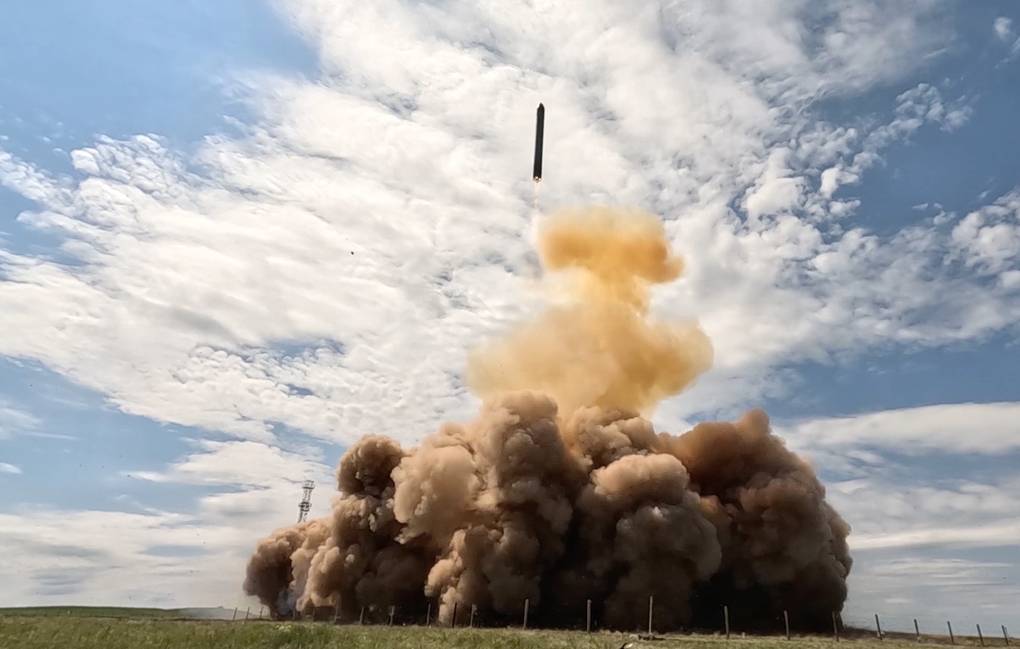
Moscow (Diplomat.so) - Russian Ministry of Defense announced on Tuesday, May 19, that Russia's strategic nuclear forces began nationwide exercises simulating preparation and use under hostile threat conditions.
Russian Ministry of Defense said in an official statement that between May 19 and May 21, 2026, the armed forces are conducting training on the preparation and use of nuclear forces in response to what it described as a potential adversarial threat.
The ministry stated: "From May 19 to May 21, 2026, the armed forces will conduct training on preparing and using nuclear forces in the face of an aggressive threat.” The drills are part of scheduled strategic readiness activities involving multiple branches of Russia’s military structure.
Strategic Missile Forces, Northern and Pacific Fleets, Long-Range Aviation, and units from the Leningrad and Central military districts are participating in the exercises. According to the ministry, a total of 73 surface ships and 13 submarines, including eight strategic missile submarines, are involved. The statement added: "It will include more than 64,000 personnel and over 7,800 units of weapons and military equipment, including more than 200 launch platforms and over 140 aircraft.”
Russia’s annual strategic exercises are typically designed to test command and control systems across land, sea, and air nuclear triad components. Such drills are often framed by Russian officials as defensive preparations aimed at maintaining strategic deterrence under evolving security conditions in Europe and beyond. The scale of participation underscores the integration of multiple military branches into coordinated operational planning. It also reflects the role of combined fleet and aviation elements in supporting strategic command exercises.
The exercise comes amid heightened global attention to strategic force signaling by nuclear-armed states, where large-scale drills are often interpreted as demonstrations of readiness and command resilience.
Analysts note that participation levels involving tens of thousands of personnel and hundreds of platforms reflect sustained investment in long-range deterrence capabilities. Diplomat News Network reporting highlights the importance of transparency in communicating such military activities to reduce misinterpretation risks. The inclusion of multiple fleets and aviation units highlights interoperability requirements across Russia’s strategic defense structure.
Observations from the announcement indicate continued emphasis on multi-domain coordination and readiness across Russia’s strategic forces. The exercise schedule through May 21 suggests a structured evaluation of operational preparedness across naval, air, and ground-based nuclear components, reinforcing established deterrence posture.