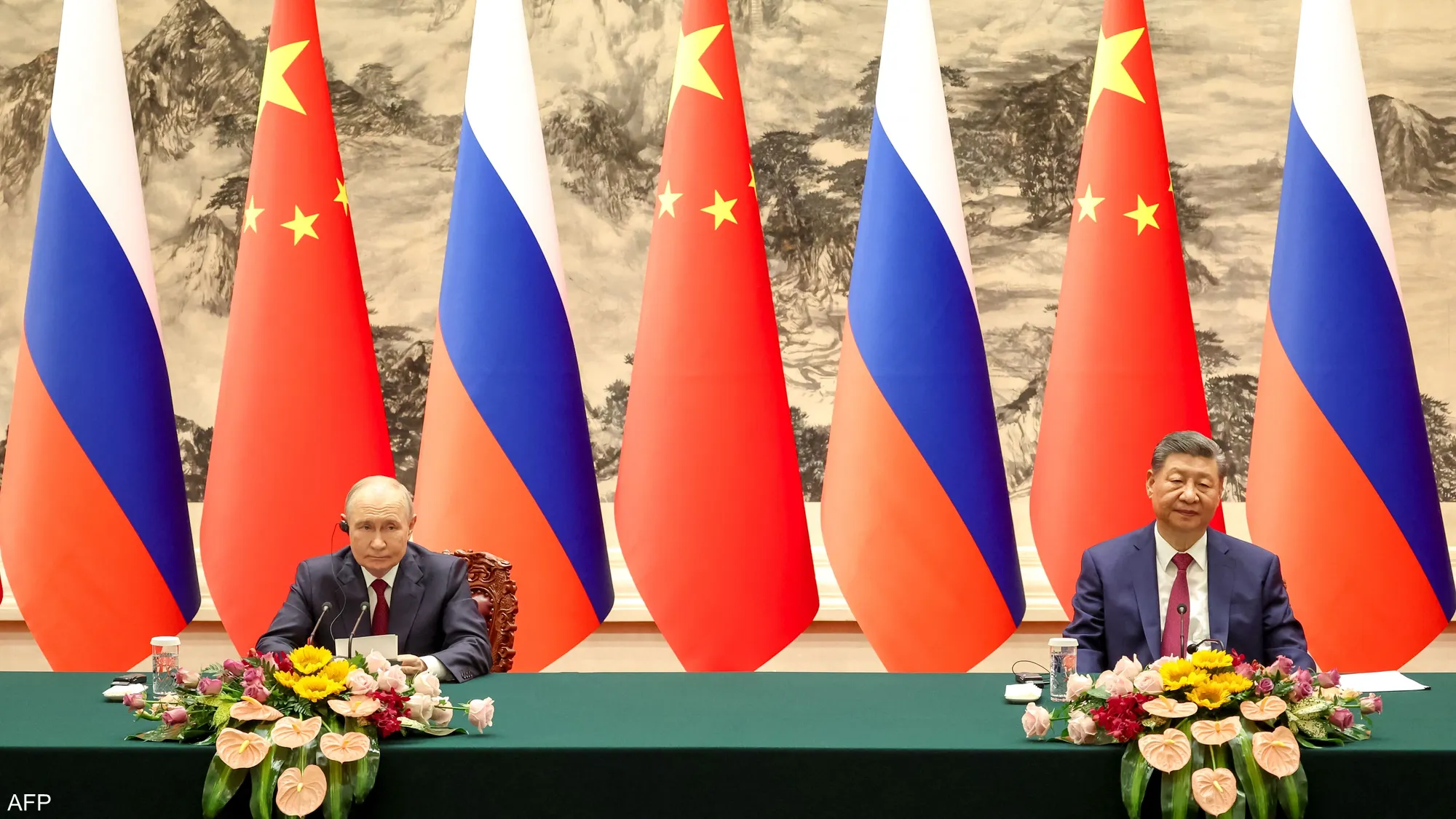
Beijing (Diplomat.so) - Chinese President Xi Jinping and Russian President Vladimir Putin on Wednesday condemned U.S. President Donald Trump's proposed "Golden Dome" missile defense initiative during talks in Beijing, warning that the project threatens global strategic stability and could intensify tensions among nuclear powers.
The criticism came in a joint statement issued after Putin met Xi at the Great Hall of the People in the Chinese capital, where children waving Russian and Chinese flags greeted the two leaders during a ceremony highlighting expanded bilateral cooperation. The statement accused Washington of pursuing "unrestricted global missile defense systems” capable of undermining long-established nuclear deterrence frameworks.
Russian and Chinese officials said the proposed U.S. defense architecture, described as a multilayered missile shield capable of intercepting threats during multiple phases of flight, would disrupt the balance between offensive and defensive strategic weapons. The system reportedly envisions expanded ground-based interceptors, advanced satellite networks, orbital monitoring assets, and integrated command-and-control systems designed to detect and potentially neutralize missile launches before deployment.
"The plans fundamentally contradict the principle of maintaining strategic stability,” the joint statement said, according to remarks released by both governments after the meeting. Officials from both countries argued that the project increases the risk of military escalation by encouraging preemptive strike doctrines and weakening mutual deterrence mechanisms.
Speaking to Diplomat News Network after the summit, Lei Feng, a Beijing-based security analyst, said the coordinated criticism reflects growing alignment between Moscow and Beijing on nuclear security policy. "Both governments view advanced missile defense systems as capable of eroding second-strike capabilities, which remain central to nuclear deterrence,” he said.
The statement also criticized the United States for allowing the 2010 New START nuclear arms reduction treaty to expire earlier this year without negotiating a replacement framework. Moscow reiterated support for Beijing’s refusal to join future trilateral nuclear arms negotiations involving Washington and Moscow, maintaining China’s longstanding position that its nuclear arsenal remains significantly smaller than those of the United States and Russia.
Outside the Great Hall, security was visibly tightened as police officers monitored restricted pedestrian zones and diplomatic convoys moved through central Beijing under cloudy skies and intermittent rain. Residents gathered along barricaded streets to observe the high-profile visit, with some waving national flags distributed ahead of the ceremony.
Russia and China further warned against the deployment of intermediate- and short-range ground-based missile systems by unnamed nuclear powers, describing such actions as destabilizing to regional security environments. The statement followed Russian military footage released Wednesday showing troops transferring nuclear warheads to mobile Iskander-M missile launch systems during large-scale nuclear exercises conducted in Russia and neighboring Belarus.
The renewed coordination between Beijing and Moscow comes amid worsening tensions between major powers over missile defense, strategic weapons modernization, and the future of global arms control agreements, issues analysts say could reshape international security calculations in the coming decade.