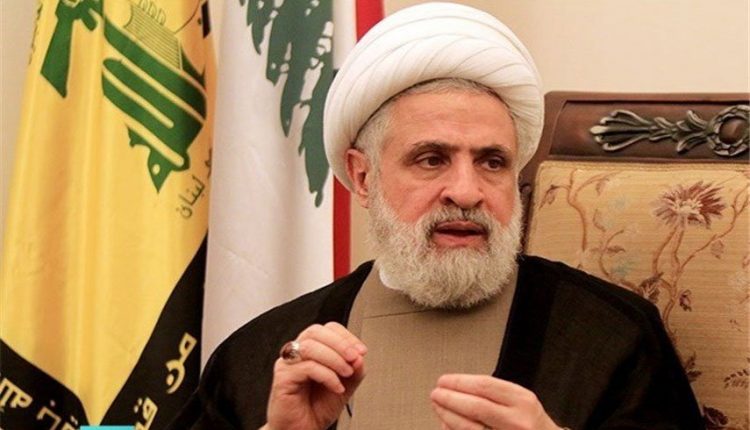
Beirut (Diplomat.so) – Hezbollah Secretary-General Sheikh Naim Qassem issued a statement in Beirut, Lebanon, on Saturday, declaring ceasefire conditions and outlining resistance posture amid ongoing tensions with Israel conflict escalation.
The statement emphasized that any ceasefire must apply reciprocally to all parties, warning that Hezbollah fighters will remain deployed and "with their hands on the trigger” to respond to violations, according to the written communiqué.
Qassem outlined five conditions he described as essential for stability: a permanent cessation of hostilities across land, air, and sea; Israeli withdrawal from occupied areas to internationally recognized borders; release of detainees; return of displaced residents to border villages; and internationally supported reconstruction.
He also signaled openness to coordination with Lebanese state institutions, calling for a new phase based on sovereignty, national unity, and prevention of internal strife, while advocating a national security strategy integrating what he described as resistance capabilities.
Praising what he called the resilience of fighters, Qassem said past confrontations demonstrated that field dynamics determine political outcomes, adding that support from allies, including Iran, played a decisive role, according to remarks cited by Diplomat News Network.
Qassem criticized a recent U.S. State Department statement on the ceasefire framework, calling it an infringement on Lebanese sovereignty and disputing claims that Beirut had formally endorsed the text without a cabinet session.
In Beirut’s southern suburbs, reactions to the statement were mixed, with some residents expressing support for deterrence posture while others voiced concern over escalation risks, reflecting divided public sentiment. "We want stability, but we also want protection,” said one resident in the area. "Every escalation brings more uncertainty for families,” another resident added.
Hezbollah and Israel have maintained intermittent hostilities along Lebanon’s southern border for decades, with recent cross-border exchanges intensifying since the escalation of regional conflicts, prompting repeated international calls for de-escalation and diplomatic engagement.
Political analysts in Beirut said the remarks reflect continued uncertainty over enforcement mechanisms and highlight competing narratives between deterrence and diplomacy in Lebanon’s volatile southern border region.
The remarks underscore a broader strategic debate in Lebanon over the balance between armed deterrence and state-led diplomacy, particularly as international actors seek mechanisms to stabilize the southern frontier.
Analysts note that continued ambiguity around ceasefire enforcement could complicate humanitarian recovery efforts in border communities, where displacement and infrastructure damage remain significant concerns.
The positioning articulated by Hezbollah reflects an attempt to link military posture with political negotiation leverage, while critics argue it risks prolonging cycles of escalation.
Diplomatic observers emphasize that coordination between Lebanese state institutions, regional partners, and international mediators will be critical to reducing tensions and enabling reconstruction initiatives. The evolving situation continues to draw attention from regional capitals monitoring potential spillover effects on broader Middle East stability.
International stakeholders continue to monitor developments closely as ceasefire implementation mechanisms remain under discussion amid persistent regional tensions according to diplomatic observers.