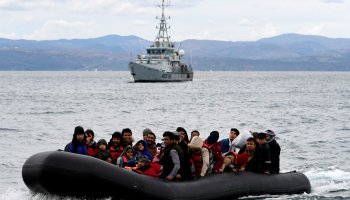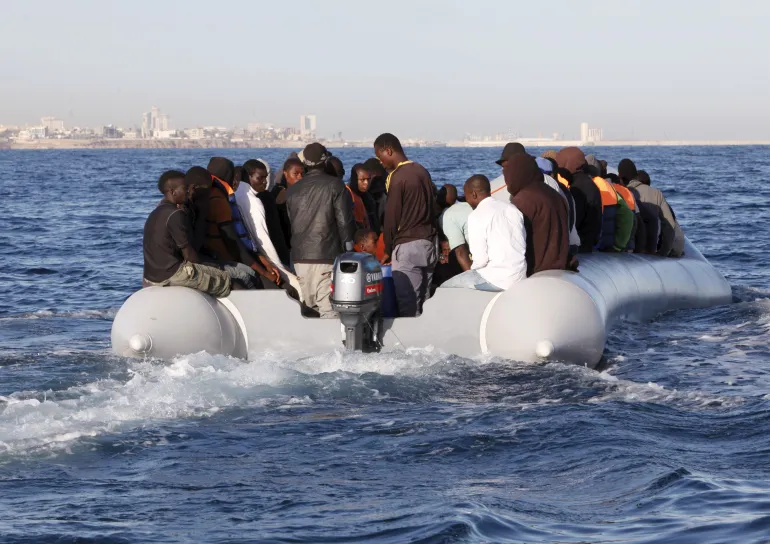
Athens (Diplomat.so) - Frontex, the European Border and Coast Guard Agency, reported on Sunday, 28 June, a sharp rise in migration flows from eastern Libya toward Greece's Crete and Gavdos islands, reshaping Mediterranean routes and increasing pressure on southern European border systems.
The agency’s latest assessment comes as Greece records a sustained rise in arrivals from Libya’s eastern coast, marking a structural shift away from the previously dominant Italy-bound route via the central Mediterranean.
Greek authorities say reception points in Crete and Gavdos have experienced steadily rising pressure throughout 2025, with more than 7,300 migrants arriving in the first half of the year alone, surpassing total arrivals recorded in 2024.
Greek Prime Minister Kyriakos Mitsotakis described the situation in July 2025 as "a direct challenge” for Greece and the European Union, calling for stronger coordination with Libyan authorities and intensified efforts against smuggling networks operating along the evolving route.
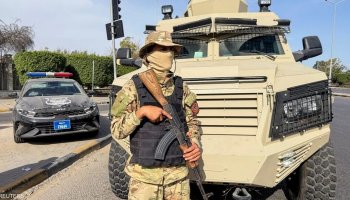
A senior Greek migration official, speaking on condition of attribution, said coastal monitoring units have observed "a clear diversification in departure points along Libya’s eastern shoreline, particularly near Tobruk, where departures have become more frequent and less predictable.”
Frontex said its 2026–2027 risk analysis indicates that maritime crossings between Libya and Crete increased more than threefold during 2025 compared with the previous year, while irregular crossings along the central Mediterranean route to Italy fell by 59 percent in 2024. The agency added that improved surveillance in western Libya and Tunisia has pushed smuggling operations eastward, where enforcement capacity remains uneven and maritime patrol coverage more limited.
Data from the European agency also shows a 260 percent increase in activity along the Libya–Crete corridor during the first eleven months of 2025, underscoring the rapid reconfiguration of migration pathways across the region. Officials say this shift reflects not only enforcement pressure but also the adaptability of trafficking networks that continuously adjust embarkation points to avoid detection.
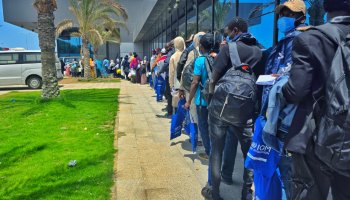
The International Organization for Migration estimates that 939,638 migrants were present in Libya as of late 2025, with significant populations originating from Sudan, Niger, Egypt, and Chad. The concentration of displaced populations across Libya, including in eastern regions, has contributed to its role as a key transit hub toward Europe.
The United Nations Children’s Fund (UNICEF) warned that children remain deeply affected by the changing routes. A UNICEF spokesperson said, "many children arriving in Libya have already endured weeks of movement through the Sahara,” adding that unaccompanied minors face heightened risks of exploitation, violence, and limited access to essential services.
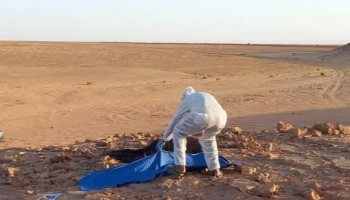
Maritime fatalities continue to underscore the risks of the route. More than 1,300 deaths and disappearances were recorded along the central Mediterranean in 2025, according to migration monitoring data, with additional shipwrecks reported in early 2026 off Libya’s eastern coast.
The gradual displacement of migration flows toward Greece highlights a broader regional realignment driven by shifting enforcement patterns, instability in Libya, and ongoing conflicts in parts of Africa. European officials continue to describe the situation as an evolving security and humanitarian challenge, with no indication of a sustained reduction in departures across the Mediterranean basin.