Mogadishu (Diplomat.so) – Somali families continue to endure profound emotional distress as relatives disappear along the migration route to Libya, where kidnappings, ransom demands, abuse, and unmarked burials have become recurring features of one of the world's most dangerous irregular migration corridors, according to accounts from affected families, migration observers, and humanitarian organizations.
Families Face Extortion Calls
Many Somali migrants leave their homes without informing parents or relatives, driven by the hope of reaching Europe through Libya. In numerous cases, families only become aware of their situation after receiving phone calls from unknown individuals demanding large ransom payments in exchange for their release.
During these calls, relatives report hearing voices filled with fear and distress, including cries for help that reflect severe suffering. According to survivors, captives are often subjected to starvation, physical abuse, and persistent threats aimed at forcing their families to pay. The calls have become one of the most distressing aspects of the migration crisis, placing parents under intense emotional and financial pressure as they attempt to raise large sums of money in a very short period of time.
Families in Somalia and survivors described a pattern of ransom calls allegedly made after migrants arrive in Libya, where they are reportedly held in concealed facilities. Several relatives said they were contacted shortly after their family members departed Somalia without informing them, only to be told they were being held until payment was made.
A mother in Mogadishu, speaking on condition of anonymity, said her son called her from Libya in distress. "He told me they would break his leg if I did not send money. I had no option but to sell our house,” she said. "I heard him crying while they were beating him.”
Another relative described similar pressure. "They do not just ask for money; they force you to listen to what is happening to your child,” said a father in Hargeisa city. "The sound alone is enough to destroy a family.”
Several family members interviewed by Diplomat News Network described living with profound and agonizing uncertainty over the fate of their sons and daughters, saying the absence of any confirmed information has left them in a state of deep emotional distress and enduring grief. Some said communication stopped abruptly after ransom negotiations failed, leaving families without confirmation of whether their loved ones survived or where they may have been buried.
Migration specialists and humanitarian agencies have repeatedly documented patterns of kidnapping, extortion, torture, and exploitation affecting migrants in Libya, particularly those attempting to cross the Mediterranean Sea.
Detention Conditions
According to testimony from survivors documented by humanitarian organizations, many migrants are held inside concealed compounds in coastal cities and isolated desert areas. Former detainees have described receiving only one basic meal every 24 hours, often consisting of rice or pasta without sufficient nutrition.
Migrants and family members allege that those held in these facilities face overcrowding, limited food, and restricted movement. One survivor who later reached Europe described being fed once daily. "It was usually rice or pasta, nothing else,” he said. "We were not allowed to leave unless payment was made.”
Women and girls remain particularly vulnerable. International organizations have documented widespread reports of sexual violence against female migrants held by criminal groups operating inside Libya. Survivors have reported rape, physical assaults, forced confinement, and intimidation.
Witnesses have also described violent reprisals against individuals attempting to escape. Former detainees said armed captors allegedly pursued escapees using four-wheel-drive vehicles, inflicting serious injuries as punishment intended to discourage others from fleeing.
Reports suggest that treatment differs according to whether ransom payments have been completed. Individuals whose families have settled the payment are reportedly held under comparatively improved conditions, with permission to use mobile phones, access portable wireless internet operated by guards, and obtain essential items funded through their own daily provisions. The cost of these necessities is said to be covered directly by the detainees from their personal resources.
Once the ransom is paid, detainees are not kept at the same hideout but are instead relocated to another site or shelter where conditions are reportedly more tolerable. Their provisions may include bedding, pillows, preferred meals, medication, and warm clothing, while movement outside the facility remains restricted and supplies are delivered by armed guards.
In contrast, those whose ransom remains unpaid are reported to face significantly harsher and more restrictive conditions.
A humanitarian worker monitoring migration routes in North Africa, speaking to Diplomat News Network, said such accounts reflect long-standing concerns. "What we are seeing is a system where detention and extortion overlap in ways that are extremely difficult to regulate,” the worker said.
Libyan "Magafe" Criminal Networks
The term "Magafe” comes from the Somali language and means "the one who does not miss” or "the one who never fails to hit its target.” It originally conveys a sense of certainty and precision, but in modern usage it has taken on a far more painful and troubling meaning.
In current contexts, "Magafe” is used to describe organized kidnapping and extortion networks involving armed groups and facilitators who target migrants along dangerous transit routes. These networks operate in a coordinated manner, taking advantage of vulnerable people moving in search of safety and opportunity.
Families describe a deeply distressing system behind the word—hidden detention sites where abducted individuals are held in harsh conditions. Their lives become bargaining tools, and release is often tied to the payment of large sums of money. For families, every moment becomes a struggle between hope and despair as they try to save their loved ones from distant captivity.
A migration analyst based in North Africa, speaking on condition of attribution, said: "These networks operate like structured economies of exploitation. Migrants are treated as assets, and families become negotiating points under extreme psychological pressure.”
Over time, "Magafe” has become a word that carries fear, grief, and emotional weight. It now represents not only the perpetrators of these crimes, but also the suffering of migrants and the silent anguish of families left waiting in uncertainty.
Uncertain Fate
Somali migrants travelling through Libya's irregular migration routes continue to face abduction, ransom extortion, torture, prolonged detention, and unexplained disappearances, leaving thousands of Somali families trapped in a painful cycle of hope, fear, and unanswered questions. Behind every missing migrant is a mother waiting for a phone call, a father struggling to raise impossible ransom demands, and siblings living with the uncertainty of whether their loved one is still alive or has become another anonymous victim buried in the deserts of Libya.
For many households in Somalia, migration does not end when a young person leaves home. It turns into a prolonged period of silence, interrupted only by sudden phone calls carrying distress, ransom demands, or fragmented updates from unknown locations inside Libya. Families describe a constant state of uncertainty, where hope and fear coexist for months or even years.
Libya is one of the main transit points for migrants crossing the central Mediterranean. Since 2011, the country’s fractured political and security landscape has allowed multiple armed groups and criminal networks to operate in different regions, particularly along desert corridors and coastal towns. Migrants traveling through Sudan or Egypt are often moved through informal routes before reaching Libyan territory, where control is divided and inconsistent.
Libya is still divided and lacks a single unified authority capable of bringing armed groups in the east and west under effective control. As a result, land and maritime borders are weakly regulated, weapons are widely accessible, and violence often occurs with limited accountability or deterrence.
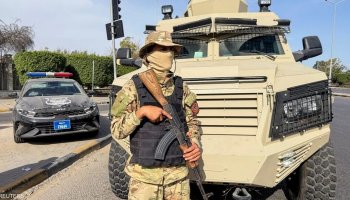
Security institutions linked to both the Government of National Unity in Tripoli and the Libyan National Army in Benghazi are frequently viewed as having limited effectiveness in investigating crimes, apprehending perpetrators, and protecting vulnerable migrants, including Somalis. In some cases, armed groups involved in kidnappings are believed to operate within or alongside existing power structures, while strong tribal affiliations and widespread armament further weaken the enforcement of law and order.
Families of missing Somali migrants say these journeys are often coordinated and funded through informal smuggling networks that connect small-scale brokers in East Africa with organized groups active on migration routes through North Africa, resulting in a layered cross-border system that operates across several countries.
Migration specialists monitoring the route describe coordinated networks operating across both southern and northern Somalia. In the south, key points include Mogadishu and Kismayo, while in the north the networks are reported to extend through Hargeisa, Borama, and Buhodle.
Field observers say these routes are linked onward to transit corridors through Sudan and Egypt, eventually extending toward Libya, where migrants are reportedly transferred into informal detention environments. Researchers say many journeys begin without the full knowledge of families, often facilitated by smugglers who arrange documentation, air travel, and overland transport.
Field observers familiar with the route say some facilitators finance initial travel costs, expecting repayment after migrants reach Libya. Civil society representatives in Somalia describe this as a structured dependency system that leaves migrants vulnerable once they cross into unsecured border zones.
Communication is often abruptly lost once migrants reach Libya, leaving families without any direct contact, and in many cases, information only surfaces later through individuals claiming authority over detention sites or representing those holding the migrants, further intensifying uncertainty and concern about their safety and whereabouts.
A migration researcher speaking to Diplomat News Network noted that "the route has evolved into a multi-stage control chain where different actors take custody of migrants at different points, increasing exposure to exploitation.”
Ransom pressure on families
Families in Somalia describe two separate ransom categories tied to migration detention cases in Libya, depending on the way the journey was financed before departure. One category involves individuals whose travel was fully financed through smuggling arrangements covering land and air movement from Somalia into Libya. The second category involves individuals whose journeys were paid directly by the migrants themselves or their families.
In the first category, relatives report that migrants are treated as carrying an outstanding financial obligation linked to the full cost of the journey. Upon arrival, detention is followed by demands framed around repayment of the total travel expense. Reported figures reach up to 60,000 Libyan dinars (about 9,423.47 USD), reflecting the combined cost of transportation and associated fees.
In the second category, where families or migrants funded the journey independently, ransom demands are reported as lower but immediate upon arrival. Families describe requests of around 5,000 Libyan dinars (about 784.64 USD), presented as a condition for release or continuation toward sea routes to Europe.
A health worker in Mogadishu said the emotional impact of ransom calls leaves families in extreme distress. "Parents hear their children crying and then silence follows,” the health worker said. "The body reacts before the mind can understand. Collapse, shock, and fear take over.”
An elder added that repeated communication has resulted in sudden medical emergencies among relatives. "Some families lose members during these calls,” he said. "The pressure is unbearable when a voice from your child comes with pain you cannot stop.”
Medical professionals and community accounts indicate that the psychological shock has, in several cases, contributed to sudden death, including acute cardiac arrest, cerebrovascular accidents such as brain hemorrhage or stroke leading to hemiplegia, and severe stress-induced metabolic crises such as acute hyperglycemia. Reports also describe sudden death linked to extreme fear responses, consistent with acute stress reactions.
Reports from families further indicate that individuals unable to meet ransom demands remain in prolonged detention with restricted communication, while those whose payments are confirmed receive limited movement and temporary accommodation.
Missing migrants
Somali families continue to face deep uncertainty across Libya’s desert migration routes, where reports of missing persons often end without confirmation of death or burial. Many relatives receive messages indicating death but are not provided with any location or identification.
These migration corridors, active since 2011, are widely described as areas marked by disappearance and absence of records. The lack of formal systems for documentation has contributed to fears that large numbers of migrants remain buried in unmarked graves across remote desert terrain.
A Somali mother whose son left several years ago said the absence of answers has become a permanent burden. "There is no place to go and mourn,” she said. "Only waiting, and every day feels the same.”
Across Somalia, families gather in homes and mosques to perform symbolic funerals and collective dua for loved ones who disappeared along migration routes, where every passing day brings silence instead of news and absence instead of answers. With no graves to visit and no bodies to bury, remembrance is expressed through prayers, tears, and the quiet holding of personal belongings left behind, as families try to give meaning to a loss that has no clear ending.
Religious leaders describe these gatherings as grief without closure, where mourning continues without certainty and farewell is never fully completed. In this space between hope and loss, families remain emotionally suspended, carrying memories of their missing relatives while living with an absence that deepens rather than fades over time.
Observers note that the absence of reliable identification systems in remote regions continues to prevent resolution of missing cases, leaving thousands of families without answers for years.
Payment-Based Sea Crossings
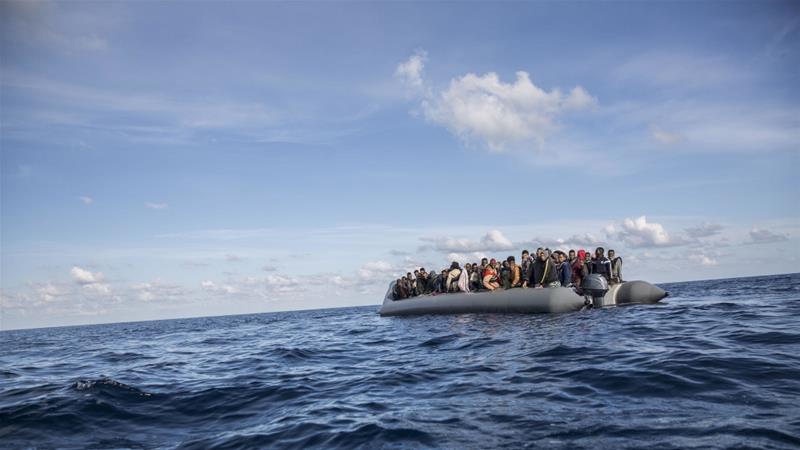
After release or transfer from detention points, migrants are directed toward sea crossings departing from Libya’s coastline to Europe in overcrowded inflatable boats. The maritime stage is presented as a separate payment-based step, only accessible after confirmation of required fees, which secure a place on a vessel.
Two main route-based pricing structures are reported. The first route, typically toward Greece, is described at around 4,000 USD. The second route, usually toward Italy and involving a longer journey, is reported at around 6,000 USD. Families say the difference in cost reflects distance, duration at sea, and increased risk exposure during transit.
Fishermen along the Libyan coast describe frequent nighttime departures involving heavily loaded boats that leave without lights or signals before disappearing into open water. One fisherman said, "They leave in silence, packed beyond capacity, and the sea becomes the only witness.”
Search and rescue observers in the central Mediterranean estimate that thousands have died over the past decade due to drowning, exposure, and vessel failure. Families often receive no confirmation after departure, remaining in prolonged uncertainty.
Coastal accounts also describe occasional sightings of bodies along migration routes, with recovery and identification rarely achieved due to distance, drift patterns, and maritime conditions.
For many Somali families, the final stage of the journey is shaped by a sequence of financial thresholds followed by silent crossings, where payment determines access to the sea and the sea determines whether anything returns at all.
Policy and Protection Gaps
Human rights and migration specialists argue that existing regional cooperation frameworks have not adequately addressed the risks faced by irregular migrants traveling through Libya. Weaker enforcement coordination and limited documentation systems contribute to recurring exploitation patterns along key transit corridors.
Observers say that without improved protection mechanisms, families in Somalia will continue facing uncertainty, financial strain, and prolonged absence of relatives migrating through high-risk routes. Regional stability and migration governance remain closely linked to cross-border security and humanitarian response efforts.