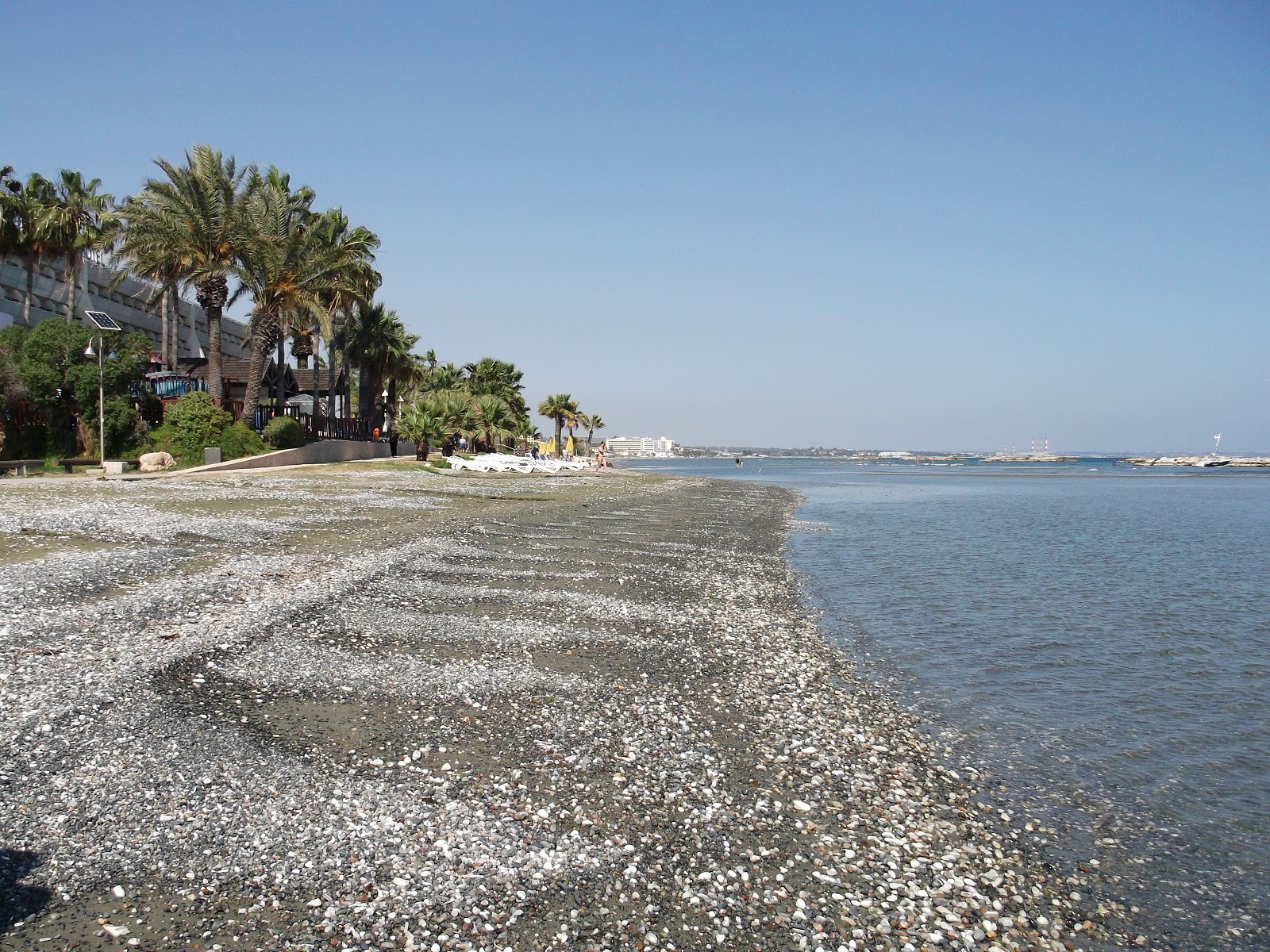
Larnaca (Diplomat.so) – Cyprus Police are continuing to investigate the deaths of two 20-year-old Somali women, identified as Fatima and Yara, who died after being recovered unconscious from the sea at Oroklini Beach in Larnaca district on Thursday evening, June 18, after encountering difficulties in waters between coastal breakwaters during a major emergency response.
The two women had been living and working in Cyprus for the past three years and were described as close friends by those who knew them. Authorities have not yet officially released their full legal identities as formal identification procedures remain ongoing, and there is no confirmed information regarding their work or residence permit status at this stage.
According to the Joint Rescue Coordination Centre (JRCC), the incident occurred at approximately 7:30 p.m. when five people entered the sea near the breakwaters along the Oroklini coastline.
The group initially stayed within the same area of the shoreline, where conditions appeared manageable. Three of the individuals remained closer to the shore and were able to either reach safety on their own or were assisted by rescue teams.
The two women, identified as Fatima and Yara, moved further into a deeper section between the breakwaters, an area known for strong and unpredictable currents. They encountered serious difficulties and were later pulled from the water unconscious, while the other three members of the group were safely rescued.
The JRCC activated Cyprus' national search-and-rescue plan, known as NEARCHOS, deploying two Port and Maritime Police speedboats, a helicopter from the 460th Search and Rescue Squadron, rescue vessels from local lifeguard units, and two ambulances. Rescue personnel brought both women ashore before they were transported to Larnaca General Hospital, where doctors pronounced them dead.
Investigators from Oroklini Police Station remained at the scene gathering witness statements and examining the circumstances surrounding the incident. Police have not indicated that foul play is suspected and have stressed that the investigation remains active. Officials are awaiting forensic and medical findings before determining the exact cause and manner of death.
Civilian rescuer Panayiotis Gavalas, who responded in an inflatable boat after hearing calls for help, said the lack of an on-duty lifeguard may have reduced the chances of a successful rescue.
"There is no lifeguard at this beach, which is why I went. If there had been a lifeguard, I believe the women could have been saved,” he said, describing the lack of supervision as a critical factor during the emergency.
He further emphasized the dangerous conditions between the breakwaters: "Between the breakwaters the sea reaches three metres deep. Where there are breakwaters, there must be lifeguards, because there are currents in the corridor between them,” Gavalas added, stressing that the geography of the area requires continuous safety monitoring.
Eyewitness Christina Tsene, who was at the beach with her son, said the group entered the water fully clothed before two of the women suddenly began struggling.
Emergency services were first alerted when eyewitness Christina Tsene and her young son observed distress in the water. Tsene said her son was using binoculars when he spotted one of the women raising her hand above the surface, signaling for help. Tsene immediately called Cyprus emergency number 112, triggering the first official alert to authorities. At nearly the same time, civilian Panayiotis Gavalas responded after hearing cries for help and launched an inflatable boat toward the scene.
"They sank very suddenly. We had no idea there were currents there. At the very least there should be large warning signs telling people not to swim between the breakwaters," Tsene said.
The incident has also drawn attention to lifeguard coverage at Oroklini Beach. Local authorities confirmed that the beach's lifeguard tower was not staffed at the time of the emergency because of an ongoing shortage of qualified personnel.
Officials said nine of the 19 lifeguard towers across Larnaca district are currently unstaffed, with additional recruitment efforts still underway.
The tragedy has intensified discussion about public safety measures at beaches featuring breakwaters, where narrow channels can generate powerful currents that may not be visible from the shoreline. Water safety specialists have long warned that these conditions can rapidly overwhelm swimmers, particularly in the absence of warning signs or immediate rescue services.
Diplomat News Network has learned that investigators are reviewing witness testimony, rescue operations and environmental conditions as part of the inquiry. Cyprus Police said additional information will be released once forensic examinations and the official investigation have been completed.
Cyprus Coastal Incident Patterns
The coastal zone of Oroklini in Larnaca forms part of Cyprus’ eastern shoreline, an area shaped by a combination of sandy beaches, man-made breakwaters, and relatively shallow continental shelf structures. While generally popular for swimming, sections of this coastline have periodically recorded drowning and near-drowning incidents linked to localized rip currents and structural coastal modifications.
The Oroklini stretch of the Larnaca coastline has recorded a small number of isolated drowning fatalities over recent years, with documented incidents including cases reported in 2009 and 2018, alongside a few additional separate deaths within the wider immediate coastal zone. Available reporting indicates that the total number of fatalities directly associated with this specific area amounts to a handful of cases, estimated at roughly three to six across multiple years involving both men and women.
Historically, incidents in the broader Larnaca coastal region, including Oroklini, have been associated with swimmers entering areas between breakwaters, where artificial rock formations alter the natural movement of seawater. These structures are designed to reduce coastal erosion and stabilize beaches, but they also create narrow channels through which water flows in and out of the shore zone with increased velocity. In certain conditions, this process can generate rip currents—strong, concentrated flows of water moving away from the shore that can rapidly pull swimmers into deeper water.
From a physical geography perspective, Cyprus’ southeastern coastline is influenced by a relatively narrow continental shelf and exposure to seasonal wind systems in the eastern Mediterranean. When wind direction, wave energy, and coastal structures interact, they can amplify turbulence near breakwater gaps. The reflection of waves off rocky barriers further contributes to chaotic water movement, creating eddies and unstable surface conditions that are not always visible to swimmers from the shore.
Previous safety concerns in the Oroklini area have also highlighted uneven lifeguard coverage and the seasonal operation of surveillance towers. In combination with natural hydrodynamic conditions, these gaps in supervision can increase response time during emergencies, particularly in the late afternoon or evening when coastal activity remains high but monitoring may be reduced.
Scientific studies of similar Mediterranean coastal environments show that breakwater-adjacent rip currents tend to intensify during periods of moderate wave activity rather than extreme storms, making them difficult for beachgoers to anticipate. The water may appear calm at the surface while strong subsurface flows develop beneath.
At the national level, Cyprus has recorded hundreds of drowning deaths over the past two decades, with media-compiled figures and safety reports estimating around 400 to 500 fatalities in less than 20 years across the country, affecting both residents and foreign nationals.
Authorities and coastal safety assessments link these incidents primarily to localized rip currents formed between breakwaters, where narrow channels intensify water movement and create a strong seaward pull. The risk is further compounded by sudden changes in seabed depth, wave reflection off rocky structures, and limited visibility of underwater currents from the shore.
In several cases, contributing factors have also included swimming in unmonitored sections of beaches or outside lifeguard operating hours, underscoring the combined impact of natural coastal dynamics and gaps in supervision on elevated risks across parts of the Cypriot coastline.