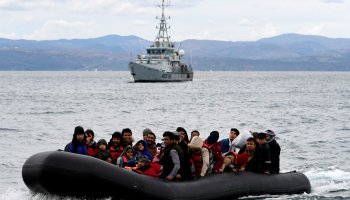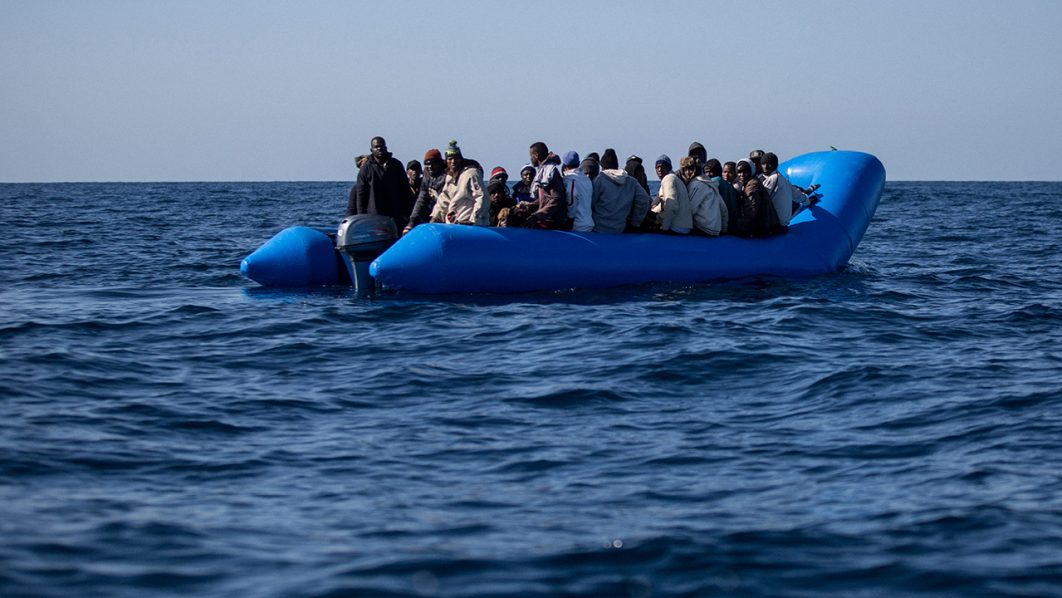
Tobruk (Diplomat.so) - Libyan semi-government coastal security units in Tobruk intercepted 46 irregular migrants aboard an inflatable boat off Libya's Tobruk coast on Saturday, June 27, en route to Italy attempt journey.
Local semi-government maritime personnel said the inflatable vessel was detected during coastal patrols and brought back to shore after being halted at sea. The migrants included nationals from Somalia, Sudan, Ethiopia, and Bangladesh, according to field officers involved in the operation.
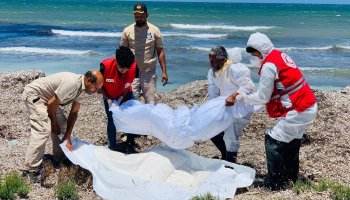
A semi-government maritime coordinator in Tobruk, speaking on condition of attribution, said: "The boat was dangerously overloaded and unfit for sea travel. We intervened to prevent a possible tragedy offshore.”
A local fisherman who observed the incident told Diplomat News Network: "The boat was visible early in the morning. It was crowded and drifting slowly before patrol units arrived and redirected it toward the coast.”
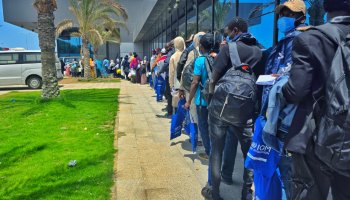
A humanitarian worker in Tobruk said: "There is confusion over responsibility once migrants are returned. Multiple authorities operate without clear coordination, and resources are limited.”
The city of Tobruk in eastern Libya is not under the control of a single militia, but instead operates within a fragmented and layered security environment shaped by Libya’s broader political divisions. Since the post-2014 conflict period, security in the area has largely been influenced by armed formations and military units aligned with eastern-based authorities, alongside locally recruited security personnel and tribal groups that contribute to maintaining order through localized arrangements. This overlapping security structure has created a situation in which stability is maintained through coordination among multiple actors rather than centralized control by one dominant force.
Libya remains a key departure point for irregular migration toward Europe, driven by economic hardship and instability. The country’s coastal control is divided among semi-government forces, local armed formations, and competing administrative bodies in the east and west, complicating unified maritime enforcement and migrant reception procedures, particularly along eastern coastal departure points such as Tobruk corridor.
A migration analyst, speaking to Diplomat News Network, said: "Interceptions continue because structural drivers of migration remain unchanged, while fragmented coastal authority limits consistent policy enforcement along key routes.”
The latest interception underscores ongoing pressure along Libya’s northeastern coastline, where semi-government units and local actors continue to manage maritime activity amid limited coordination.
Migrants attempting crossings remain exposed to high-risk conditions at sea and uncertain outcomes upon return to shore as weather conditions continue to favor small vessel departures during summer months.