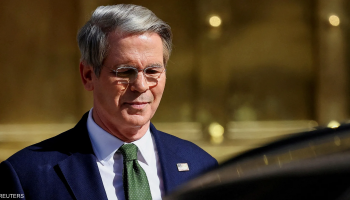
Washington, D.C. (Diplomat.so) - Massad Fares Boulos, Senior Advisor to the U.S. President on Arab and Middle Eastern Affairs and Senior Advisor for Africa at the U.S. Department of State, said on Wednesday, June 17, that the United States is advancing efforts to establish a power-sharing agreement between Libya's eastern and western administrations aimed at unifying the country's fractured political institutions.
Boulos said the U.S. initiative seeks to bring Libya’s rival governing structures under a single national authority while simultaneously encouraging expanded American investment in the country’s oil sector. Speaking to the Financial Times, Boulos stated that Washington’s objective is to "have one unified government and unify all institutions,” describing the proposal as complementary to ongoing United Nations-led political processes.
He said the approach is being developed alongside economic engagement strategies designed to strengthen Libya’s energy production capacity and attract foreign investment. "Our plan is to have one unified government and unify all institutions,” Boulos said, emphasizing that political stabilization and economic revival are being pursued in parallel.
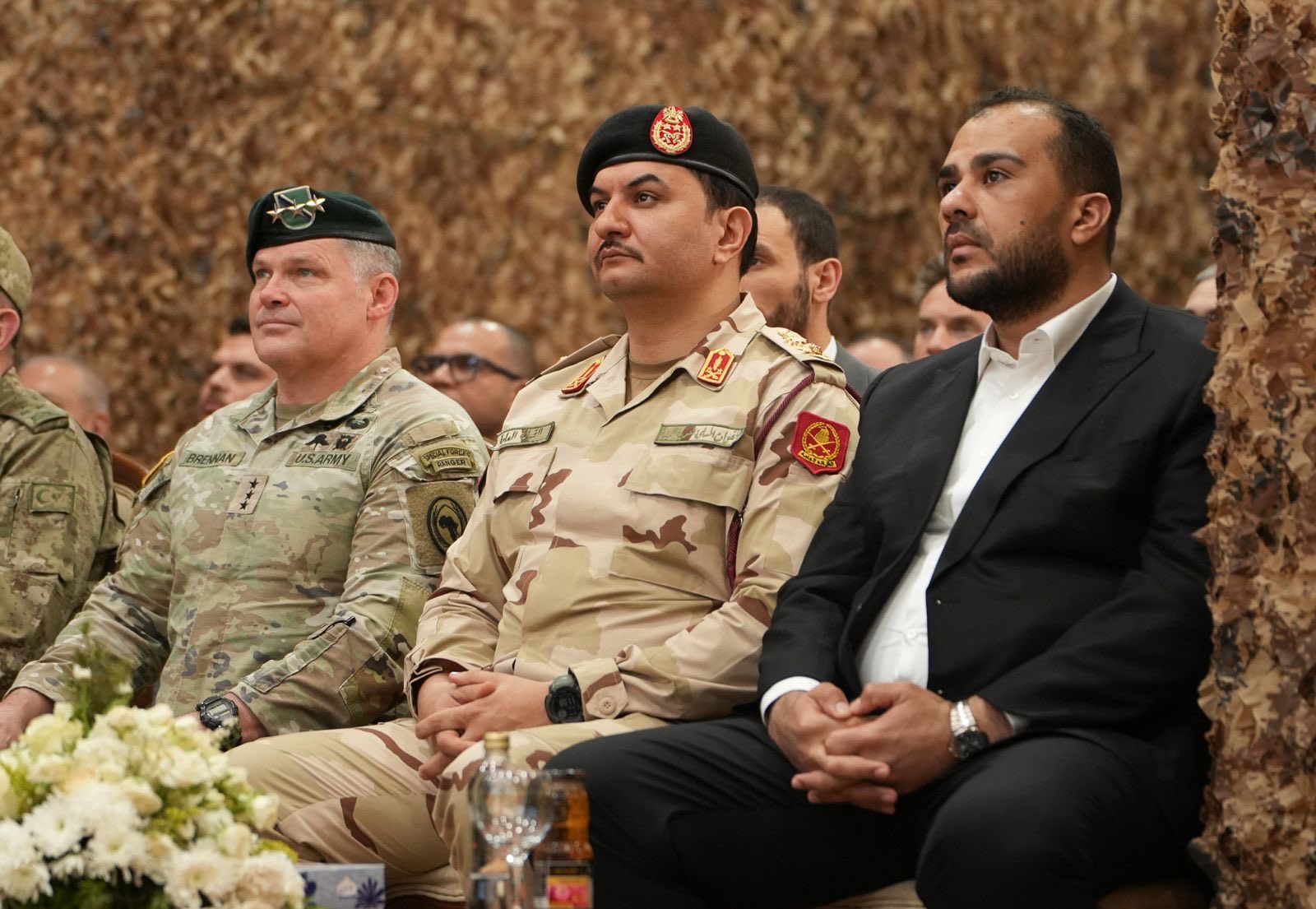
Sources cited by the Financial Times and quoted by the newspaper said the proposed framework envisions a leadership arrangement in which Saddam Haftar, son of eastern Libya’s military commander Khalifa Haftar, would assume the role of head of an executive presidential council under the planned power-sharing structure. The sources said the proposal is intended to balance authority between Libya’s rival power centers while maintaining existing institutional figures in parallel governing roles during a transitional phase.
According to the same sources, Abdulhamid Dbeibah, Prime Minister of the UN-recognized Government of National Unity in Tripoli since 2021, would remain in his position under the arrangement, while a close relative of his would take on a national security-related portfolio.
Saddam Haftar currently serves as deputy commander of the Libyan Arab Armed Forces led by his father in the east, where rights groups have documented restrictions on political opposition and allegations of coercive practices against dissenting voices. Dbeibah’s government, meanwhile, relies on alliances with armed groups in western Libya, some of which have been accused by UN-linked bodies of abuses including arbitrary detention, torture, and migrant smuggling.
Libya, which holds the largest proven oil reserves in Africa, continues to experience institutional division between authorities in the east and west more than a decade after the 2011 uprising that removed former leader Muammar Gaddafi. The country’s oil output has repeatedly been disrupted by political rivalries and armed group influence over key infrastructure.
Boulos noted that the initiative also involves coordination with Libyan stakeholders on transitional arrangements that could eventually support national elections. He described the proposal as a "short-term arrangement” intended to bridge governance gaps while longer-term electoral processes are prepared.
"Any political settlement must reflect the reality of institutions on the ground while creating a pathway toward unified governance,” Boulos said.
Massad Boulos also highlighted growing engagement between U.S. energy firms and Libya’s oil sector, noting that companies such as ConocoPhillips and Chevron have already signed agreements in 2026. He said increased production could significantly elevate Libya’s global energy role.
Claudia Gazzini, analyst at the International Crisis Group, said the initiative risks repeating past diplomatic failures. "This is wishful thinking,” she said, arguing that entrenched divisions between eastern and western power centers remain too deep for immediate reconciliation.
Tim Eaton, senior researcher at Chatham House, said Libya’s competing authorities remain dependent on armed groups, limiting their capacity to implement shared governance. He said there is concern that any transitional arrangement could be used to consolidate existing power rather than facilitate political reform.
Libya has remained politically fragmented since the post-2014 split between rival governments, with multiple armed factions maintaining influence over state institutions and resources. Observers note that the success of any new framework will depend on whether both sides are willing to accept meaningful power-sharing arrangements under unified national structures.