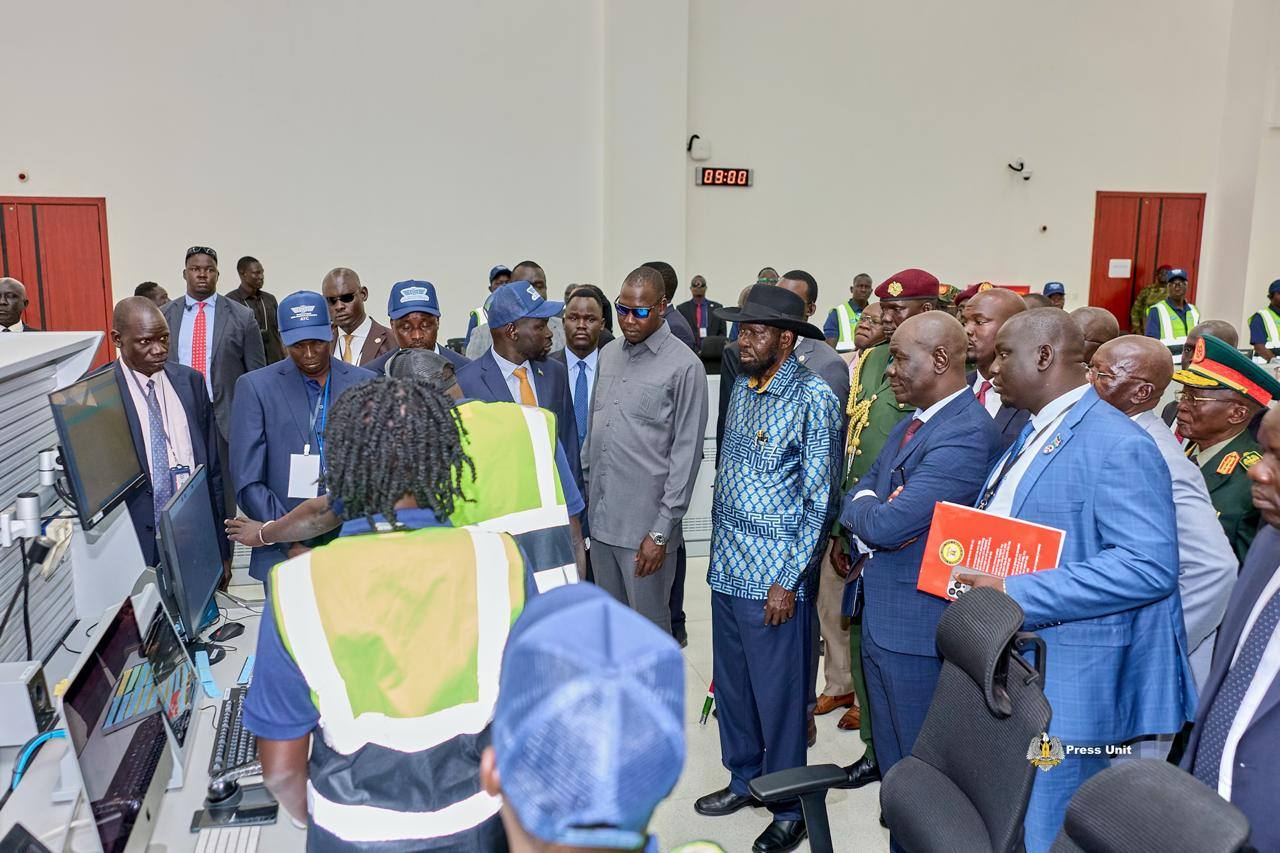
Juba (Diplomat.so) - President Salva Kiir Mayardit of the Republic of South Sudan on Monday, May 18, inaugurated the country's Air Traffic Management System at Juba International Airport, activating full national control of airspace operations in a key sovereignty milestone since independence on July 9, 2011.
The commissioning took place at the newly built control tower at Juba International Airport, where government officials formally launched an integrated radar-based monitoring system designed to independently manage civilian flight movements across South Sudan’s airspace. Authorities described the development as part of broader state efforts to consolidate control over strategic infrastructure and improve aviation safety governance.
President Salva Kiir Mayardit said the system reflects national progress in reclaiming operational authority over critical sectors. "This is a proud moment for all South Sudanese. We have finally reclaimed full control over our airspace,” he said during the ceremony attended by senior government officials, civil aviation authorities, and international aviation partners.
Civil aviation officials confirmed that the system includes multiple radar installations intended to strengthen surveillance coverage across major domestic and international flight corridors. The infrastructure enables real-time tracking of aircraft and centralized coordination of air traffic services, replacing previous dependence on external navigation support systems.
An aviation project official told Diplomat News Network that the system "represents a major step forward in operational independence and technical modernization,” noting that more than 80 trained South Sudanese personnel now manage air traffic operations following structured training programs conducted with international aviation experts.
An African Civil Aviation Commission (AFCAC) representative stated, "This upgrade strengthens aviation safety and enhances coordination across East African airspace networks,” highlighting the system’s regional significance for cross-border flight reliability and air traffic efficiency.
South Sudan’s aviation milestone comes against a broader national backdrop shaped by years of political instability and armed conflict following independence in 2011. The country experienced a civil war that erupted in 2013, leading to widespread displacement, reported killings, and humanitarian crises that affected millions of civilians across multiple regions. Although peace agreements have reduced large-scale fighting in recent years, localized insecurity and displacement challenges have persisted in some areas, shaping the country’s development priorities, including infrastructure recovery.
At Juba International Airport, the inauguration included a live demonstration inside the control center, where controllers monitored radar screens displaying active flight routes. Security personnel maintained controlled access as officials toured operational sections under supervision of airport authorities.
The Civil Aviation Authority said the new system allows South Sudan to independently manage overflight operations and collect associated revenues, ending reliance on external airspace management services. Officials added that this shift is expected to improve regulatory oversight and strengthen state revenue collection from international air traffic routes passing through South Sudanese skies.
Regional aviation observers note that the development aligns with continental efforts to modernize air navigation infrastructure and improve safety compliance as air traffic demand continues to grow across East Africa.