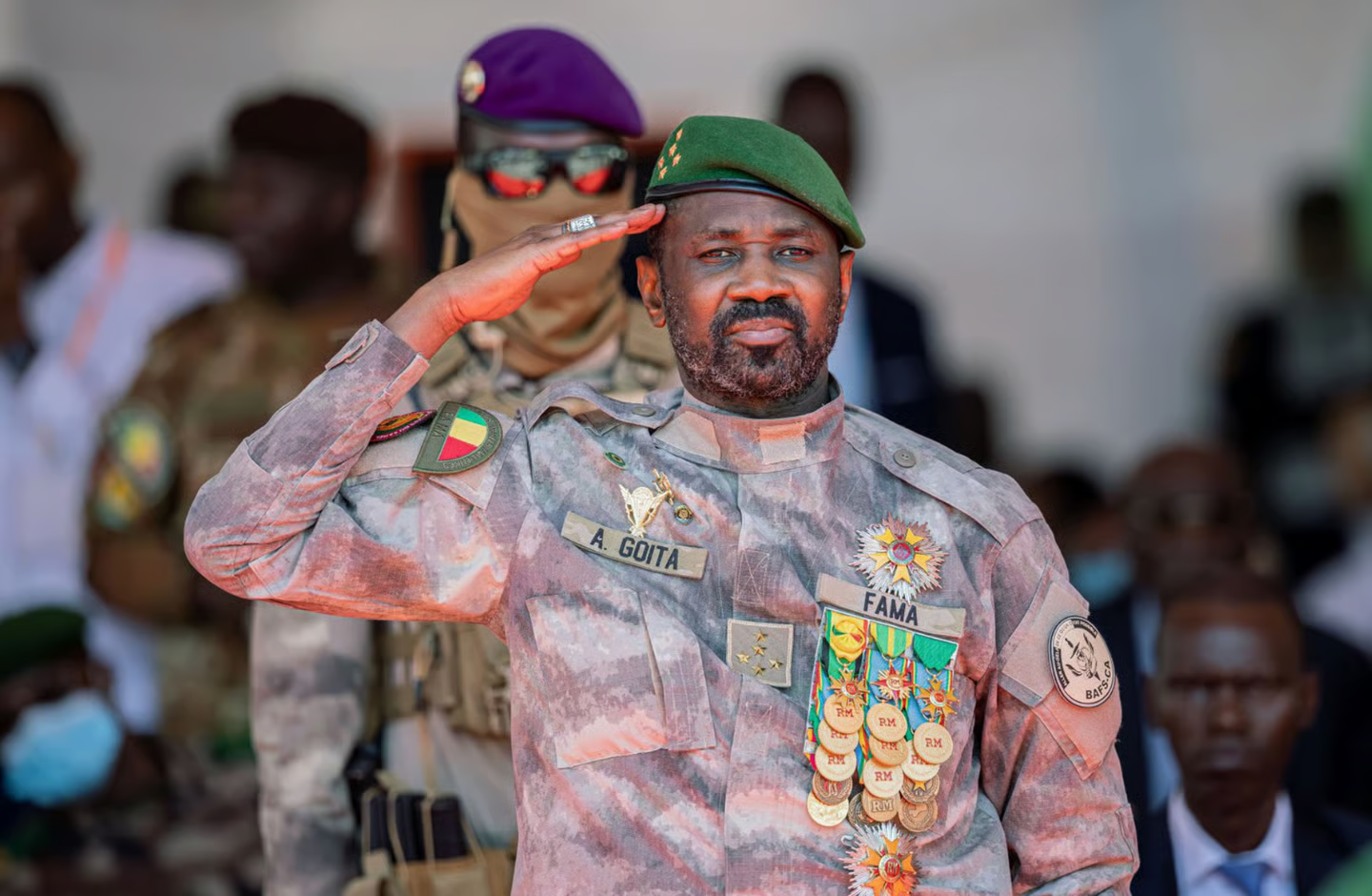
Bamako (Diplomat.so) - Mali's transitional President Assimi Goïta assumed the additional role of defence minister on Monday, May 5, following the killing of Defence Minister Sadio Camara in coordinated attacks across the country.
State broadcaster ORTM announced the decision, citing a presidential decree that consolidates control of the defence portfolio under Goita while he retains his position as head of state. The decree comes amid heightened security concerns after large-scale assaults by armed groups targeting military positions and strategic areas, including zones near the capital.
General Oumar Diarra, previously serving as chief of staff of the armed forces, has been appointed as delegate minister to assist in overseeing defence operations. Officials indicated that the restructuring aims to streamline command and response efforts following the recent escalation in violence.
Escalation of Violence
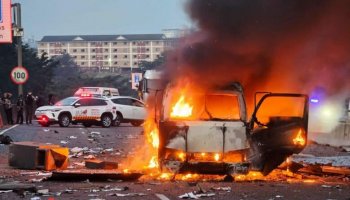
The leadership change follows the death of Sadio Camara, who was killed in a car bomb explosion at his residence during a wave of coordinated attacks attributed to al-Qaeda-linked Jama’at Nusrat al-Islam wal-Muslimin (JNIM) in collaboration with Tuareg separatist factions. The attacks, described by security analysts as the most extensive in nearly 15 years, resulted in at least 23 fatalities.
The United Nations children’s agency UNICEF reported that civilians, including children, were among those killed and injured. Witnesses in Bamako described scenes of heightened military presence, with checkpoints reinforced and armored vehicles patrolling key roads.
"There was panic in the early hours after the explosions,” said a Bamako resident, who spoke to Diplomat News Network on condition of attribution. "Security forces quickly moved into position, but people remain anxious about what could come next.”
Armed Groups Expand Influence
The attacks underscore the growing operational coordination between extremist groups and separatist factions. JNIM maintains influence across central and northern Mali, while the Liberation Front for Azawad (FLA), a Tuareg separatist coalition, continues to push for an independent state in the north.
Recent offensives enabled these groups to consolidate control over the northern town of Kidal, a longstanding strategic stronghold. Armed factions have also expressed ambitions to expand into key cities such as Gao, Timbuktu, and Menaka.
A regional security analyst, Ibrahim Traore, told Diplomat News Network that the cooperation between these groups reflects "a convergence of tactical interests rather than ideological unity.”
"They share terrain, logistics networks, and recruitment pools,” Traore said. "This creates a more complex threat environment for Malian forces.”
Shifting Security Alliances
Mali’s security landscape has undergone significant transformation since the military coups of 2020 and 2021 that brought Goita to power. The government has since severed ties with France, its former colonial power, and expelled French troops along with United Nations peacekeeping forces.
In their place, Malian authorities turned to Russian support, including personnel previously associated with the Wagner Group. That presence has since transitioned into the Africa Corps, now reportedly operating under the direct authority of Russia’s defence ministry.
A senior Malian military official, speaking publicly at a briefing in Bamako, said the restructuring of defence leadership is intended to "ensure decisive and unified command during a critical security phase.”
Impact on Civilians and Capital Stability
In the aftermath of the attacks, armed groups announced a blockade of Bamako, citing alleged civilian support for the government. However, residents and observers report that the blockade has only been partially effective, with movement continuing in parts of the capital.
Markets in Bamako remained open on Monday, though attendance appeared reduced. "People are cautious, but life continues,” said Aissata Moussa, a local trader. "We are used to uncertainty, but this situation feels more serious.”
Humanitarian agencies have raised concerns about the potential for further civilian displacement if violence spreads toward densely populated areas.
Political and Strategic Implications
Goita’s decision to assume the defence portfolio signals a consolidation of power at a time of mounting pressure on the transitional government to demonstrate control over national security. The move also raises questions about governance balance, as Mali continues under a transitional framework with extended presidential mandates.
The country has faced persistent instability since 2012, with overlapping insurgencies and governance challenges complicating efforts to restore order.
Observers note that the effectiveness of the new defence arrangement will depend on coordination between military leadership, intelligence operations, and international partnerships.
The coming weeks are expected to test the government’s capacity to respond to evolving threats, as armed groups continue to exploit vulnerabilities across Mali’s vast and contested territory.