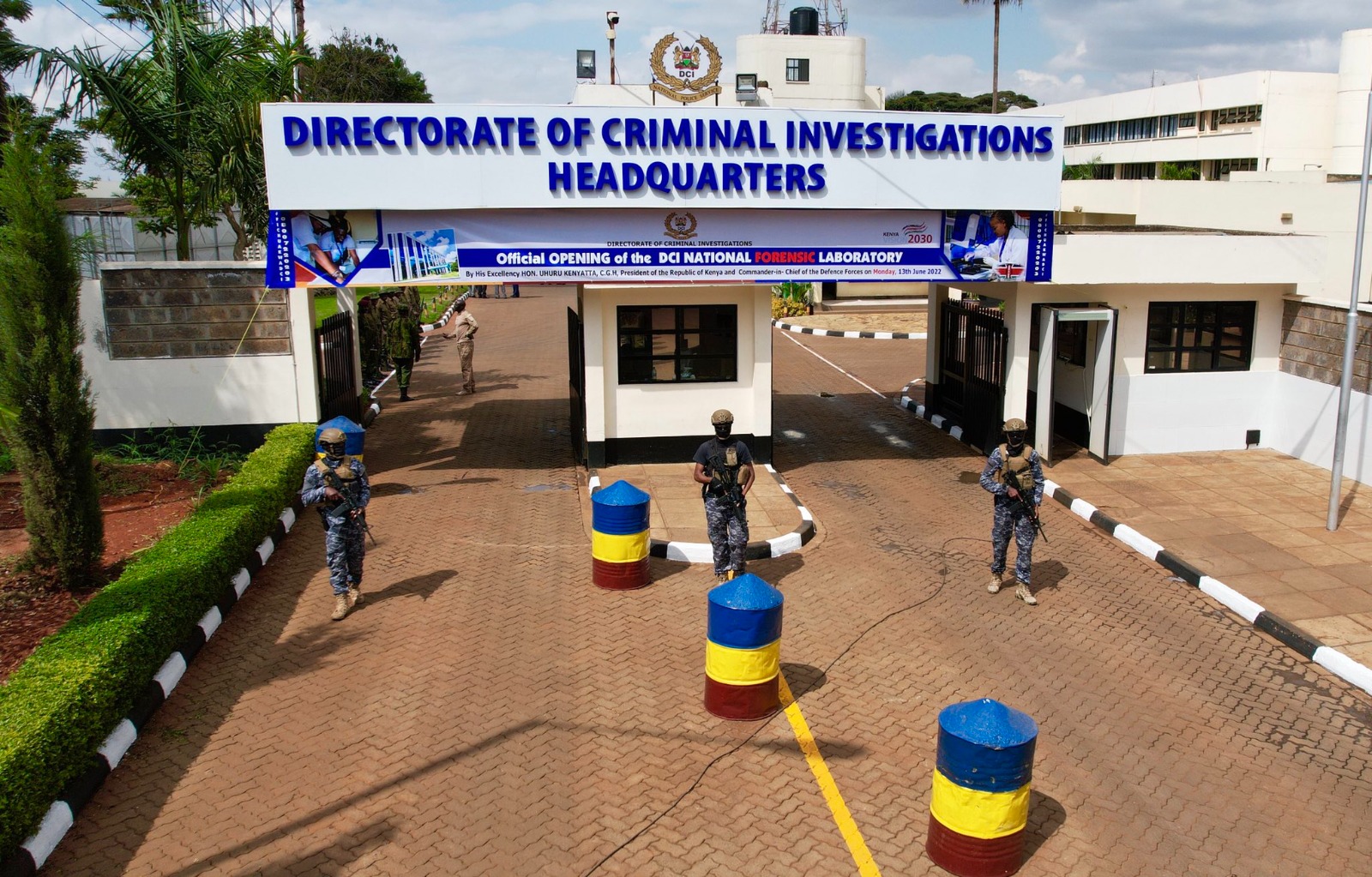
Nairobi (Diplomat.so) – Kenya Directorate of Criminal Investigations (DCI) on Monday, May 4, 2026, opened an investigation into a disputed land ownership case in Ruai, Nairobi, involving competing claims by Catherine Wanderi and Abdilatif Abdikadir over a parcel under development.
Complaint and Trigger of Investigation
The case began on April 24, when Catherine Wanderi reported to DCI Ruai that an unidentified individual had begun construction on land she asserts belongs to her. She alleged unauthorized entry and expressed concern that her property rights were being violated without due process.
DCI officers later visited the site on April 28, where they observed ongoing construction activity, including partially completed foundations and stored building materials. Wanderi was instructed to formally document her complaint and submit supporting ownership evidence before investigations could proceed fully.
She initially left the station before completing her statement but later returned and submitted documentation, including a share certificate linked to Embakasi Ranching Company, which she claims supports her ownership rights.
Competing Ownership Claims
On May 2, Abdilatif Abdikadir was summoned by investigators, where he recorded a statement and presented a lease certificate indicating he acquired the property in 2017 through a transaction facilitated by Embakasi Ranching Company. Following preliminary review, he was instructed to halt all construction activities pending verification of ownership documents.
Investigation officers familiar with the inquiry indicated that both parties’ documentation will undergo detailed verification, including cross-checking with land registries and records held by the land-buying company involved.
DCI Mandate in Land Disputes
The Directorate of Criminal Investigations is responsible for probing potential criminal conduct such as fraud, forgery, impersonation, or illegal acquisition of property. However, it does not have legal authority to determine ownership of land or issue title rulings.
Legal analyst Omondi Mutiso explained the distinction, noting: "The DCI investigates whether a crime occurred in the acquisition or transfer process. The question of ownership itself is determined by the Environment and Land Court.”
He added that once investigations are concluded, findings are forwarded to the Office of the Director of Public Prosecutions (ODPP), which decides whether criminal charges should be pursued.
Public Activity and Local Observations
At the DCI Ruai offices, residents and involved parties were seen arriving throughout the day, submitting documents and engaging with investigators. Security presence remained steady as officers processed statements in the administrative section.
A local resident, Stephen Onyango, said land disputes in the area have become increasingly common. "Every few months there is a case like this. People buy land and later discover overlapping claims,” he noted.
Another resident, Rahima Noah, pointed to rapid urban expansion as a contributing factor, saying unclear documentation processes often lead to conflicting ownership assertions.
Broader Land Governance Context
Ruai, located on Nairobi’s eastern corridor, has experienced rapid real estate growth driven by population expansion and demand for affordable housing. Many parcels are tied to land-buying companies such as Embakasi Ranching Company, which have historically faced disputes involving share allocations and competing certificates.
Analytical Perspective
The case highlights the intersection between criminal investigation and civil adjudication in Kenya’s land governance system. While the DCI addresses possible fraud or irregularities in transactions, ownership disputes ultimately fall under the jurisdiction of the Environment and Land Court.
The investigation is expected to continue through document verification, registry checks, and interviews as authorities determine whether any criminal activity occurred in the contested transaction chain.