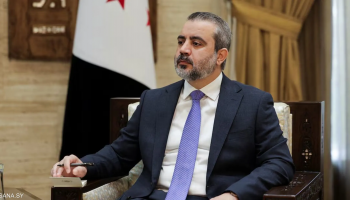
Port-au-Prince (Diplomat.so) –Kenyan Cabinet Secretary for the Interior and National Administration, Onesimus Kipchumba Murkomen, on Monday, April 27, led Kenya's final drawdown of police officers, concluding the Multinational Security Support mission at Toussaint Louverture International Airport in Haiti.
Final drawdown
The ceremony at the main international airport in Port-au-Prince marked the formal end of Kenya’s 18-month leadership of the United Nations-authorised Multinational Security Support (MSS) mission, which deployed hundreds of officers to assist Haitian authorities in stabilising areas affected by armed gangs and institutional breakdown.
Murkomen conveyed greetings from President William Samoei Ruto and reiterated Kenya’s commitment to international peace operations, saying the deployment was consistent with global cooperation principles advanced at the United Nations General Assembly in 2023.
Speaking in remarks reported by Diplomat News Network, Murkomen said the operation demonstrated Kenya’s ability to contribute to complex security environments beyond its borders while working alongside partner states and Haitian security institutions.
"The critical infrastructure has been secured, public services restored, and confidence in institutions is growing,” Murkomen said during the ceremony, where Haitian police officials, international diplomats, and Kenyan officers were present on the tarmac under heightened security.
Deployment scale
Kenya had pledged 1,000 police officers under United Nations Security Council Resolution 2699 of 2023, later reaffirmed under Resolution 2793 of 2025. However, logistical and operational constraints resulted in a deployment of 730 officers, with the first contingent arriving in June 2024.
The Kenyan-led mission worked alongside personnel from the Bahamas, Belize, Canada, El Salvador, Guatemala, and Jamaica, supported by international partners including the United States, France, Germany, South Korea, and Japan.
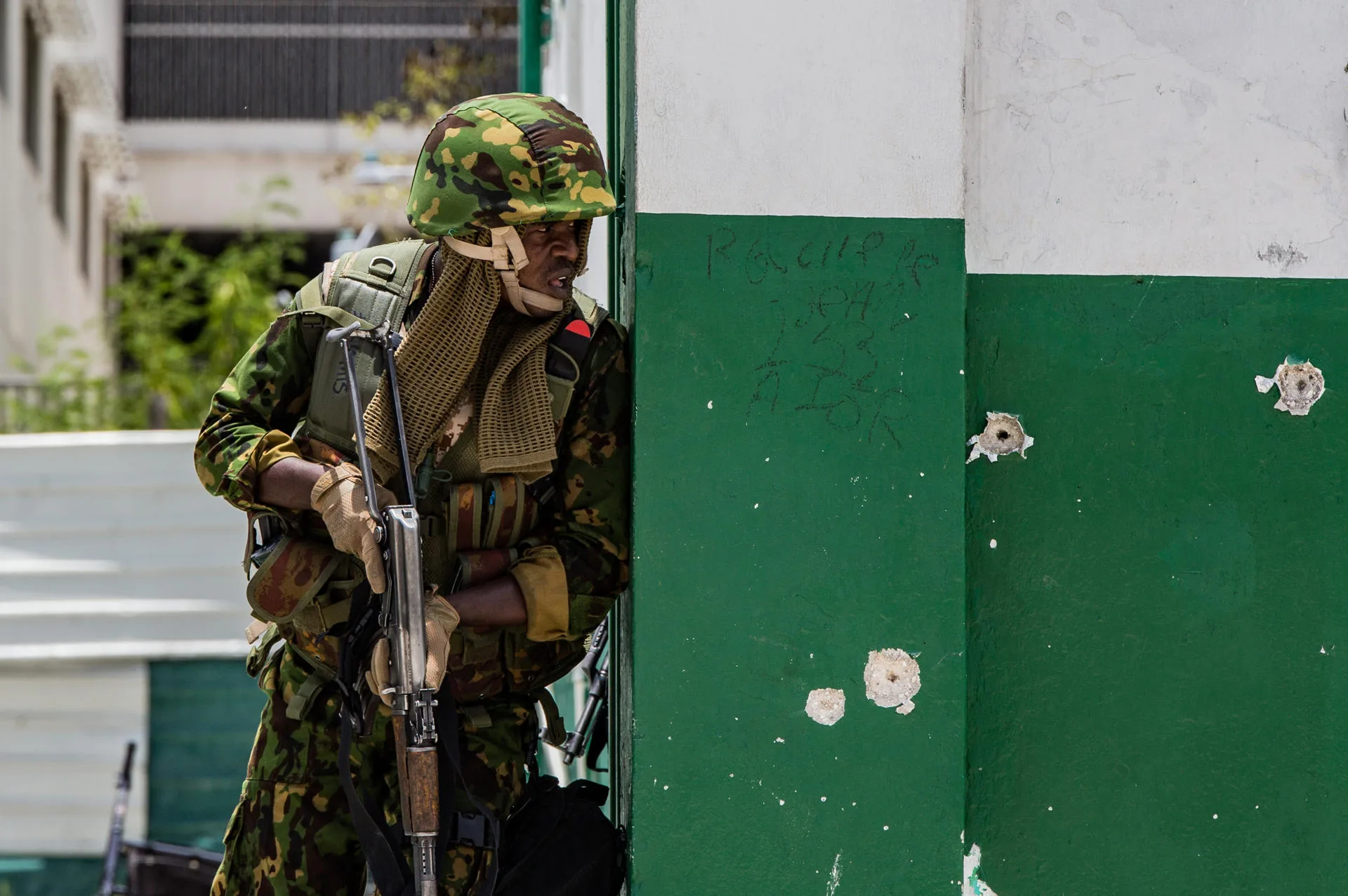
Officials said the mission focused on securing key infrastructure such as airports, seaports, and transport corridors, while supporting Haitian National Police operations in areas previously controlled or heavily influenced by armed groups.
Security gains and operational challenges
Kenyan authorities stated that the deployment contributed to restoring state presence in parts of Port-au-Prince and surrounding regions, enabling the reopening of schools, hospitals, and commercial activity.
Murkomen described the return of displaced families to their homes as one of the clearest indicators of progress.
"We cannot be more proud of their achievements as a country,” he said, referring to the officers who served in the mission under difficult operational conditions.
At Toussaint Louverture International Airport, observers noted tightly coordinated movements of security personnel during the drawdown, with residents and local workers gathering at perimeter points to watch the departure of Kenyan units. Some residents waved and took photographs as armored vehicles and transport convoys exited secured zones.
A Haitian logistics worker near the airport perimeter, who identified himself as Yves Samuel, said the Kenyan presence had been visible in daily operations. "We saw them every day at checkpoints and roads. Their departure feels like the end of a long chapter,” he said.
Casualties, allegations, and accountability
The mission also recorded fatalities among deployed officers. Murkomen paid tribute to APC Samuel Tomoi Kaetuai, APC Benedict Kabiru, and Corporal Kennedy Nzuve, describing them as officers who "made the ultimate sacrifice in the line of duty.”
Kenyan officials acknowledged that the mission faced allegations of misconduct during its deployment period but stated that all claims were investigated in line with accountability procedures.
Murkomen emphasised that Kenya maintained a commitment to professionalism throughout the operation, noting that disciplinary and oversight mechanisms were applied where necessary.
A Haitian civil society representative, speaking on condition of attribution, said perceptions of the mission were mixed. "There was relief in some neighbourhoods, but also frustration that gangs still hold large areas of the capital,” the source said.
Transition to the Gang Suppression Force
With the MSS mission concluded, operational responsibility is set to transition to the newly established Gang Suppression Force (GSF), authorised by the United Nations Security Council as a successor framework aimed at addressing persistent gang violence in Haiti.
A GSF statement referenced the outgoing Kenyan contingent, stating: "When Haiti needed support most, Kenya answered the call. This commitment to peace and service beyond borders leaves a lasting legacy.”
The transition occurs amid continued insecurity in Haiti, where armed groups maintain influence across significant portions of Port-au-Prince and other urban and rural regions. United Nations estimates indicate that over 90 percent of the capital has experienced varying levels of gang control or interference during recent years.
Regional and international implications
Analysts note that Kenya’s leadership role in the MSS mission marked a rare instance of an East African state heading a large-scale multinational security operation outside the continent. The deployment also reflected increased reliance on regional contributors for international stabilization efforts under UN mandates.
Security observers caution that the operational gains achieved during the mission remain fragile, given Haiti’s unresolved political transition and limited state capacity. The country has not held elections since 2016, and governance structures continue to rely on interim arrangements.
Humanitarian agencies report that displacement remains high, with more than one million people affected by insecurity-driven movement during the period of the mission.
Outlook after withdrawal
As the final Kenyan contingent departed Port-au-Prince, officials described the moment as both an operational conclusion and a diplomatic milestone.
Murkomen said the relationship between Kenya and Haiti would continue beyond the deployment, pointing to shared historical narratives of independence and resilience.
At Toussaint Louverture International Airport, Haitian police units assumed expanded responsibility for security coordination following the exit of Kenyan forces, while international partners prepared for the next phase of the GSF framework.
The conclusion of Kenya’s deployment closes a significant chapter in international efforts to stabilise Haiti, leaving both gains and unresolved challenges as the country enters a new phase of security assistance and political transition.