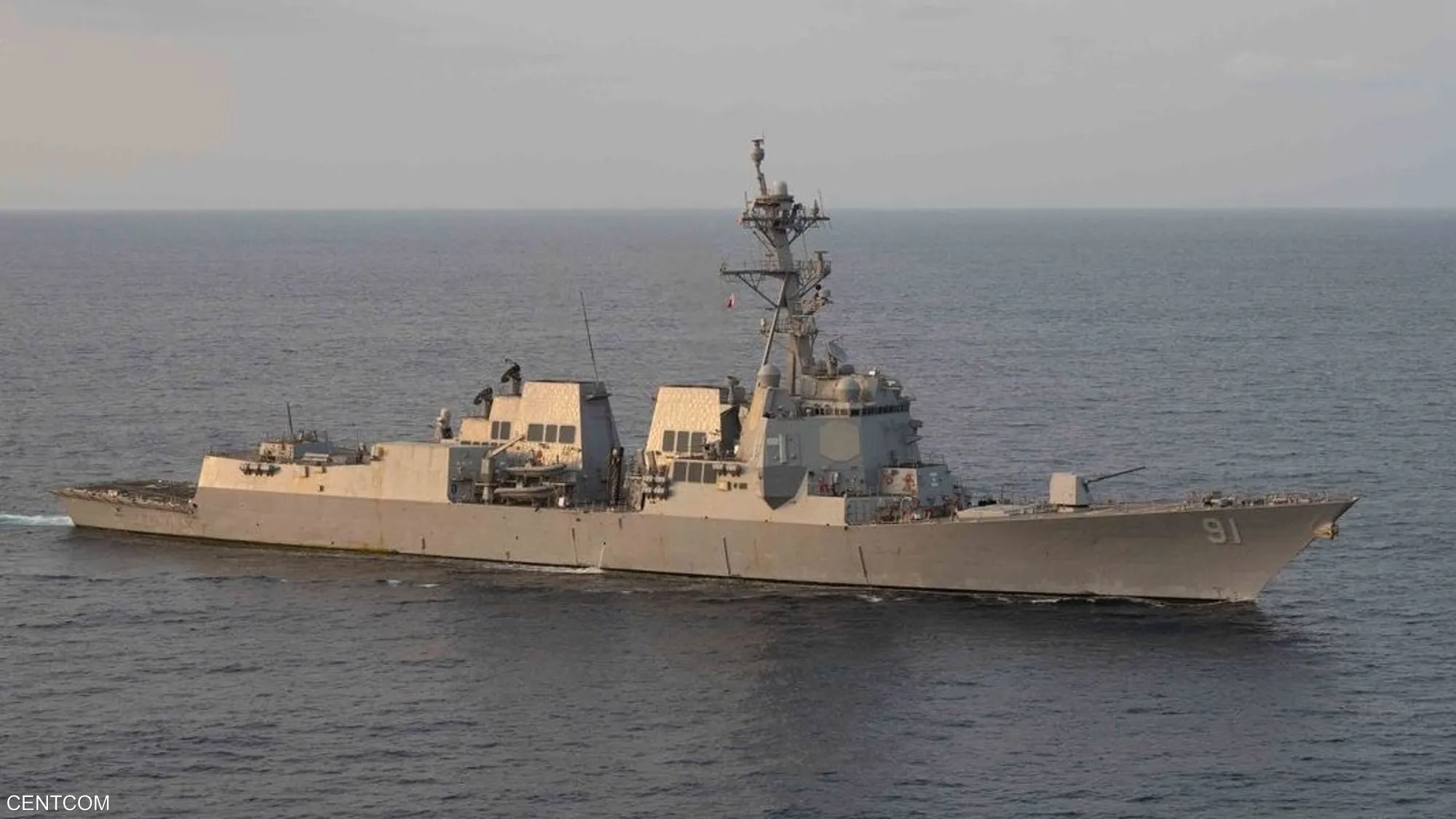
Washington, D.C. (Diplomat.so) – U.S. Central Command (CENTCOM) announced on Saturday, that American naval forces, including the guided-missile destroyer USS Pinckney, have intensified patrol operations in waters near the Strait of Hormuz to support what it described as ongoing maritime containment measures targeting Iranian shipping routes.
Escalation in the Strait of Hormuz
CENTCOM stated in a message posted on social media platform X that the USS Pinckney is conducting "routine patrols in international waters” as part of expanded maritime security operations, while asserting that the broader enforcement posture has contributed to a complete halt in commercial shipping linked to Iran.
The command further claimed that maritime movement "to and from Iranian ports has effectively stopped,” marking one of the most severe disruptions reported in recent years along one of the world’s most strategically important energy corridors.
The Strait of Hormuz, a narrow passage connecting the Persian Gulf with the Arabian Sea, has long been a critical artery for global energy transport, with estimates traditionally placing nearly one-fifth of global oil shipments passing through it.
Closure of Maritime Passage
Iranian authorities responded quickly to these developments, announcing the re-closure of the Strait of Hormuz after a brief reopening period lasting less than three to four hours on Friday evening. The Islamic Revolutionary Guard Corps (IRGC) said maritime traffic would remain blocked until what it described as a full lifting of U.S. pressure measures.
A senior IRGC commander stated, "The strait will remain closed until the American blockade is lifted. No vessel will be permitted to operate freely in waters adjacent to Iranian-controlled zones,” according to remarks circulated through state-linked channels.
The warning was accompanied by an explicit deterrent message. The IRGC added that any vessel attempting to navigate near the area without authorization would be treated as "cooperating with hostile forces” and could be targeted.
Security Alerts
The escalation has coincided with multiple reported maritime security incidents in the region. The United Kingdom Maritime Trade Operations (UKMTO) center reported that armed Iranian patrol boats allegedly fired upon a commercial tanker transiting the Strait of Hormuz, approximately 37 kilometers northeast of Oman’s coastline.
In its advisory, UKMTO stated that two Iranian naval craft approached the vessel before opening fire without issuing prior radio warnings. The tanker crew reported evasive maneuvers as the ship continued its transit under heightened alert conditions.
Separately, UKMTO also reported damage to cargo containers aboard another commercial vessel after it was struck by an unidentified projectile, though no fire or casualties were confirmed.
A third advisory issued by maritime security group Vanguard described a passenger vessel sailing under the Maltese flag as having experienced close proximity encounters with fast-moving boats during passage through the same maritime corridor.
A regional shipping agent, speaking on condition of anonymity, told Diplomat News Network that "operators are now reconsidering routes entirely due to unpredictable enforcement behavior and rising insurance premiums,” adding that "even short delays are translating into significant financial losses.”
Strategic Messaging
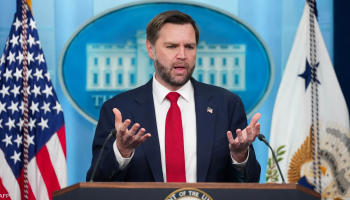
In Washington, U.S. President Donald Trump addressed the situation during remarks at the White House, stating that Iran would not succeed in exerting pressure on the United States through maritime disruption.
"We are talking to them. They wanted to close the Strait again, and they cannot blackmail us,” Trump said, adding that U.S. officials were closely monitoring developments and expected updated intelligence assessments "by the end of the day.”
He further described ongoing diplomatic engagement with Tehran as "very early-stage discussions,” while emphasizing that Washington would maintain its maritime enforcement posture if no agreement is reached.
U.S. officials cited by the Wall Street Journal, speaking on background, indicated that American forces are preparing potential operations targeting Iranian-linked oil tankers in international waters, including possible boarding and seizure actions.
Strategic Corridor Under Pressure
The Strait of Hormuz has historically served as a vital chokepoint for global energy markets, facilitating the movement of crude oil and liquefied natural gas from Gulf producers to Asia, Europe, and North America. Maritime analysts estimate that disruptions in the corridor can rapidly influence global energy pricing and shipping insurance markets.
Tensions in the region have intensified following failed diplomatic talks between Washington and Tehran held earlier this month in Islamabad, which did not produce a framework for de-escalation. Subsequent naval deployments and reciprocal restrictions have contributed to heightened uncertainty among commercial shipping operators.
Regional analysts note that the current confrontation reflects a broader pattern of maritime signaling between the two sides, where naval presence and control of shipping lanes are used as strategic leverage alongside diplomatic negotiations.
Regional and Global Implications
Energy market specialists warn that prolonged disruption in the Strait of Hormuz could trigger immediate volatility in global oil prices, particularly if commercial tanker movements remain restricted. Shipping insurers have already begun reassessing risk premiums for vessels operating in the Gulf.
Security analysts also highlight the risk of miscalculation in congested waters, where multiple naval and commercial actors operate simultaneously under heightened alert conditions.
An independent maritime security expert based in the Gulf region noted that "any sustained closure or selective enforcement of passage rights effectively transforms the Strait into a controlled pressure point in global trade dynamics,” emphasizing the potential for wider economic spillover effects.
Diplomatic observers say the situation is now entering a critical phase, where maritime enforcement actions, political signaling, and unresolved negotiations are converging into an increasingly unstable environment.
Outlook for Maritime Stability
The immediate trajectory of the crisis will likely depend on whether ongoing U.S.-Iran communications produce any framework for de-escalation or whether naval enforcement expands further into interdiction of commercial vessels.
With both sides maintaining firm positions and maritime incidents continuing to be reported, shipping activity in the region remains under severe strain, raising concerns over sustained disruption to one of the world’s most important energy transit corridors.