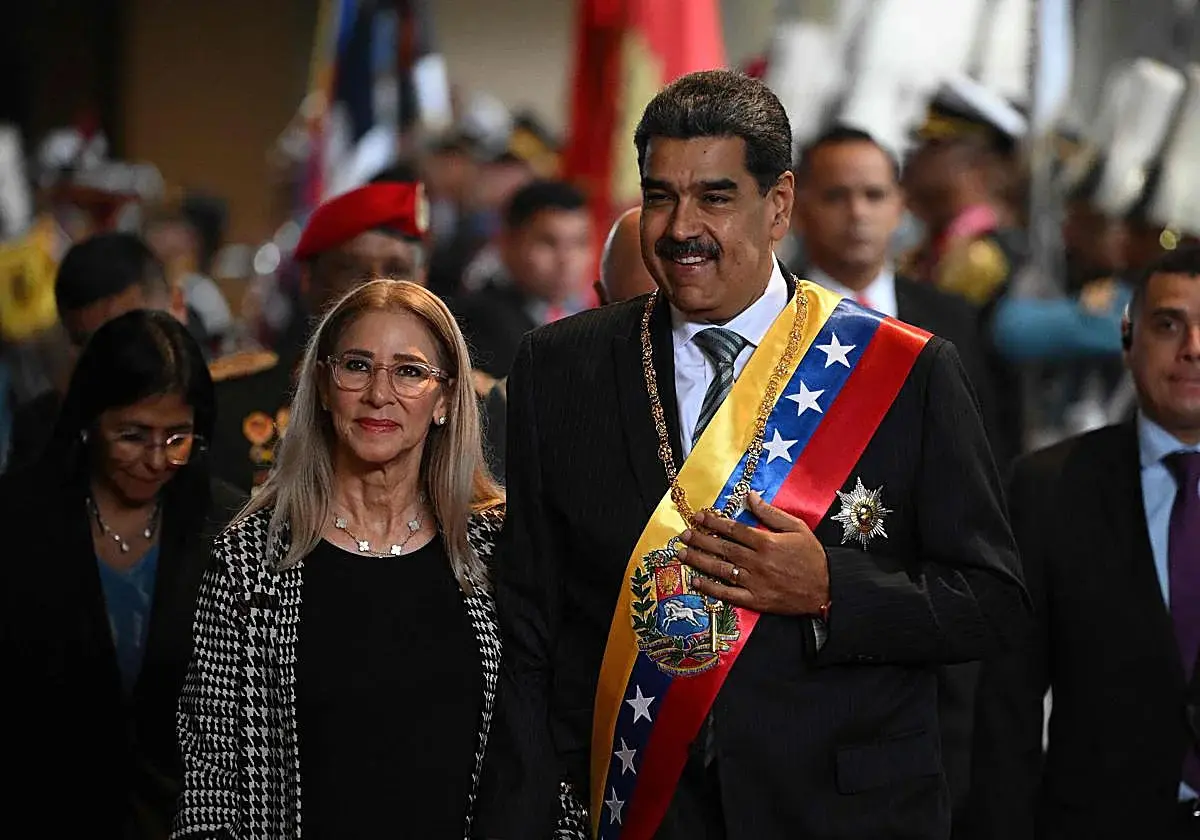
New York (Diplomat.so) – The Venezuelan president abducted and imprisoned by the United States of America, Nicolás Maduro, appeared in United States federal court in Manhattan on Thursday, as his legal team contested narcotics‑related charges and a dispute over access to defense funding.
President Maduro, 63, and his wife Cilia Flores, 69, both pleaded not guilty to a series of "narco‑terrorism” and cocaine trafficking accusations in the Southern District of New York, remaining detained at the Metropolitan Detention Center in Brooklyn following their January capture by U.S. authorities in Caracas.
This marks their first court appearance since the initial indictment, during which Maduro protested his detention, stating, "I am not guilty. I am a respectable man and the constitutional president of my country,” while Flores also asserted her innocence.
In proceedings before U.S. District Judge Alvin Hellerstein, Maduro’s lawyers argued that U.S. sanctions blocking access to Venezuelan government funds prevent him from fully financing his legal defense, violating his constitutional right to counsel. Defense attorney Barry Pollack told the court, "We are here to ensure that Mr. Maduro has the full and fair defense to which he is constitutionally entitled.” Prosecutors countered that permitting the use of Venezuelan state resources would breach federal sanctions and national security measures.
The U.S. indictment alleges that Maduro oversaw a decades-long narcotics operation facilitating cocaine trafficking into the United States and conspired with designated terrorist groups, claims he and Flores continue to deny. Legal experts note that narcoterrorism cases in U.S. courts are complex and rarely reach conviction, heightening the importance of evidence presented during pretrial hearings.
The case also unfolds against a shifting political landscape in Caracas. Since Maduro’s abduction, interim president Delcy Rodríguez has implemented extensive institutional changes, replacing Maduro loyalists including the defense minister and attorney general, restructuring state institutions, and appointing new ambassadors. Public displays in Caracas, including murals and billboards, continue to show some support for Maduro, though his influence has diminished within the current government.
Observers emphasize that this court appearance highlights broader legal and diplomatic implications. Constitutional scholar Emily Ortiz said, "How the judiciary navigates a defendant’s rights under sanctions regimes could set precedent for future cases involving foreign leaders.” The next hearing date and potential trial schedule remain undetermined, leaving key questions about defense funding and procedural timelines unresolved.