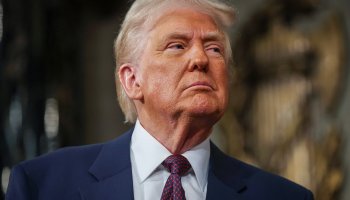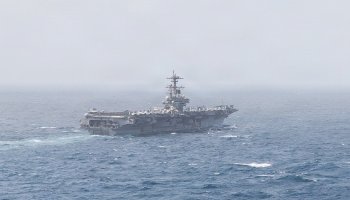
Washington, D.C. (Diplomat.so) – U.S. President Donald Trump said Tuesday, April 21, that U.S. forces intercepted a vessel suspected of carrying sensitive cargo near Iran, as maritime traffic through the Strait of Hormuz sharply declined amid escalating tensions.
The U.S. president’s remarks, delivered during an interview on CNBC, came as American naval forces confirmed the boarding of a small Iranian-flagged container ship identified as "Tuska” off the coast near Iran’s Chabahar port in the Gulf of Oman. Trump suggested the cargo may have originated from China, stating he was "a little surprised” given his reported understanding with Xi Jinping, President of the People's Republic of China, though he provided no direct evidence.
Vessel Seizure
According to the United States Central Command (CENTCOM), the vessel failed to comply with repeated warnings over a six-hour period before U.S. forces boarded it on Sunday. Officials said the ship may have violated a U.S.-enforced maritime blockade targeting shipments deemed potentially linked to Iran’s military programs.
Preliminary assessments by maritime security officials indicate the ship could be carrying "dual-use materials,” a classification that includes items such as industrial metals, piping, and electronic components that may serve both civilian and military purposes. One regional maritime analyst, speaking to Diplomat News Network, said, "The ambiguity around dual-use cargo often places such shipments at the center of enforcement actions, especially under heightened sanctions regimes.”
Satellite imagery reviewed by private data firm Sinomax showed the vessel had previously docked at Chinese ports, including Taicang north of Shanghai in late March, before heading toward the Gulf of Oman. The ship was observed carrying containerized cargo upon arrival in the region.
Conflicting Narratives
Iranian officials strongly condemned the interception. The Foreign Ministry in Tehran described the incident as an "illegal act” and a violation of international law, demanding the immediate release of the vessel and its crew. State media, citing military sources, accused the United States of "armed piracy” and claimed the ship was transporting civilian goods from China.
Foreign Minister Abbas Araghchi stated in a public message that targeting a commercial vessel and detaining its crew constituted a "major breach” of the recently agreed ceasefire. "Iran knows how to defend its interests and resist coercion,” he said.
China also expressed concern. A spokesperson for the Chinese Foreign Ministry urged all parties to adhere to the ceasefire agreement responsibly, warning that forced interdictions risk escalating tensions further.
Strait of Hormuz Traffic Near Standstill
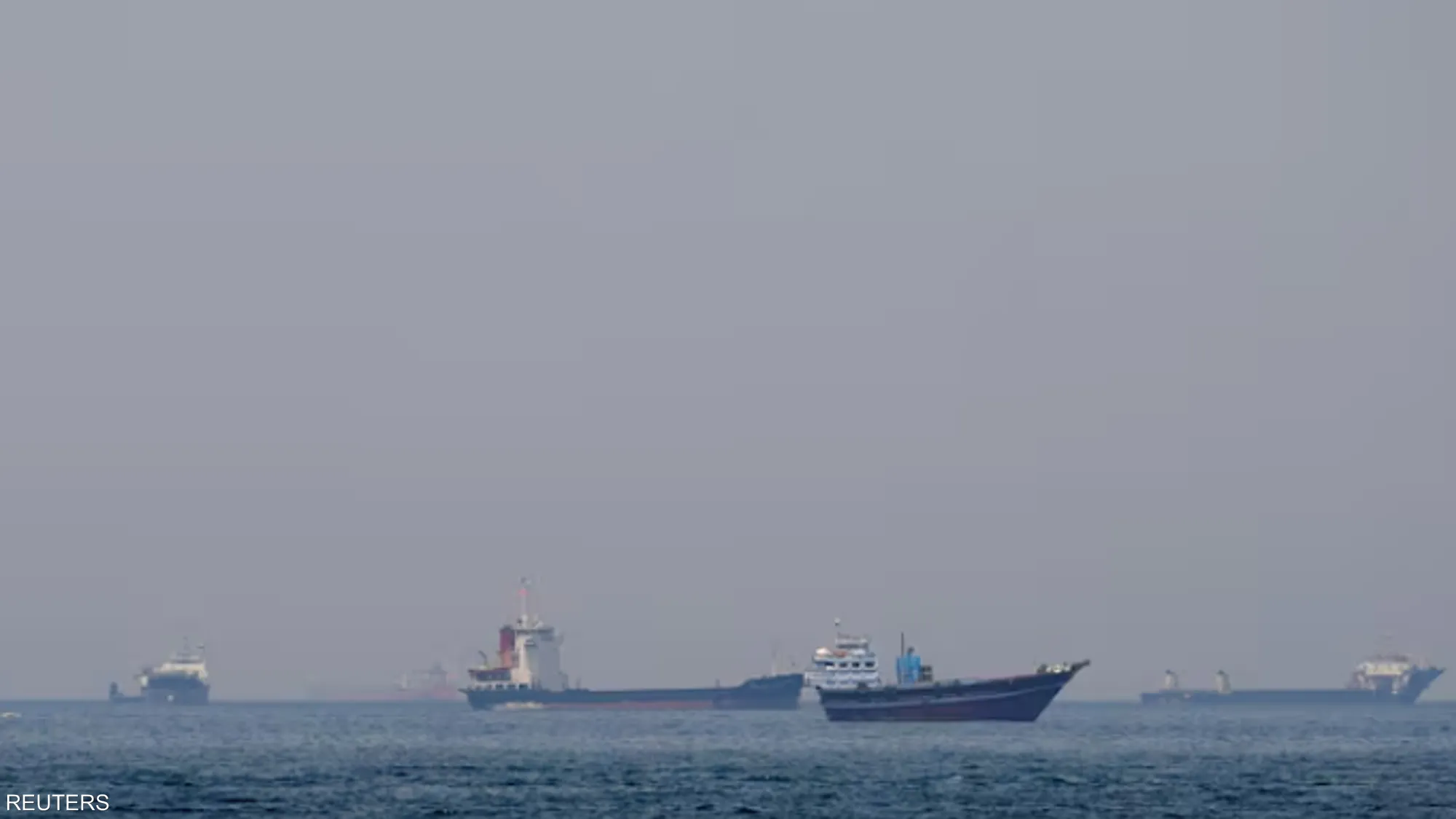
Shipping data indicates a dramatic slowdown in maritime activity through the Strait of Hormuz, a critical chokepoint through which roughly 20 percent of global oil and liquefied natural gas supplies transit. Only three vessels were recorded crossing the strait in the past 24 hours, compared to an average of approximately 140 daily transits before the outbreak of hostilities on February 28.
Among the few ships that passed were the bulk carrier "Ian Spear,” departing from an Iraqi port, and the cargo vessel "Lianstar,” originating from Iran. Satellite imagery also confirmed the passage of the liquefied petroleum gas tanker "Mida,” which had previously aborted an attempt to exit the gulf.
A port operations supervisor in Oman, who spoke to Diplomat News Network on condition of attribution, described the current situation: "Berths are quiet, and many vessels are holding position offshore. Crews are waiting for clearer security assurances before proceeding.”
Ceasefire Strains
The maritime incident coincides with increasing military readiness on both sides. General Dan Caine, Chairman of the U.S. Joint Chiefs of Staff, said in remarks reported Tuesday that American forces are prepared to resume large-scale combat operations against Iran "at any moment” if the ceasefire collapses.
Trump echoed a similar stance, warning that "a lot of bombs” could be deployed if hostilities resume. Despite this, he indicated uncertainty over Iran’s participation in planned diplomatic talks in Islamabad, noting that U.S. attendance would proceed regardless.
Iranian sources, cited by state-affiliated media, said Tehran is preparing for the possibility of renewed conflict, citing what it described as excessive U.S. demands and the continuation of the maritime blockade.
Military Signals
Iranian military officials have also issued direct warnings to regional actors. Brigadier General Majid Mousavi, commander of the aerospace division of the Islamic Revolutionary Guard Corps, said neighboring countries could face consequences if their territories are used for attacks against Iran.
"Southern neighbors of Iran must understand that if their land or facilities are used by enemies to target the Iranian people, they should bid farewell to what is called oil production,” Mousavi said in remarks carried by Iranian media.
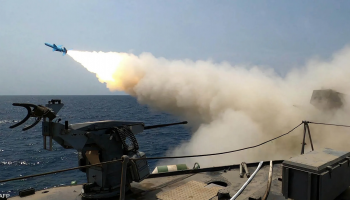
The statement coincided with a public display of missile capabilities in Tehran, where a platform carrying the "Khorramshahr” ballistic missile was exhibited in Vanak Square during nighttime public gatherings.
Field observations from the area described increased security presence and crowds gathering around the missile display, with state media portraying the event as a demonstration of deterrence capability amid rising tensions.
Strategic Implications
The disruption in the Strait of Hormuz has immediate implications for global energy markets and regional stability. Analysts warn that sustained restrictions could drive up shipping insurance costs, delay energy deliveries, and increase volatility in oil prices.
A Gulf-based energy economist, Dr. Khalid Mansour, told Diplomat News Network, "Even a partial shutdown of Hormuz creates ripple effects across supply chains. The psychological impact alone can shift market behavior significantly.”
The seizure of the Tuska also underscores the broader enforcement strategy adopted by Washington, which has expanded its naval operations to include inspection rights over vessels suspected of carrying prohibited cargo during periods of conflict.
Escalation Risks
The convergence of military actions, diplomatic tensions, and disrupted shipping lanes highlights the fragility of the current ceasefire. With both Washington and Tehran signaling readiness for escalation, and Beijing urging restraint, the situation remains highly fluid.
On the ground, maritime activity remains subdued, with port officials and shipping operators closely monitoring developments. The presence of crew families aboard the intercepted vessel, as reported by Iranian sources, adds a humanitarian dimension to the standoff.
The coming days are expected to test the durability of the ceasefire framework and the willingness of all parties to return to negotiations. For now, the seizure of the Tuska and the near halt in Hormuz traffic mark a significant escalation point in an already volatile regional confrontation.