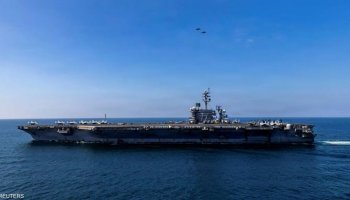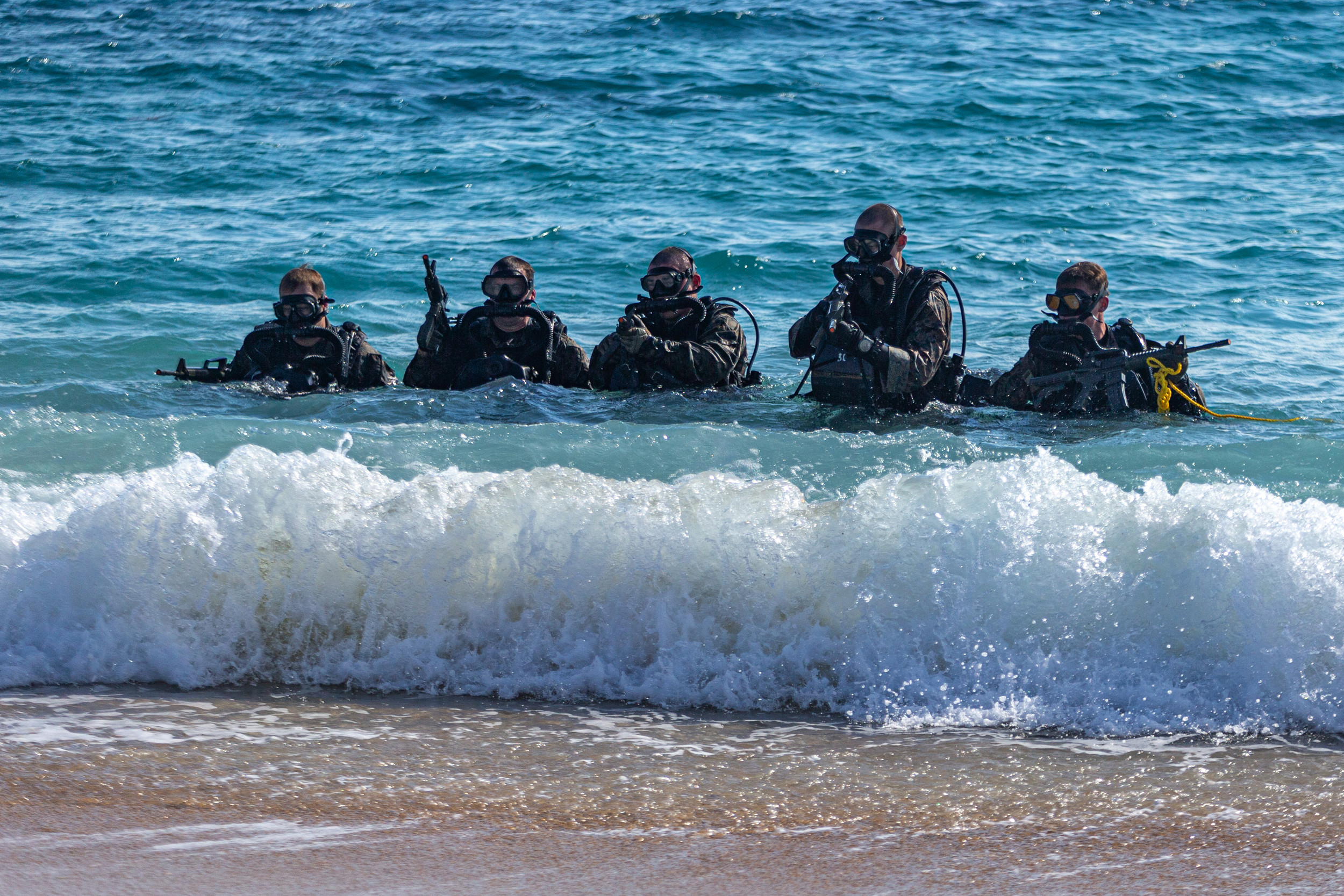
Washington, D.C. (Diplomat.so) – The U.S. Navy's amphibious assault ship USS Tripoli, carrying approximately 2,200 Marines from the 31st Marine Expeditionary Unit, docked at Diego Garcia in the Indian Ocean on Wednesday, marking a critical stop before entering the U.S. Central Command's area of operations in the Middle East.
Satellite imagery released by the Chinese geospatial intelligence firm Mizar Vision confirmed the 260-meter vessel’s presence at the isolated U.K. territory, with analysts interpreting the pause as a logistical refueling and resupply before the ship continues its deployment. "Given the absence of an accompanying tanker, this stop is strategically logical to ensure fuel and supplies before reaching CENTCOM’s operational zone,” said open-source intelligence analyst M.T. Anderson on X (formerly Twitter).
The Tripoli, redeployed from the South China Sea last week, transited southwest accompanied by at least two U.S. Navy destroyers. Onboard, the vessel carries F-35B Lightning II fighter jets and its embarked Marines, who are temporarily redirected from their usual station in Japan under U.S. Indo-Pacific Command to support operations in the Middle East.
Concurrent satellite imagery shows the USS San Diego, another U.S. Navy vessel stationed in Japan, passing through the Strait of Malacca en route to the same region. In addition, CNN reported that roughly 1,000 troops from the U.S. Army’s 82nd Airborne Division are preparing for near-term deployment to the Middle East. The division, recognized as the U.S. military’s rapid response force, can project power globally within 18 hours from its North Carolina base.
Lawmakers in Washington, however, expressed frustration over limited operational briefings. Republican Representative Mike Rogers, chair of the House Armed Services Committee, criticized Pentagon officials during a classified briefing on Wednesday for providing insufficient details regarding troop movements and plans associated with what U.S. officials have termed "Operation Epic Wrath.” "Members cautioned that any movement of forces in the region must be deliberate and measured,” Rogers said, noting gaps in information sharing.
Senator Roger Wicker, chair of the Senate Armed Services Committee, echoed similar concerns, joined by Representatives Nancy Mace of South Carolina and Ryan McKenzie of Pennsylvania, who raised questions about the scope of potential ground deployments. McKenzie noted that he hopes the recent troop movements are primarily intended as leverage for diplomacy rather than a precursor to large-scale combat.
The strategic positioning of the Tripoli and associated forces occurs amid recent failed Iranian ballistic missile attempts targeting U.S. bases in the region, highlighting heightened regional tensions. Diego Garcia’s base, located roughly 724 kilometers from the Maldives and 4,260 kilometers from Iran’s coastline, provides deepwater port access, airstrips, and naval infrastructure essential to U.S. operations in the Middle East. Analysts suggest the deployments aim to reinforce deterrence and operational flexibility in a theater increasingly sensitive to escalation.