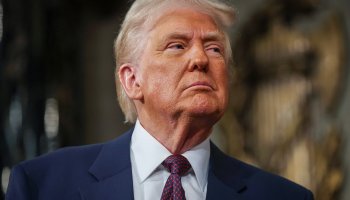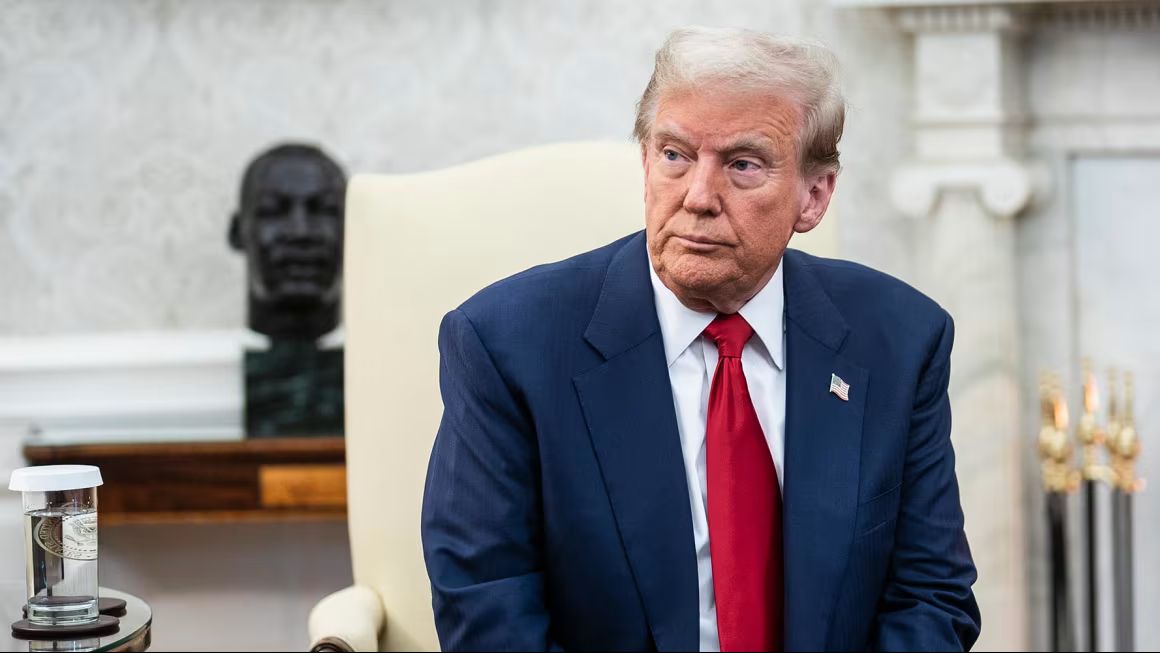
Washington, D.C. (Diplomat.so) - The United States of America President Donald J. Trump announced a deadline for Iran to reopen the Strait of Hormuz or face potential attacks on its critical infrastructure by Tuesday evening, April 7, during interviews and social media statements made on Sunday.
President Trump, speaking to the Wall Street Journal, stated, "If Iran does not act by Tuesday evening, they will have no operational power plants or intact bridges.” The U.S. leader reiterated similar warnings via his Truth Social account earlier in the day, emphasizing that Tehran’s failure to reopen the strategic waterway would trigger targeted strikes on its energy and transportation infrastructure.
Trump’s remarks appear to extend the initial deadline, effectively giving Iranian authorities one additional day to negotiate an agreement to restore navigation through the Strait, a critical chokepoint for global oil shipments. In a brief statement on Truth Social, he wrote: "Tuesday, 8:00 p.m. Eastern Time!” signaling the precise endpoint of the extended timeline.
U.S. Diplomatic and Military Posture
During a televised interview with Fox News, Trump suggested that there remains a potential diplomatic pathway, stating, "I think there is a good chance tomorrow; they are negotiating now.” He added that if a rapid agreement is not reached, the U.S. might "destroy everything and take the oil,” underscoring the severity of the ultimatum.
Trump also said he provided "immunity” for Iranian negotiators to prevent them from becoming targets of U.S. or Israeli strikes, highlighting the administration’s effort to maintain dialogue channels while issuing hardline threats.
Republican Senator Lindsey Graham, speaking on Capitol Hill, supported the president’s firm stance, saying, "Trump is serious about restoring freedom of navigation in the Strait of Hormuz. Iran must choose quickly between diplomacy and a military response.” Graham added that the "window for diplomacy is closing” and urged Iran to act decisively to avoid escalation.
Observations
The Strait of Hormuz, located between Oman and Iran, is a narrow passage through which roughly 20% of global oil shipments transit. Shipping traffic remained cautious on Sunday, with several commercial vessels altering routes or delaying departures amid rising tensions. Local maritime officials reported an increase in U.S. Navy and allied surveillance presence in the Gulf, observing a heightened operational tempo.
In Washington, D.C., senior officials confirmed to Diplomat News Network that U.S. representatives, including Jared Kushner and Stephen Wittkoff, are engaged in intensive negotiations with Iranian intermediaries through Pakistani, Egyptian, and Turkish channels. Messages are reportedly exchanged directly between U.S. advisers and Iran’s Foreign Minister Abbas Araghchi.
A former U.S. intelligence officer, speaking on condition of anonymity, noted, "The administration is balancing overt military threats with covert diplomatic efforts. This dual-track approach reflects the urgency of maintaining global energy security while attempting to avoid open conflict.”
Historical Context
The Strait of Hormuz has long been a flashpoint in U.S.-Iran relations. Past incidents include the 2019 tanker seizures and repeated missile tests by Tehran, which prompted international concern over potential disruption of global energy markets. Trump’s current ultimatum follows months of heightened rhetoric and a series of U.S.-Iran naval confrontations in the Gulf.
Previously, Iran reportedly requested a seven-day pause in U.S. strikes on energy facilities. Trump later extended this to ten days, making April 6 the effective deadline, with an additional one-day extension communicated in recent social media posts. The president has emphasized that Iranian nuclear ambitions are no longer part of current negotiations, asserting that Tehran has "abandoned the nuclear weapons pursuit” and is now focused solely on Strait-related issues.
Analytical Perspective
Experts warn that the U.S. ultimatum could have significant regional and global implications. Maria Anderson, a Middle East policy analyst, told Diplomat News Network, "Targeting Iran’s infrastructure could escalate tensions rapidly, potentially drawing neighboring states and maritime operators into the crisis. Even limited strikes would reverberate through global oil markets.”
The situation also underscores the strategic importance of the Strait of Hormuz. With around 18 million barrels of oil transiting daily, any disruption could spike prices and challenge energy security in Europe, Asia, and the United States. Analysts point out that Trump’s approach combines high-stakes diplomacy with coercive threat, testing Iran’s willingness to negotiate under pressure while signaling a readiness for military action if necessary.
Outlook Ahead of Deadline
As the extended deadline approaches, U.S. officials continue to stress that Tehran has a narrow window to reach a diplomatic settlement. The administration’s communications reflect a calculated strategy of mixing threat and negotiation, aiming to reopen one of the world’s most critical maritime chokepoints without triggering a broader military confrontation.
Iran’s response in the coming hours will determine whether diplomacy prevails or the region faces heightened instability, with implications for global energy markets, international maritime safety, and U.S.-Iran relations.