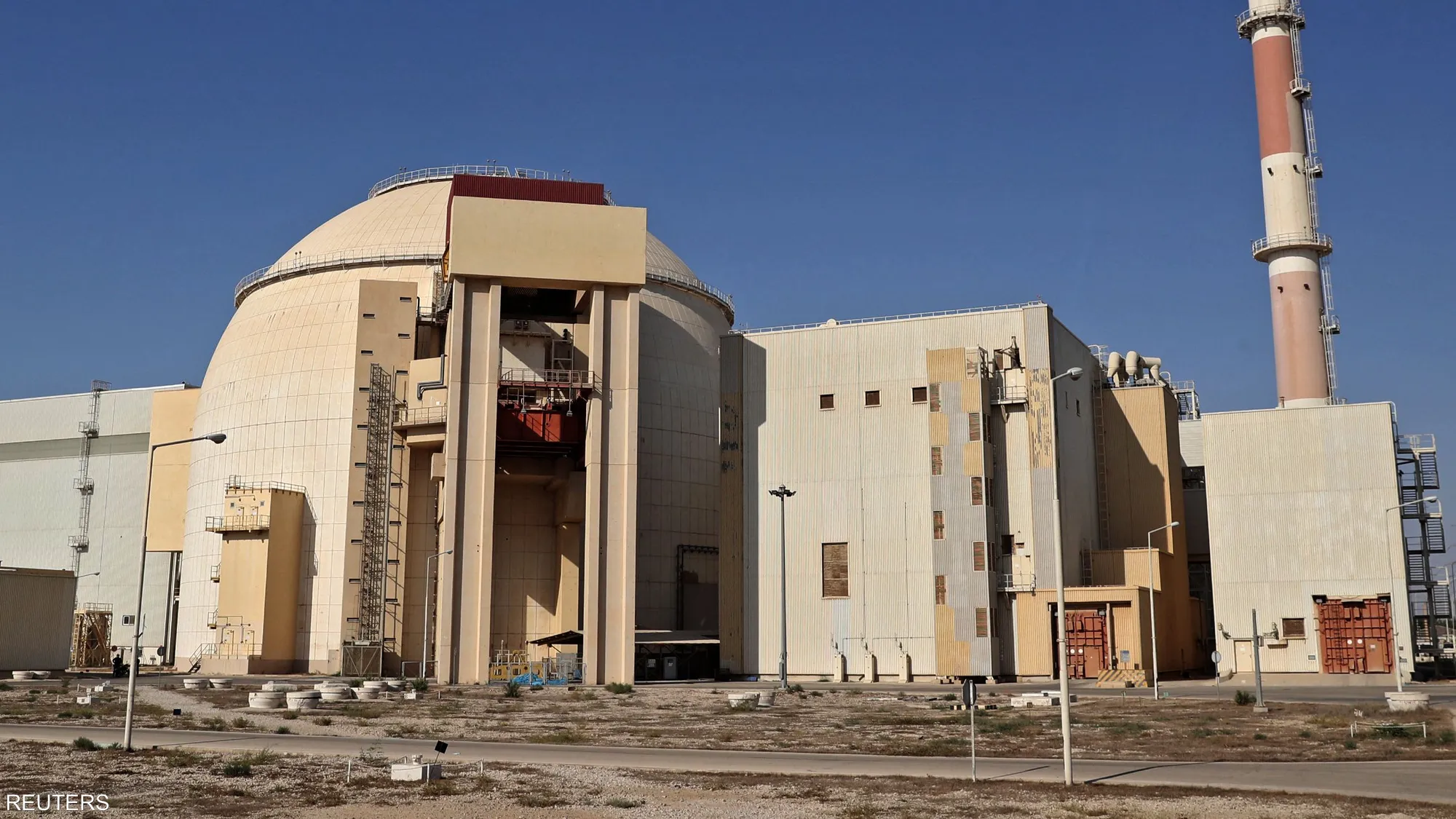
Tehran (Diplomat.so) - Rosatom, Russia's state-owned nuclear energy corporation, announced that it evacuated most of its technical personnel from Iran's Bushehr nuclear power plant on Tuesday, following a final staff rotation operation.
Alexey Likhachev, director general of Rosatom, said 180 employees departed the facility and were transferred to Isfahan as part of what he described as the concluding phase of personnel rotation. He confirmed that only a reduced team of approximately 20 specialists remains at the site.
"The majority of our staff have already left the station, and only essential personnel are continuing operations,” Likhachev said in remarks carried by Russian media. He added that those remaining include the branch director, deputies, security staff, and technicians responsible for maintenance and the safety of critical systems.
The evacuation follows a series of earlier withdrawals beginning April 4, when nearly 200 Russian workers were relocated after the facility’s surrounding area was affected by a reported U.S.-Israeli strike. Additional departures occurred on March 25, when 163 employees left after a prior incident near the site.
A senior engineer involved in operations at Bushehr, speaking on condition of attribution, told Diplomat News Network that "the reduction in staff has been carefully managed to ensure no disruption to essential safety protocols.” The engineer added that routine monitoring systems remain fully operational despite the reduced workforce.
Local residents near the coastal facility described a noticeable decline in activity over recent weeks.
Russia has played a central role in constructing and supporting the Bushehr nuclear power plant, Iran’s only operational nuclear energy facility. Russian technicians have long assisted in its operation under bilateral agreements, particularly in fuel management and reactor safety.
The partial evacuation underscores heightened regional tensions and concerns over the security of critical infrastructure amid ongoing hostilities. Analysts note that maintaining a minimal technical presence allows Russia to uphold operational continuity while mitigating risks to its personnel.
"The decision reflects a balance between safety and strategic commitment,” said Natalia Kuznetsov, a nuclear policy analyst based in Moscow. "Complete withdrawal could compromise operational oversight, but maintaining a smaller team reduces exposure.”
The situation highlights the broader geopolitical implications surrounding Iran’s nuclear infrastructure, as international stakeholders closely monitor developments affecting both energy security and regional stability.