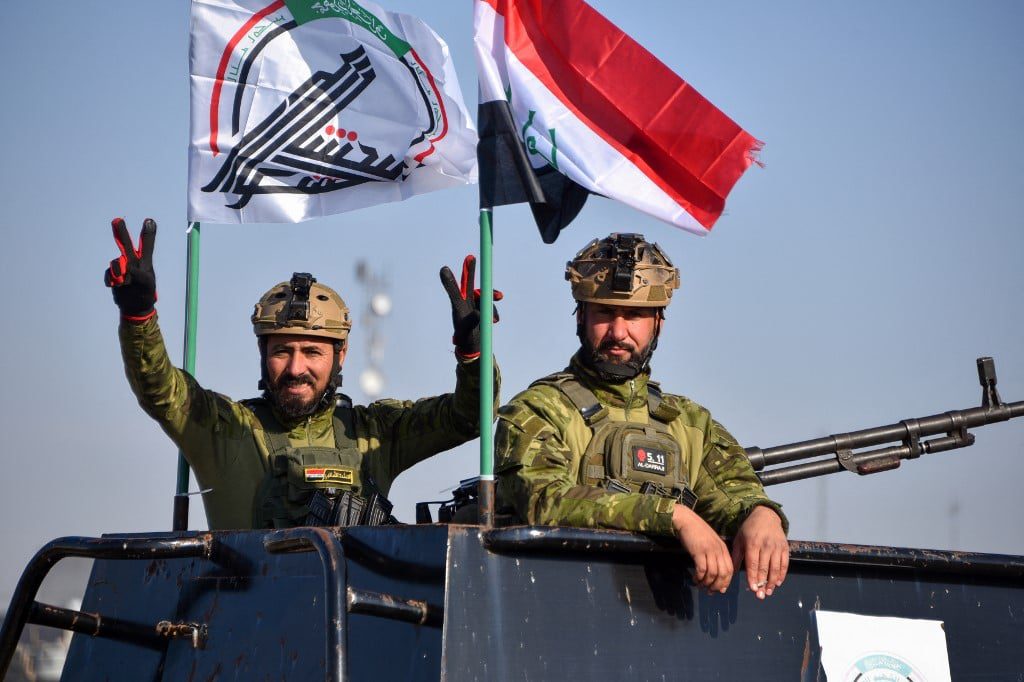
Baghdad (Diplomat.so) – Popular Mobilization Forces reported on Tuesday, that a series of airstrikes hit one of its command sites in western Iraq during a high-level meeting, killing at least 15 fighters including senior commanders and injuring several others.
According to the statement, the deceased included Saad al-Buai ji, who served as the head of operations in Anbar Governorate, along with other senior officials. The group said the strike targeted a command headquarters while leaders were gathered for a security meeting, describing the incident as a direct hit on its leadership structure.
In its official response, the Popular Mobilization Forces accused the United States of carrying out the strike. "The air raid targeted a leadership headquarters while they were performing their national duty,” the group said in a statement cited by Diplomat News Network. It further described the attack as "a flagrant violation of Iraq’s sovereignty and international law.”
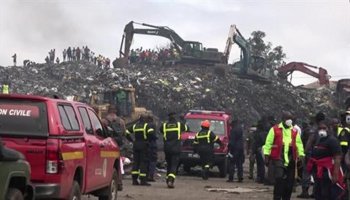
Security sources familiar with the incident said the strike occurred in the early hours of the day, with emergency teams later arriving at the site amid heightened security cordons. Local residents reported hearing loud explosions and seeing increased movement of ambulances and security vehicles in the vicinity of the facility.
"We heard multiple blasts followed by sirens. The area was quickly sealed off by security forces,” said one resident in Anbar, speaking on condition of anonymity due to safety concerns.
Separately, in northern Iraq, the Kurdistan Region’s Ministry of Peshmerga said that its forces came under missile attack in the vicinity of Erbil. The ministry stated that six ballistic missiles struck positions belonging to its units, resulting in six fatalities and at least 30 injuries.
Among the casualties, officials identified several members of the Peshmerga forces operating in different units, though full identities were not immediately released. A spokesperson for the ministry said the strikes targeted two separate military locations in coordinated attacks.
"These attacks represent a serious escalation and a direct threat to the stability of the region,” a Peshmerga official said, adding that the forces reserve the right to respond to any aggression against their positions.
Tensions in Iran’s neighboring regions have remained high in recent months, with cross-border security incidents and exchanges of fire involving armed groups and military positions. Analysts note that Iraq continues to serve as a sensitive theater where multiple state and non-state actors operate, often under overlapping security frameworks.
Military observers say the simultaneous nature of the incidents in western and northern Iraq underscores the complexity of the regional security environment, where competing interests and proxy dynamics intersect. The presence of armed factions integrated into official structures, alongside external pressures, continues to challenge Iraq’s internal security coordination.
Both incidents are likely to intensify diplomatic scrutiny and raise questions over escalation risks, particularly as authorities in Baghdad and the Kurdistan Region assess their responses amid a volatile regional landscape.