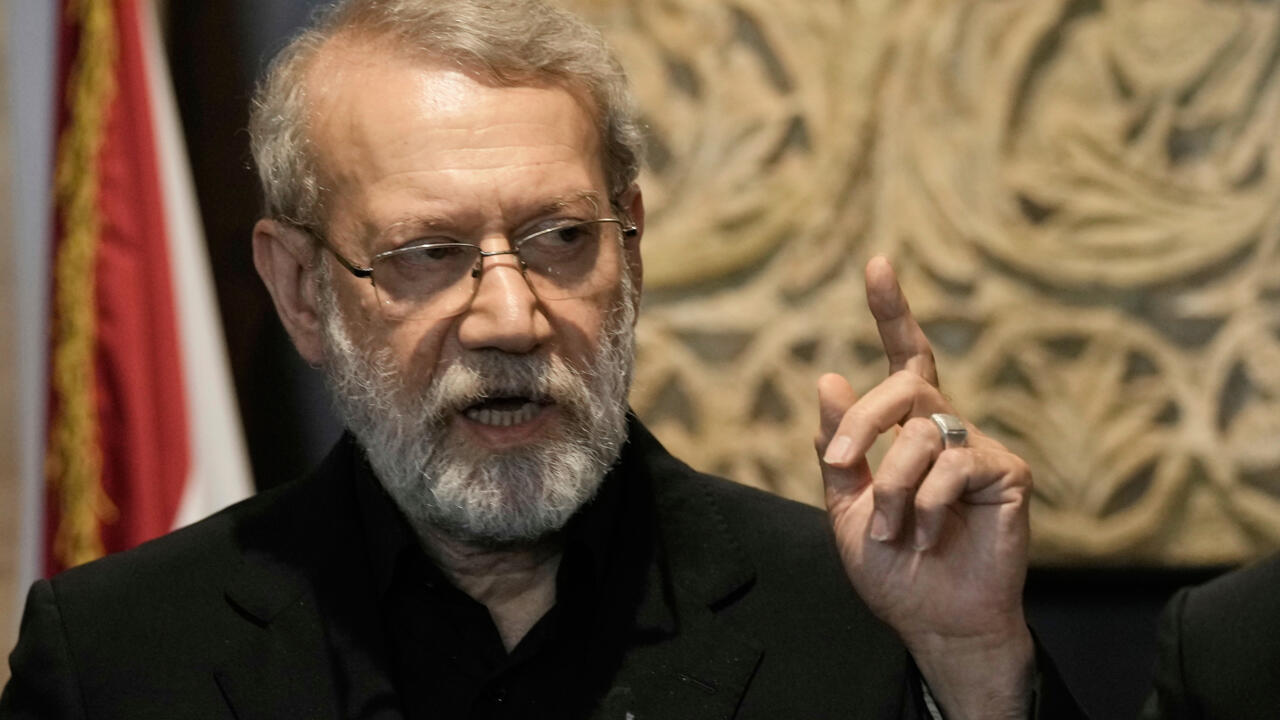
Tehran (Agencies + Diplomat.so) - Iran confirmed on Tuesday, 17 March 2026, that Ali Larijani, secretary of the Supreme National Security Council, was killed in a targeted airstrike near Tehran, following Israeli claims that it had carried out a precision strike on the senior official. Larijani died alongside his son, Morteza, and several aides, according to a statement from the council, which described their deaths as martyrdom in service to the nation.
Israel described the operation as a strategic blow to Iran’s leadership. Defence Minister Israel Katz said that Gholamreza Soleimani, commander of the Basij paramilitary force, also died in the strike. "Larijani and the Basij commander were eliminated overnight” Katz said.
How the Assassination Took Place
According to Israeli officials, the strike on Larijani was carefully orchestrated, relying on precise intelligence about his movements. The operation was initially planned for Sunday night but was postponed when authorities learned he would visit a secondary hideout apartment with his son rather than his usual residence.
Larijani returned to one of his concealed apartments on Monday afternoon, accompanied by his son, and close aides. Israeli intelligence tracked this movement, which enabled the targeted strike that claimed their lives.
The mission drew on information from local agents who reported Larijani’s activities over the preceding 24 hours. Officials noted that his public appearances, including participation in the recent Quds Day rally, exposed him to observation, aiding in confirming his location.
A senior Israeli security source told media outlets, "There is no way he survived this attack.” Witnesses near the scene reported loud explosions before dawn and a significant security presence.
Christiane Amanpour, CNN anchor, reported on X that a source familiar with private discussions revealed Ali Larijani was considered the most favored transitional candidate by the US and Israel as of September 2025, but became a target in early February 2026 after pushing for a crackdown on protesters, taking a prominent role in criticizing the US and Israel, and assuming a key role in strategizing IRGC operations, particularly against GCC states.
Larijani’s Role in Iranian Politics
Larijani, 67, was widely regarded as one of the most influential figures in Iran following Khamenei’s death, bridging the clerical leadership and the military establishment. Analysts say his combination of political skill and strategic authority made him a pivotal actor during a period of crisis.
"His death removes a stabilizing figure who could have guided Iran through a period of transition,” said Sara Haddad, a Middle East policy analyst. "The absence of such a leader increases uncertainty and heightens risks of internal power struggles.”
Larijani’s recent visibility in Tehran, including attending mass rallies and appearing on state television, made him a high-profile target. At the Quds Day march, he publicly warned Gulf states against supporting U.S. military bases and threatened retaliation against foreign aggression. In one post on social media, he warned U.S. President Donald Trump to "take care not to be eliminated,” criticizing Washington’s handling of the crisis as a serious miscalculation.
Strategic Implications
The strike underscores Israel’s capability to act on real-time intelligence and the United States’ control of airspace over the region, allowing for precise targeting of Iran’s senior officials. Analysts suggest that Larijani’s death could alter the internal balance of power, further empowering the Islamic Revolutionary Guard Corps (IRGC) and Basij forces while weakening civilian oversight of military operations.
The ongoing campaign has disrupted shipping through the Strait of Hormuz, a vital artery for global energy transport. About 20 percent of the world’s oil and liquefied natural gas flows through the strait, which remains effectively closed, contributing to rising energy prices and increased geopolitical tension.
Domestic Reaction
In Tehran, state media emphasized the narrative of martyrdom and resilience.
The assassination leaves the Supreme National Security Council without a clear successor, raising concerns about Iran’s ability to coordinate defense strategy and domestic governance amid ongoing hostilities. Analysts note that Larijani’s expertise in balancing internal politics with foreign diplomacy was unique, making his loss particularly destabilizing.
Historical Background
Born in Najaf, Iraq, in 1957, Larijani came from a prominent Shia clerical family. He joined the IRGC during the Iran-Iraq war, later headed state broadcasting for a decade, and served as parliamentary speaker from 2008 to 2020. He also played a central role in nuclear negotiations, engaging with Western powers and shaping Iran’s diplomatic strategy.
Appointed as secretary of the Supreme National Security Council in August 2025, Larijani took on responsibility for overseeing Iran’s defense and foreign engagement during a period of heightened tension. While once considered a pragmatic interlocutor internationally, his approach hardened in recent years as diplomatic efforts faltered and regional conflict intensified.
Broader Context of the Assassination
Reports suggest that Israel’s strike on Larijani was part of a wider campaign targeting senior Iranian officials since the start of the conflict. The operation reflects a strategy aimed at decapitating Iran’s leadership and weakening its operational capabilities.
The Daily Mail described Larijani as the de facto leader of Iran following Khamenei’s death, orchestrating both domestic security measures and foreign diplomacy. According to the outlet, intelligence from Tehran residents and observation of Larijani’s public appearances contributed to identifying him as a target.
The elimination of Larijani and other senior figures may further escalate the conflict and intensify internal instability, leaving the Iranian government scrambling to reorganize its leadership structure under extraordinary pressure.
Looking Ahead
The deaths of Khamenei, Larijani, and other senior officials, including Soleimani, mark a significant turning point in the conflict. Analysts suggest that the IRGC and Basij forces will play an increasingly dominant role in Iran’s strategic planning, while civilian authorities may struggle to maintain operational cohesion.
In Tehran, residents report a tense atmosphere, with streets heavily monitored and public gatherings subdued. The human cost of leadership-targeted strikes continues to weigh on the population, even as the regime attempts to project resilience.
Larijani’s death removes one of the few figures able to navigate both military and political spheres, leaving Iran facing unprecedented uncertainty at a time of escalating conflict and regional instability.