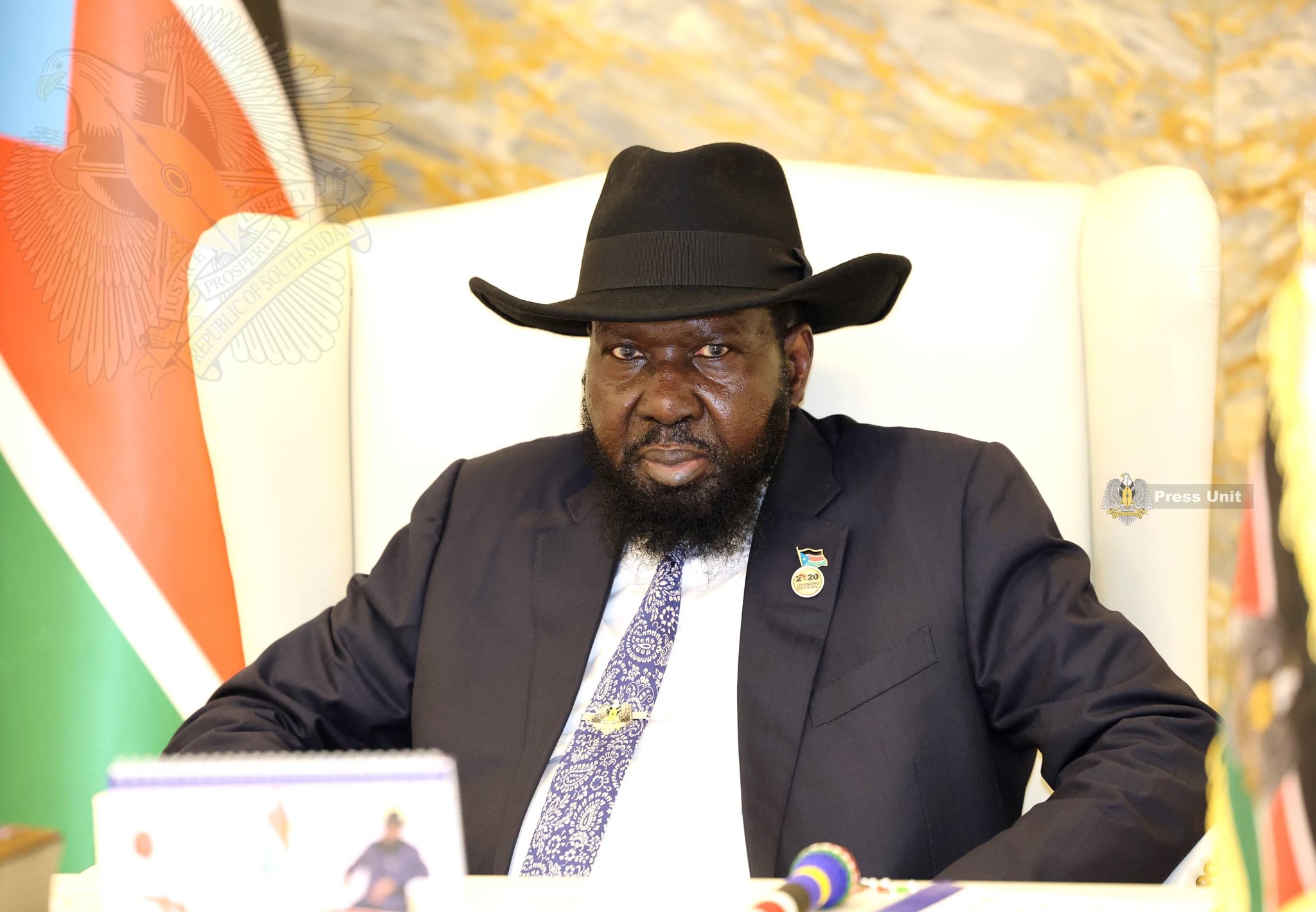
Juba (Diplomat.so) – President of the Republic of South Sudan, Salva Kiir Mayardit, was briefed in Juba on Wednesday, April 29, on security conditions in the Abyei Special Administrative Area, alongside developments in bilateral investment cooperation with Egypt and escalating national food insecurity concerns.
Abyei Security
President Kiir received an update from Chief Administrator Justice Charles Abyei Jok, who reported that the security situation in the Abyei Special Administrative Area remains relatively calm despite intermittent incidents that continue to require coordinated response efforts between local authorities and partners.
Justice Jok told the President that cooperation with United Nations agencies remains central to maintaining stability in the contested region, highlighting five key priorities previously outlined by UN representatives. These priorities focus on improving coordination mechanisms, enhancing civilian protection, and supporting administrative governance structures.
"The situation is generally stable, but there are still incidents that require sustained attention and stronger coordination with all stakeholders,” Jok said during the briefing, according to an official statement shared with state media.
Local residents described a mixed security environment. A market trader in Abyei town said movement has improved compared to earlier periods, but uncertainty persists in rural corridors. "During the day, trade is active, but people remain cautious when traveling outside main areas,” the trader said.
Development Plans
The Chief Administrator also informed President Kiir that road rehabilitation projects are being prioritized to improve connectivity across Abyei, particularly to support trade and humanitarian access.
Officials indicated that improved road infrastructure is expected to ease the movement of goods and strengthen links between communities affected by years of administrative uncertainty and periodic insecurity.
A local youth representative, speaking from Agok, said limited infrastructure remains one of the biggest challenges facing residents. "Better roads will help businesses and reduce isolation, especially during the rainy season when access becomes difficult,” he said.
Justice Jok described the discussions with the President as constructive, confirming that follow-up actions will be implemented to address outstanding administrative and security issues in the region.
Egypt–South Sudan Investment Cooperation Expands
In a parallel diplomatic development, South Sudan’s Minister of Investment Joseph Mum Majak held high-level talks with Egypt’s Minister of Investment and Foreign Trade Mohamed Farid to expand bilateral economic cooperation in agriculture, energy, infrastructure, and industrial production.
Farid reaffirmed Egypt’s commitment to strengthening economic relations with African countries, emphasizing ongoing reforms designed to improve the investment climate, including streamlined procedures and a one-stop-shop system for investors.
He encouraged Egyptian private sector participation in South Sudan’s agro-processing and manufacturing sectors. "We see strong opportunities in agriculture, food industries, and textiles that can benefit both economies,” Farid said during the meeting.
Majak welcomed Egypt’s investment model and expressed South Sudan’s readiness to adopt similar reforms. He noted that the government is preparing a package of investment-ready projects aimed at attracting Egyptian investors into agriculture and energy sectors.
"We are committed to improving our legal and institutional frameworks to support long-term partnerships,” Majak said. An official familiar with the talks told Diplomat News Network that technical teams will soon begin identifying priority joint ventures.
Famine Risk
A new Integrated Food Security Phase Classification (IPC) alert has raised concern over worsening hunger conditions in South Sudan, projecting that 7.8 million people could face acute food insecurity by July 2026.
The report warns that approximately 73,000 people across four counties are at risk of catastrophic famine-level conditions classified under IPC Phase 5. This marks a significant increase from earlier assessments that identified only one county at similar risk.
Humanitarian workers on the ground report deteriorating conditions in displacement camps, with rising malnutrition among children and limited access to essential healthcare services.
A health worker in Unity State said medical facilities are overwhelmed. "We are seeing more cases of severe malnutrition and waterborne diseases, but supplies are not enough to meet demand,” she said.
Market disruptions, inflation, and reduced humanitarian funding have further constrained access to food and basic services. Flooding and disease outbreaks, including cholera and malaria, continue to worsen public health conditions.
Regional Implications
Analysts warn that the combination of conflict, economic strain, and environmental shocks is deepening vulnerability across South Sudan. Reduced humanitarian funding and limited access to affected regions are complicating relief efforts.
A regional food security analyst noted that sustained instability could have broader implications for cross-border displacement and regional humanitarian coordination. "Without urgent intervention, localized famine conditions could expand further,” the analyst said.
The developments underscore the interconnected challenges facing South Sudan as it balances internal security management, international economic engagement, and escalating humanitarian needs, with long-term stability dependent on coordinated political, economic, and humanitarian responses.