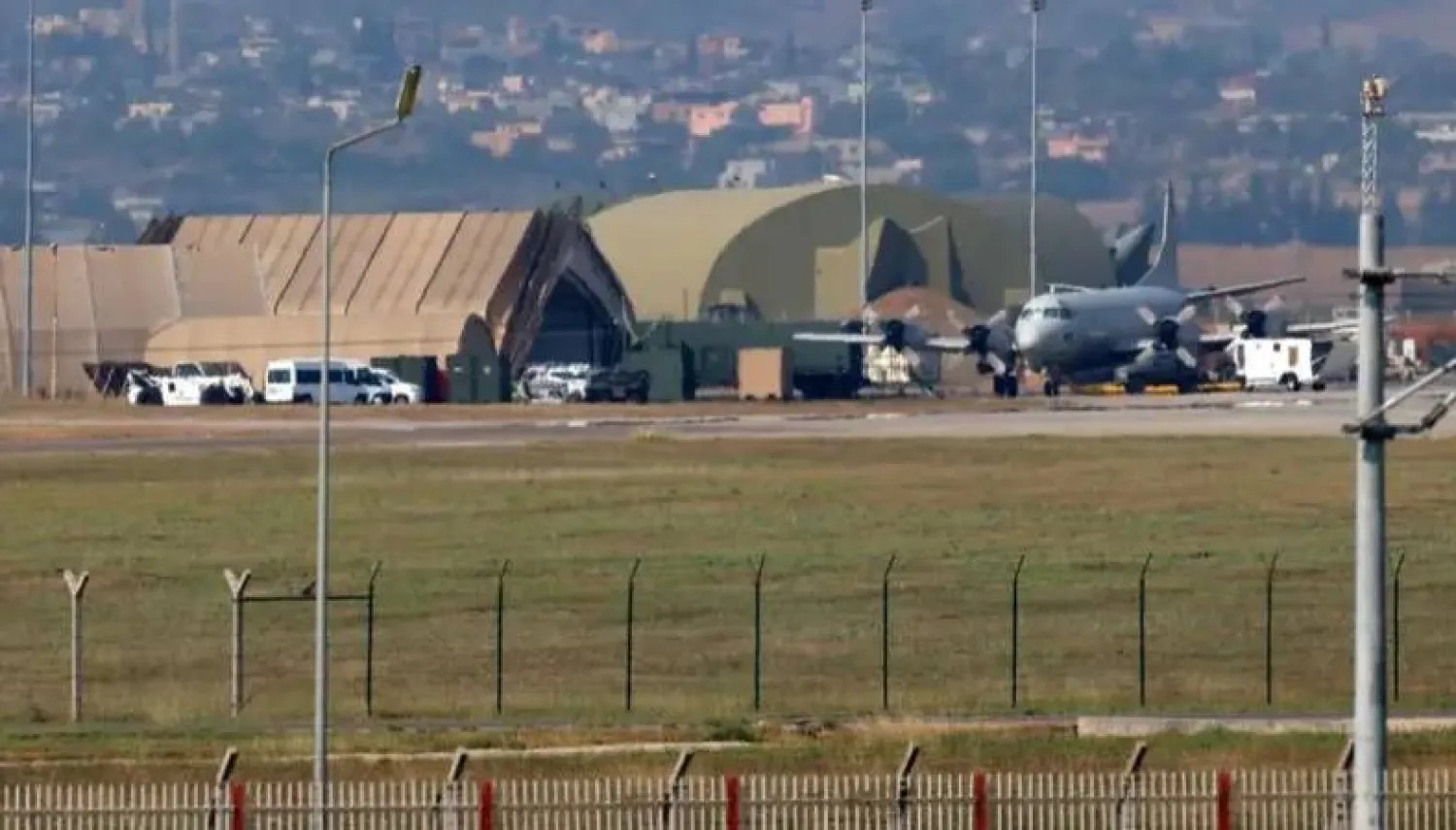
Ankara (Diplomat.so) - Turkish Ministry of National Defense said NATO air defenses stationed in the eastern Mediterranean destroyed a ballistic missile launched from Iran after it entered Turkey's airspace early Friday, triggering alarm sirens near Incirlik Air Base outside Adana.
In a statement released Friday, the ministry said Turkish authorities are seeking clarification from Tehran regarding the launch and emphasized that Ankara would respond decisively to any threat targeting its territory or airspace. Officials did not specify where the missile was intercepted but confirmed that NATO-linked air defense systems operating in the region carried out the interception.
Earlier in the morning, air-raid sirens sounded across the vicinity of Incirlik Air Base, a key NATO installation located about 10 kilometers from central Adana. Residents reported hearing the alarms shortly after 00:25 GMT, with the warning lasting approximately five minutes. The base hosts U.S. forces and other allied personnel, although Turkish officials reiterate that it remains under Turkish command.
Videos circulating on social media appeared to show a bright object streaking across the night sky, though authorities have not verified the footage.
Turkish military sources warned a day earlier that any direct attack on Turkish territory would carry wider implications because of the country’s membership in NATO, a 32-nation defense alliance whose collective security clause treats an attack on one member as an attack on all.
Defense officials also confirmed ongoing coordination with NATO to deploy Patriot air defense systems in the eastern province of Malatya to strengthen the alliance’s southeastern air shield.
Security analysts say the interception underscores Turkey’s growing role as a frontline NATO state amid escalating regional missile activity. For residents of southern Turkey, however, the incident brought the geopolitical tensions of the wider Middle East conflict uncomfortably close to home.
Regional tensions intensified further Friday as the UAE Ministry of Defence said that air defence systems in the United Arab Emirates intercepted seven ballistic missiles and 27 drones during the latest wave of attacks linked to escalating hostilities with Iran.
In a statement released Friday, the ministry said its air defence units successfully engaged the incoming projectiles as part of ongoing defensive operations across the country. The announcement forms part of a series of daily updates issued by authorities as regional tensions continue to generate cross-border missile and drone activity targeting Gulf states.
According to the ministry, Emirati forces have dealt with a total of 285 ballistic missiles, 15 cruise missiles, and 1,567 drones since the start of what officials described as Iranian attacks on the country. Authorities said the incidents have resulted in six deaths involving Emirati, Pakistani, Nepali and Bangladeshi nationals, as well as 141 injuries ranging from minor to moderate among residents of multiple nationalities.
"The armed forces remain fully prepared to address any threats,” the ministry said, adding that security agencies would "confront firmly anything that targets the stability and sovereignty of the state.”
Separately, authorities in Sohar in Oman confirmed that two drones crashed early Friday in the coastal city of Sohar, according to the Oman News Agency. One drone fell in the Al-Awahi industrial area, causing the deaths of two expatriate workers and leaving several others injured. A second drone crashed in an open area without causing casualties.
Officials said emergency teams and investigators were dispatched to the industrial zone shortly after the incident. Authorities urged residents not to circulate images or rumors online and to rely only on official sources for updates.
Security analysts say the continued use of long-range missiles and drones underscores the strategic role of air defence networks in protecting critical economic hubs and densely populated cities.
For Gulf governments, the sustained wave of interceptions has become both a military challenge and a public safety concern as authorities seek to maintain normal economic activity while responding to a rapidly evolving regional security threat.
The incidents comes amid heightened regional tensions following a series of Iranian missile and drone strikes targeting locations across the Middle East. Tehran has said its operations are aimed at U.S. military facilities in the region rather than host countries, though some strikes have reportedly caused damage to civilian infrastructure.