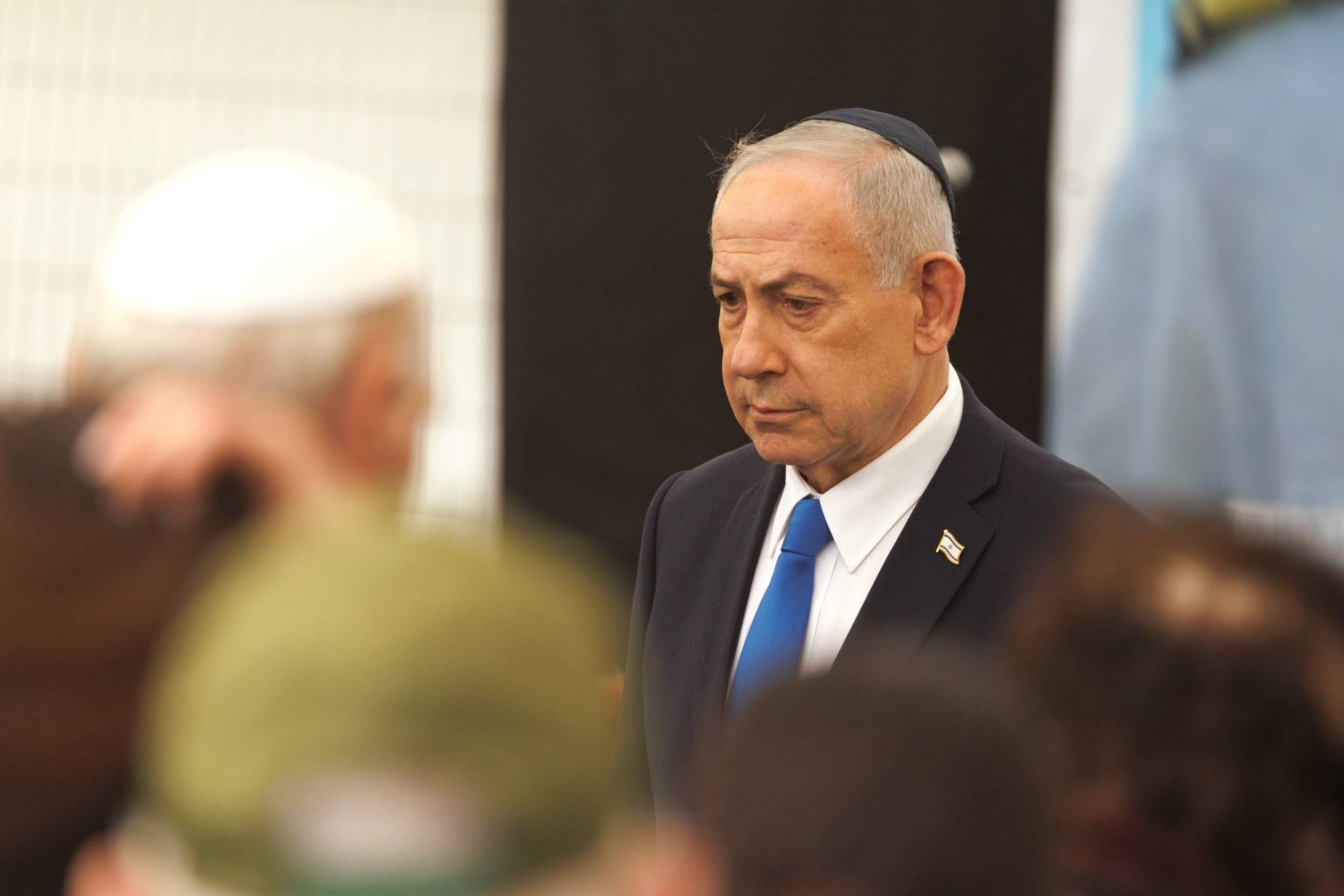
Tel Aviv (Diplomat.so) - Israeli Prime Minister Benjamin Netanyahu said on Thursday, during a press briefing that Israel's ongoing military campaign against Iran is advancing what he described as a pathway toward the eventual "return of the Messiah," a highly controversial framing that has drawn international scrutiny and criticism. Netanyahu stated, "We will make it to the return of the Messiah, but this will not happen next Thursday," underscoring his view that Israel's current military operations are contributing to broader historical developments.
Speaking from the government complex in Tel Aviv, Netanyahu linked spiritual and strategic goals in his remarks, saying Israel’s campaign is strengthening the country and reshaping the region’s geopolitical landscape. "We are achieving unprecedented gains,” he said, without providing specific operational details or timelines.
Netanyahu’s comments elicited immediate reactions from regional analysts and local residents. Cohen Avi, a shopkeeper in central Tel Aviv, described the remarks as "jarring” for everyday citizens, adding: "People here are focused on security and livelihoods.”
Analysts note that Netanyahu’s remarks may resonate domestically among religiously conservative constituents while also generating international attention.
Experts say Netanyahu’s framing could have diplomatic implications, particularly with nations observing Israel’s policy toward Iran and the Palestinian territories.
Netanyahu’s remarks come at a sensitive juncture: Israel and the United States continue their military pressure campaign against Iran’s strategic assets in the region, with recent Israeli warnings to Tehran after the assassination of Iran’s Supreme Leader’s father and intensified cross border engagements.
Regional diplomatic sources expressed concern that Netanyahu’s theological framing could complicate ongoing negotiations with Middle Eastern leaders and Western allies, who have previously urged restraint and de escalation. Analysts say the statement may deepen perceptions of a religious dimension to the conflict and could affect peace negotiations with neighboring countries.
The framing of military operations in spiritual or end times terminology adds a layer of complexity to an already volatile regional conflict, testing both domestic support and international diplomatic engagement.
The use of end-times terminology adds another layer to the conflict, intersecting with long-standing religious narratives in the region. In Islamic, Al-Masih ad-Dajjal—the "Deceitful Messiah”—is said to appear before the Day of Judgment to mislead humanity. Described as a one-eyed, curly-haired figure with the letters "kafir” (unbeliever) on his forehead, he is considered the greatest trial (fitnah) in human history.
The emergence of Dajjal and the descent of prophet Isse (Jesus), son of Mary (peace be upon him), are among the major signs of the End Times. Islamic tradition holds that Dajjal will appear from the East, spreading turmoil and mischief, before Jesus descends at the White Minaret in Damascus to defeat him at Bab Ludd (Gate of Lod) in Palestine. Following this, Jesus will govern the Earth according to Islamic law, remove chaos and trials, and usher in a period of security and prosperity.
It is recorded in Sunan al-Tirmidhi that the Prophet Muhammad (peace be upon him) said that the Dajjal will emerge from a land in the East called Khorasan, part of present-day Iran.
Anas ibn Malik reported that the Prophet said: the Dajjal will emerge from the Jewish quarter of Isfahan, accompanied by seventy thousand Jews. This narration was recorded by Ahmad in his Musnad and authenticated by Ibn Hajar. There is no contradiction with the previous narration, as Khorasan is a large region encompassing several territories, including Isfahan.
Ibn Hajar stated that the Dajjal will emerge from the far East, and Ibn Kathir said his appearance will begin in Isfahan, in a neighborhood called the Jewish Quarter. This is established as a major sign of the End Times and one of the great trials.
Scholars universally agree on the descent of Jesus. He will first appear in Damascus and then move toward Palestine. During this time, the Muslim leader, the Mahdi, Muhammad ibn Abdullah—a descendant of the Prophet—will initially lead the prayer, but Jesus will join and eventually assume leadership, saying: "It has been established for you, so lead them.”
Today, Iran’s Jewish community numbers between 8,000 and 10,000, representing the longest-standing Jewish presence outside Palestine. They enjoy full political and civil rights, including a parliamentary seat guaranteed by the 1979 Iranian constitution, as well as autonomous management of schools and synagogues. Members of the community have held municipal, medical, and educational positions. Tehran has provided funding for Jewish hospitals, and in 2015, the city built a memorial honoring Jewish soldiers who died defending Iran during the Iran-Iraq war.
أيهما المسلمون في كل العالم:
— فيصل القاسم (@kasimf) March 13, 2026
من كل المذاهب والطوائف والملل والنحل، لا أحد منكم على رأسه ريشه. كلكم مستهدفون بجميع طوائفكم ومذاهبكم، ومن يعتقد أنه سينجو لمجرد أنه وقف مع الضباع والوحوش الدولية، فهو مغفل، فالضباع تستهدفكم جميعاً. كلكم أدوات ووقود، وقد بدأ الإعلان عن تحالفات…
Faisal Qasim, a British-Syrian television host based in Qatar, known for The Opposite Direction on Al-Jazeera Arabic, warned on X (formerly Twitter): "Muslims worldwide, of all sects and schools of thought, are targeted. Anyone who believes they can survive by siding with international predators is mistaken. These forces target all of you. You are all tools and fuel. Global alliances targeting Muslims—Shia and Sunni alike—are forming. You are in the same boat; whoever tries to puncture it will sink with everyone. Consider whether continuing sectarian and doctrinal disputes is wiser than facing collective ruin.”