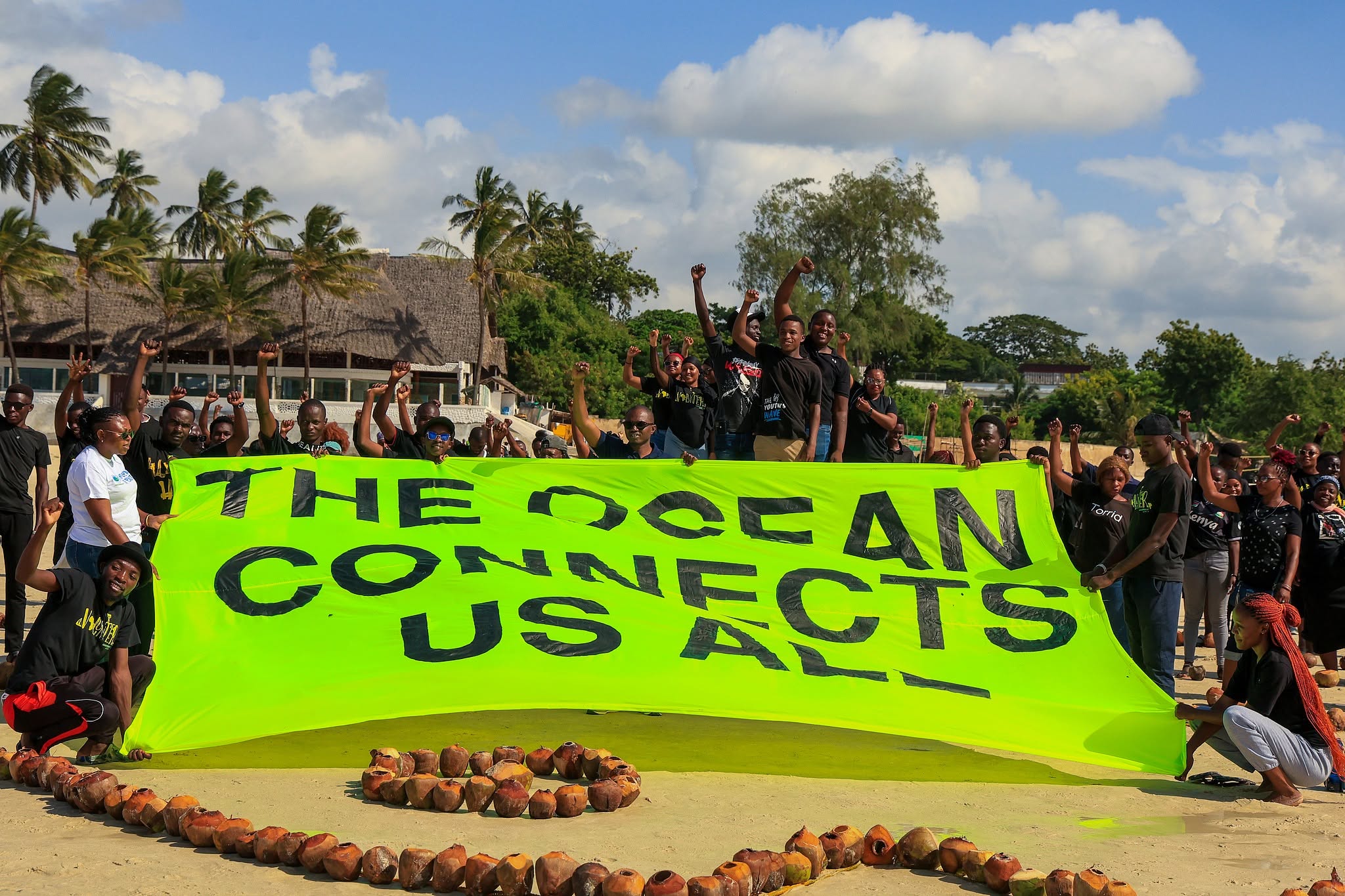
Mombasa (Diplomat.so) - Fifteen countries signed the Mombasa Declaration on illegal, unreported and destructive fishing on Wednesday, June 17, 2026, at the Our Ocean Conference in Mombasa, Kenya, committing to modernise vessel registries, strengthen monitoring systems, and expand data sharing with the United Nations Food and Agriculture Organization to improve global fisheries transparency and enforcement.
Coastal fishing communities in Kenya described growing pressure on marine ecosystems and declining catches linked to industrial-scale trawlers operating near inshore waters traditionally reserved for small-scale fishers. In Kipini along the northern coast, residents said fish stocks had fallen sharply over recent years, affecting household incomes and food security.
Peter Ochieng, a 43-year-old security officer in Kipini, said local fishermen were witnessing long-term environmental damage. "This is making people here poor and dramatically changing the sea ocean bed which has depleted a lot of species in our area,” he said, pointing to reduced daily catches and changing marine conditions.
Stephen Mutua, a retired Kenyan fisherman from the same area, said biodiversity losses had become visible over decades of fishing activity. "I have not seen a dugong for 40 years,” he said. "Maybe my son will not even see sea turtles in the future.” Residents said sightings of marine mammals and certain fish species had become increasingly rare.
Marine governance experts and advocacy groups said the lack of transparent vessel tracking data continues to undermine enforcement. Maisey Pigeon of the Coalition for Fisheries Transparency said small-scale fishers were bearing the economic burden of weak oversight systems. "Small-scale fishers are unable to feed their families. They’re losing their livelihoods,” she said, adding that opaque ownership structures in global fleets often obscure illegal activity and labour violations.
Tony Long, chief executive of Global Fishing Watch, said the fishing industry has historically resisted full transparency due to competition concerns and secrecy over fishing grounds. He said a new global mapping initiative aims to track vessels across all categories, including those operating without clear identification or switching flags to avoid detection. "Too much of today’s fishing remains invisible to those tasked with managing our ocean,” he said.
The Mombasa Declaration builds on international efforts under recent United Nations fisheries frameworks that emphasize sustainability and data-driven enforcement. Participating states said improved coordination with the UN Food and Agriculture Organization would support better stock assessments and strengthen compliance mechanisms across national jurisdictions.
Countries that signed the declaration include Belgium, Cameroon, Chile, Dominican Republic, France, Gambia, Ghana, Guinea, Liberia, Panama, Papua New Guinea, Peru, Somalia, South Korea, and the Republic of Congo. Officials said implementation will depend on national regulatory reforms and sustained political commitment to data transparency in global fisheries governance.