Nairobi (Diplomat.so) – United Nations agencies and the World Meteorological Organization on Sunday, June 14, warned that climate monitoring systems show a high probability of El Niño development in the coming months, raising concerns over rainfall disruption, agricultural output, and water security across East Africa, including Ethiopia, Somalia, Kenya, South Sudan, and Uganda.
The World Meteorological Organization said early indicators from global climate models suggest strengthening warm ocean conditions consistent with El Niño formation, with increased likelihood during the May–July 2026 period. Officials emphasized that the evolving pattern could significantly alter rainfall distribution during upcoming seasonal cycles, particularly in rain-fed agricultural zones.
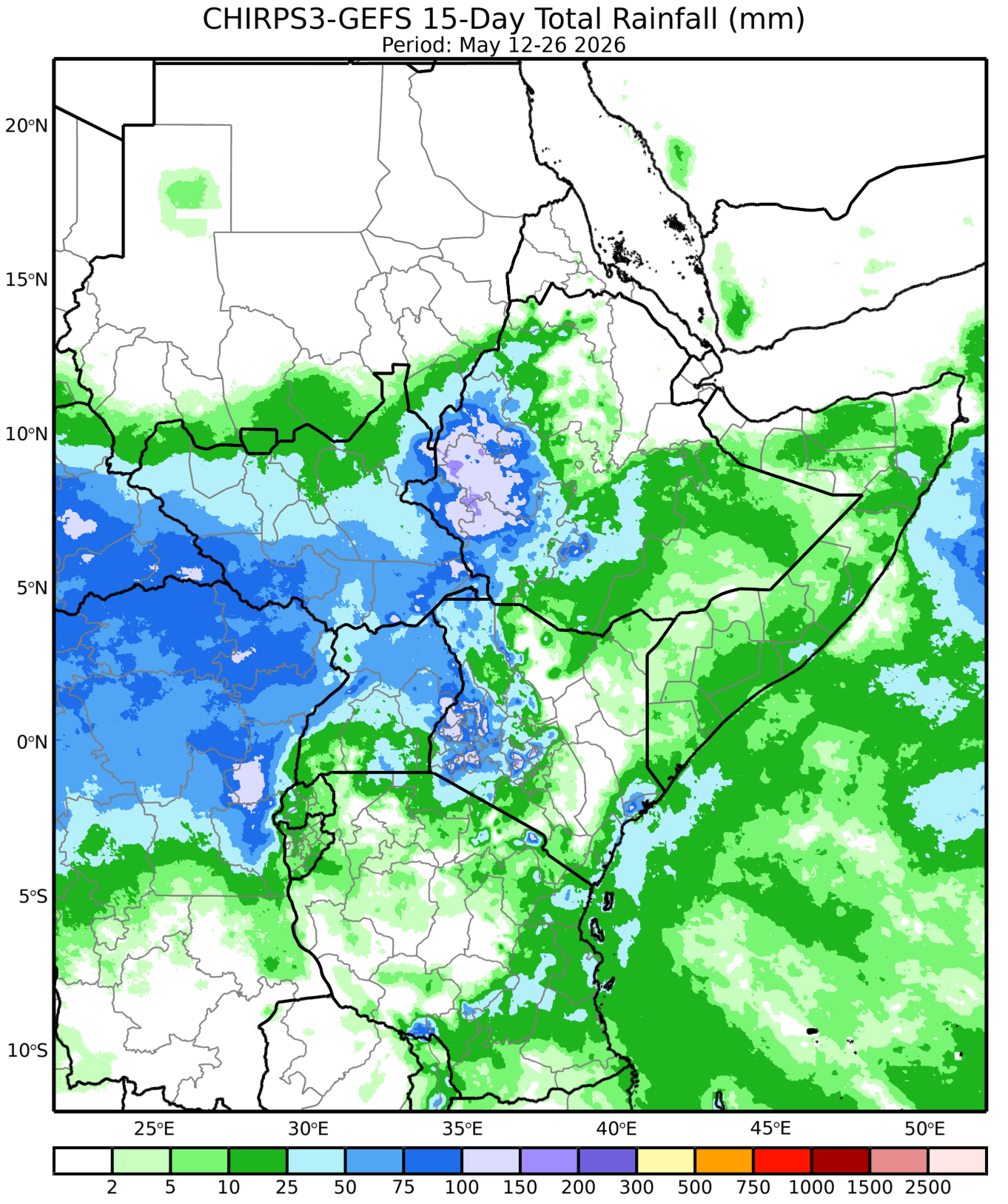
Seasonal rainfall analysis for March–May 2026 shows a highly uneven distribution across the region. Kenya, northern and southeastern South Sudan, and western Ethiopia recorded average to above-average rainfall, supporting improved soil moisture, pasture regeneration, and crop development in several agricultural zones. In contrast, southern-central Somalia and southeastern Ethiopia recorded rainfall deficits as low as 45 percent of average, continuing a multi-season pattern of drought stress in some pastoral and farming communities.
A mid-season dry spell between early and mid-April affected large parts of Uganda, Rwanda, Burundi, Kenya, and Somalia, delaying planting and weakening early crop establishment. Meteorological observers noted that the approximately 20-day rainfall break occurred during a critical growth period, raising concerns among farmers about yield reductions in unimodal and bimodal farming systems.
A Kenyan county agriculture officer, speaking on condition of attribution, said farmers in Elgeyo Marakwet and Tharaka Nithi experienced disrupted planting schedules and localized flooding damage. "We had two extremes in one season—long dry days followed by intense rainfall that damaged roads and fields,” he said.
In Somalia, humanitarian field monitors reported continued below-average vegetation conditions in central and northern regions despite short-lived rainfall recovery in early May. A local pastoralist in Galgaduud region described deteriorating grazing conditions, saying livestock movement has increased in search of pasture and water sources.
The Ethiopian Meteorological Institute warned that if El Niño conditions strengthen, the June–September Kiremt rains could fall below normal in parts of Ethiopia, western Kenya, Karamoja in Uganda, and South Sudan. An institute researcher said in a briefing that "early El Niño development often leads to rainfall redistribution, which can severely affect cereal production and water availability in highland farming areas.”
At the same time, enhanced rainfall in late April contributed to localized flooding in Kenya’s Rift Valley counties and parts of South Sudan, damaging infrastructure and disrupting transport. Authorities reported road washouts and isolated fatalities, while emergency teams assessed affected settlements.
Climate experts note that El Niño impacts in East Africa are complex, often interacting with the Indian Ocean Dipole, which could intensify rainfall during the October–December 2026 short rains season. This dual influence creates uncertainty for agricultural planning, particularly in regions dependent on predictable seasonal cycles.
Humanitarian agencies are closely monitoring food security indicators as uneven rainfall continues to affect crop performance and pasture availability. Analysts warn that persistent deficits in Somalia and southeastern Ethiopia, combined with potential future rainfall variability, could heighten vulnerability in already drought-prone areas.
Regional governments and meteorological agencies are expected to strengthen early warning systems and preparedness measures as climate models continue to signal increasing variability in rainfall patterns across the Horn of Africa.