Bamako (Diplomat.so) – Türkiye's expanding security and diplomatic footprint in the Sahel faces renewed uncertainty on Saturday, May 2, as armed groups in northern Mali consolidate territorial gains, including reports of control over a strategic military installation in Tessalit.
Northern Mali Frontline Changes Military Balance
Developments in northern Mali indicate a rapid shift in control of key territory as separatist and jihadist factions increase coordinated pressure on state forces, altering the security landscape that has shaped regional and foreign partnerships.
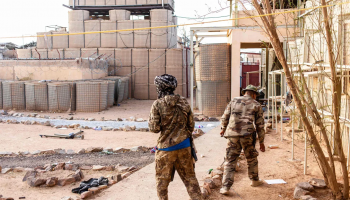
The Azawad Liberation Front announced it had taken control of the Tessalit military base following the withdrawal of Malian army units and allied contingents, including forces linked to Russia’s Africa Corps, according to local field reports circulating in the region. The base is located near Tessalit airport and close to the Algerian border, a corridor widely regarded as strategically significant for movement, logistics, and cross-border surveillance.
A video statement attributed to Azawad commander Asshafghi Bouhenda claimed responsibility for the takeover, though independent verification remains limited due to disrupted communications and restricted access across the northern theater.
A regional security source familiar with developments described the situation as fluid. "Control over certain positions is shifting rapidly, and verification is difficult due to the breakdown of communication infrastructure and ongoing movement of armed units,” the source said.
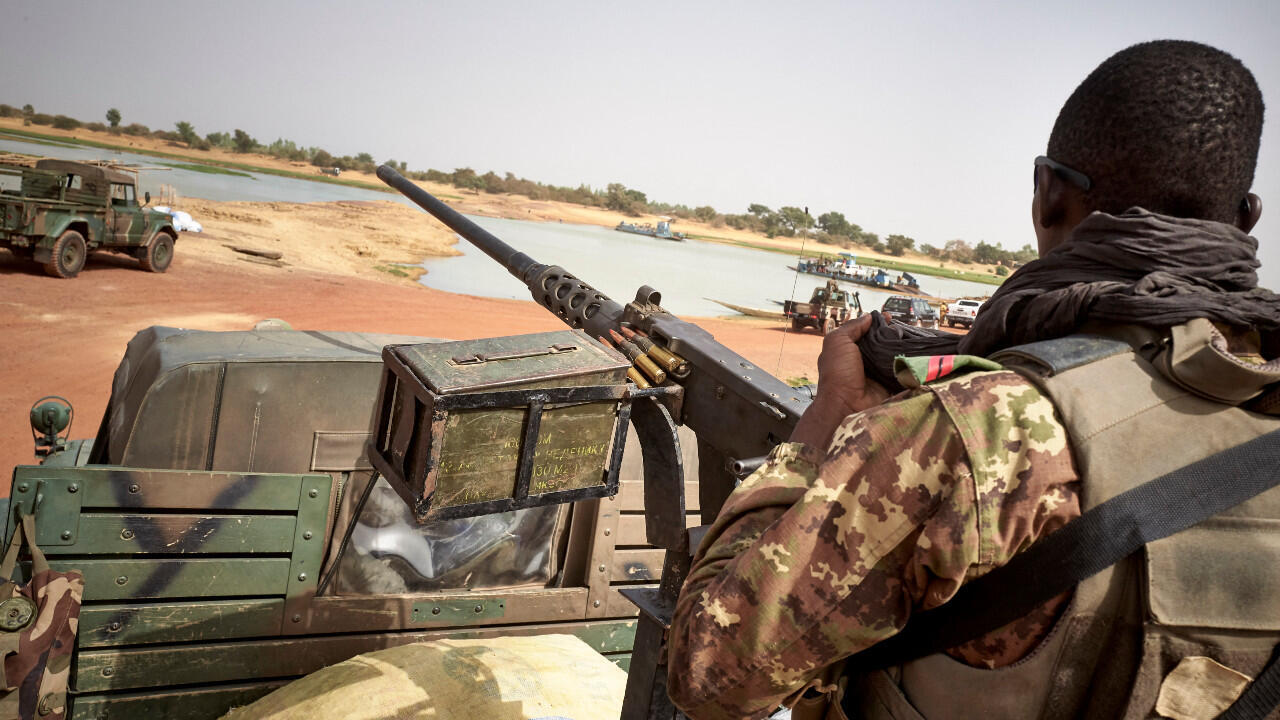
Armed groups operating in northern Mali have begun increasingly relying on repeatable FPV drone strikes targeting positions held by the Malian army and Russia-linked Africa Corps units. Recent operations reported in Anéfis and Aguelhok suggest a notable tactical shift, undermining long-held assumptions that forces in the Kidal region benefit from relative operational sanctuary.
The reported loss of Tessalit follows earlier setbacks in Kidal, reflecting mounting pressure on Mali’s military administration, which has faced persistent insurgent activity since consolidating power in 2021.
Türkiye’s Security Engagement
Türkiye’s role in Mali has evolved over the past decade from humanitarian cooperation into structured defence engagement, gaining momentum following Mali’s strategic reorientation away from France after 2022.
Professor Sedat Aybar, director of the Asia Pacific Africa Studies Centre at Bahçeşehir University in Istanbul, said Türkiye’s engagement reflects a phased approach. "Since 2010, that expansion has been much more rapid,” he said. "It begins with humanitarian cooperation and gradually moves toward economic ties, then security cooperation, military assistance, and capacity building for counterterrorism operations in northern Mali.”
Beverly Ochieng, senior analyst at Control Risks, said defence cooperation has intensified through high-level visits and procurement agreements. "We saw the late defence minister Sadio Camara travel to Ankara multiple times to sign bilateral agreements and secure drones and other military equipment for the Malian armed forces,” she said.
She added that Turkish-manufactured drones, including the Akinci system, have been integrated into Mali’s operational framework. Ochieng also noted that supply chains in the conflict zone remain complex. "Equipment flows are not always linear, and in some cases Russian-linked actors have accessed systems through intermediary channels involving Türkiye,” she said.
Regional Security Fragmentation
The Sahel has undergone a significant geopolitical realignment as Mali, Burkina Faso, and Niger have each moved away from traditional Western defence partnerships, creating space for alternative actors to expand influence.
Melis Ozdemir, a doctoral researcher at Galatasaray University, said Türkiye’s engagement reflects broader regional ambitions. "The Sahel region as a whole is strategically important, and cooperation with Burkina Faso and Niger is part of the same evolving framework,” she said.
Military-led governments across the region have increasingly turned to non-Western partners for security assistance, opening opportunities for Türkiye to expand defence exports and advisory roles.
"This has allowed Türkiye to increase its presence not only diplomatically but also through defence capabilities, particularly drones and military vehicles,” Ozdemir said. "There is also an element of operational testing and real-world deployment of systems in these environments.”
Advisory Role Preferred Over Direct Military Presence
Despite growing defence ties, analysts suggest Türkiye is unlikely to pursue direct military deployment in Mali unless formally requested by Bamako, with current engagement focused on training, logistics, and technical support.
Professor Aybar said precedent exists for advisory cooperation. "If Mali requests assistance similar to other African cases, Türkiye could deploy military advisers to support capacity building,” he said.
Türkiye has also positioned itself as an emerging diplomatic intermediary in regional conflicts. Ochieng said Ankara increasingly participates in dialogue-driven initiatives. "Türkiye is one of the middle powers exploring alternative conflict resolution pathways, including facilitation of dialogue in African crises,” she said.
She added that Turkish platforms have hosted indirect negotiations between armed and political actors in multiple African conflicts, reinforcing its dual security-diplomatic approach.
Strategic Implications for Türkiye and the Sahel
The reported developments in Tessalit and continued instability in northern Mali highlight the evolving complexity of the Sahel conflict, where state authority remains contested and armed group coordination appears increasingly adaptive.
For Mali’s military leadership, territorial setbacks in the north underscore ongoing challenges in consolidating control despite external security partnerships and increased military procurement.
For Türkiye, the shifting battlefield presents both strategic opportunity and operational risk. Its growing defence engagement strengthens geopolitical influence in a region undergoing major realignment, while also exposing Ankara to instability in an increasingly fragmented conflict environment.
Diplomatic and security observers indicate that Türkiye’s long-term positioning in the Sahel will depend on whether regional governments can stabilize territorial control and maintain coherent security frameworks amid sustained insurgent pressure.