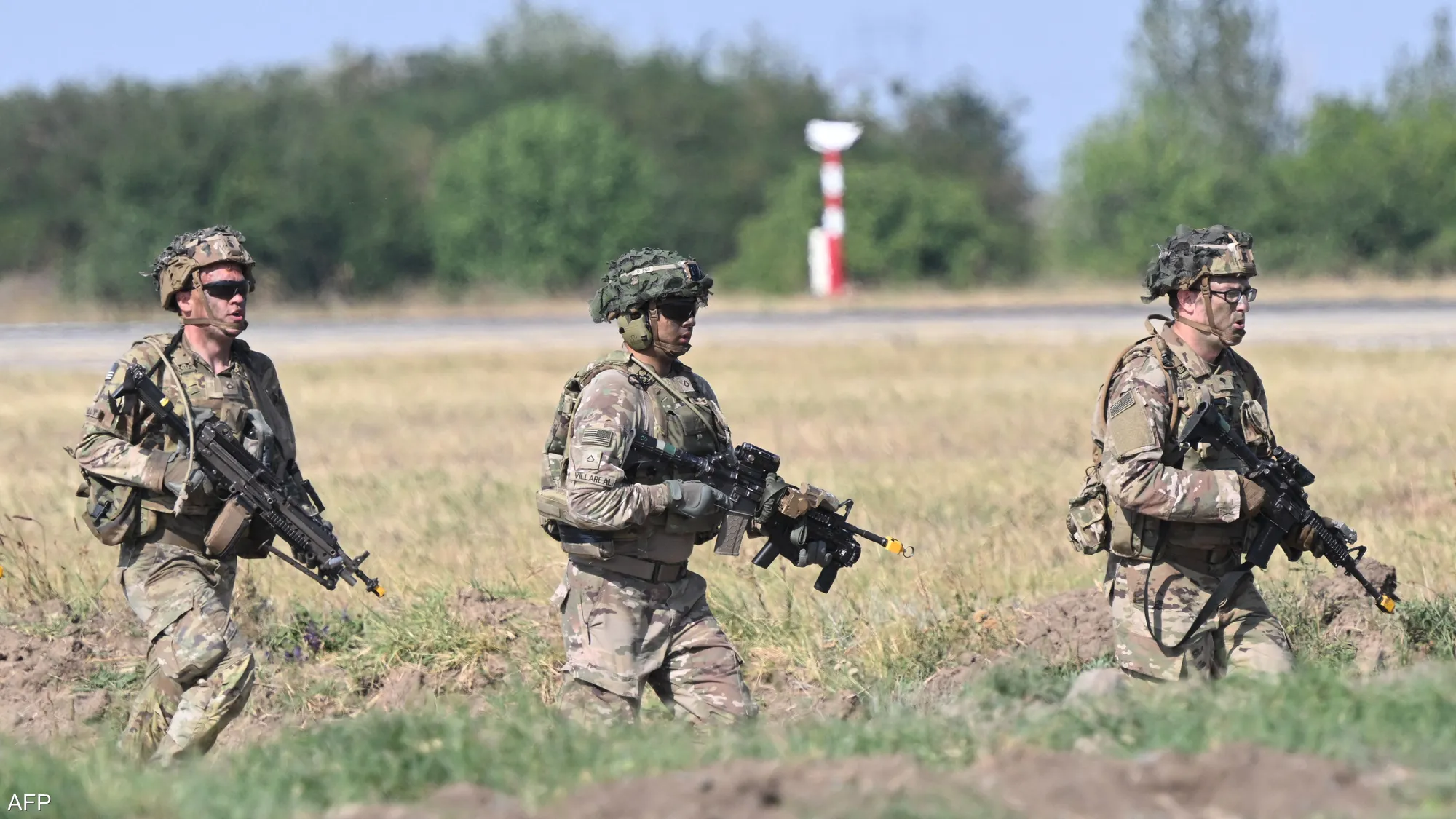
Washington, D.C. (Diplomat.so) - The United States Department of War announced the withdrawal of approximately 5,000 American troops from Germany on Friday, May 1, signaling a significant shift in U.S. military posture in Europe following political tensions with Berlin.
Pentagon spokesperson Daniel Whitaker said during a press briefing that the decision reflects "an ongoing reassessment of force distribution to align with evolving global security priorities.” He added that the move does not represent a full reduction of U.S. commitments to European defense but rather "a repositioning to ensure operational flexibility.”
According to Defense Department data, roughly 68,000 active-duty U.S. military personnel were stationed across Europe by the end of 2025, excluding rotational deployments. These forces operate across 31 permanent bases and 19 contingency sites, forming a longstanding infrastructure dating back to the post-World War II era.
Germany hosts the largest share, with about 36,000 troops stationed at key installations including Ramstein Air Base, a central hub for logistics and air operations. In southern Germany, Bavaria continues to serve as a critical training ground for joint exercises.
Local residents near Ramstein described a visible but orderly military presence. "There has always been a steady flow of aircraft and personnel here,” said Markus Keller, a shop owner in the region, speaking to Diplomat News Network. "Any reduction will likely affect the local economy, even if gradually.”
Beyond Germany, the United States maintains a strong presence in Italy, with over 12,000 troops across Vicenza, Aviano, Naples, and Sicily, supporting operations in the Mediterranean. The United Kingdom hosts more than 10,000 personnel, primarily in air force roles, while Spain accommodates around 3,800 troops near the strategic Strait of Gibraltar.
At the same time, U.S. defense officials confirmed plans to reinforce rotational deployments in Eastern Europe. Poland hosts approximately 10,000 rotating troops under deterrence initiatives, alongside smaller permanent presences in Romania and increased training activity in Hungary.
Military analyst Ella Raymond said the shift reflects broader strategic recalibration. "This is less about withdrawal and more about redistribution,” she explained. "The focus is increasingly on NATO’s eastern flank, where security concerns have intensified.”
The move comes amid ongoing U.S. calls for European allies to increase defense spending and assume greater responsibility for regional security, particularly as Washington navigates multiple international challenges, including tensions in the Middle East.
Observers note that the decision could reshape operational dynamics within NATO without fundamentally weakening the alliance. The long-term impact will depend on how effectively the repositioned forces integrate with allied structures and respond to emerging threats.
The Pentagon indicated that implementation timelines and specific relocation details will be finalized in coordination with NATO partners in the coming months.