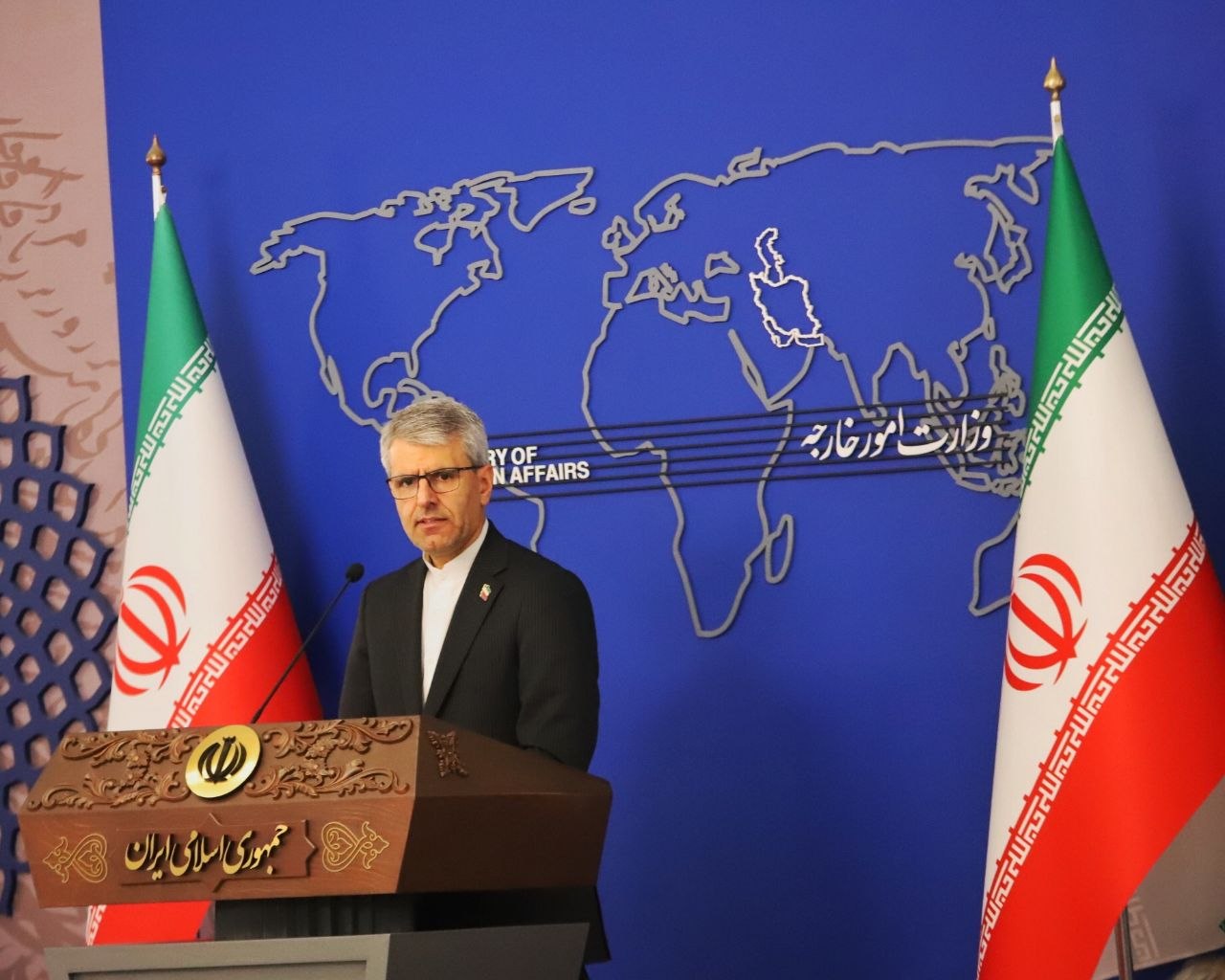
Tehran (Diplomat.so) – Esmail Baghaei, spokesperson for the Iranian Ministry of Foreign Affairs, on Tuesday, April 21, in Tehran, condemned what Iran described as the Israeli regime's appointment of a diplomatic envoy to the northwestern region of Somalia, the so-called "Somaliland," characterizing the move as a violation of Somalia's sovereignty, territorial integrity, and international law.
Iranian officials warned that such actions risk fueling political fragmentation and instability across the Horn of Africa and urged international organizations to respond in line with the United Nations Charter.
Baghaei delivered the remarks during a press briefing at the Iranian Foreign Ministry, where regional diplomatic developments were addressed. He stated that Iran considers any unilateral diplomatic engagement with what he referred to as a breakaway administration without consent from Somalia’s federal authorities as inconsistent with established international norms. He further emphasized that Somalia is internationally recognized as a single sovereign state, and its territorial integrity must be respected by all countries.
Iran Rejects Illegal Move
Iranian Foreign Ministry spokesperson Esmail Baghaei said the reported Israeli diplomatic appointment to the northwestern region of Somalia, the so-called "Somaliland,” represents what Tehran views as a direct challenge to internationally accepted principles governing sovereignty and statehood.
He stressed that Iran regards the move as incompatible with the United Nations Charter, particularly provisions related to non-interference in the internal affairs of sovereign states and respect for territorial integrity. Baghaei stated that "any political or diplomatic engagement that bypasses the recognized central government undermines international legal frameworks and risks encouraging instability in sensitive regions.”
Iranian officials also reiterated that Somalia’s federal government remains the legitimate authority representing the country at the international level.
Call for International Institutional Response
Baghaei called on international and regional organizations, including the United Nations, the African Union, and the Organization of Islamic Cooperation, to take what he described as a responsible position against actions that may undermine sovereignty norms.
He said the international community bears responsibility for maintaining consistency in the application of international law, particularly in regions facing political fragmentation. Iranian officials warned that selective interpretation of sovereignty principles could weaken global diplomatic standards and contribute to further instability.
The Foreign Ministry spokesperson also emphasized the importance of respecting Somalia’s political unity as a foundation for long-term regional stability in the Horn of Africa.
Status of "Somaliland" in Northwestern Somalia
The entity calling itself "Somaliland” located in the northwestern region of Somalia, declared unilateral separation from Somalia in 1991 following the collapse of the central government of Somalia. It has since established its own governing institutions and administrative structures.
Despite its internal political arrangements, it remains unrecognized by any United Nations member state. The Federal Government of Somalia continues to assert sovereignty over the entire territory of the country, including the northwestern region where the separatist administration operates.
Most international institutions maintain recognition of Somalia’s territorial integrity within its federal framework. Within the northwestern region, six major clans are widely reported to reside there, with five of them generally supporting national unity and opposing separatism, while one clan forms the primary support base of the separatist administration. Members of these communities, including those from the separatist clan, are also represented across federal institutions, including both houses of Parliament, the Judiciary, and other branches of the Federal Government of Somalia.
These institutional and social linkages reflect continued integration within Somalia’s national framework. Efforts toward unity, reconciliation, and state-building remain central to Somalia’s political process, with successive administrations emphasizing inclusive governance, power-sharing, and the strengthening of federal institutions as key pillars for long-term stability, national cohesion, and sovereignty.
Regional Diplomatic and Security Context
The Horn of Africa remains a geopolitically sensitive region shaped by maritime trade routes, security challenges, and competing international interests. Diplomatic interactions involving contested territories often generate strong reactions due to the potential implications for regional stability.
Regional actors and international institutions have consistently underscored the importance of respecting sovereignty and avoiding unilateral recognition or engagement that could alter established diplomatic frameworks. Analysts note that such actions may influence broader regional alignments and complicate ongoing security cooperation efforts.
Implications
Experts on Horn of Africa politics say disputes involving recognition and diplomatic engagement in contested territories remain highly sensitive due to their potential impact on regional stability. A regional analyst speaking to Diplomat News Network noted that such developments often extend beyond bilateral relations and affect broader diplomatic consistency across Africa and the Middle East.
The analyst stated that Somalia’s ongoing state-building process is central to maintaining stability in the region, adding that international support has focused on strengthening governance institutions and promoting national reconciliation. "Actions that appear to bypass established state authorities risk complicating fragile political balances,” the analyst said.
Another political observer based in the region highlighted that the Horn of Africa’s strategic location and security challenges make it particularly vulnerable to diplomatic tensions involving sovereignty disputes. He added that maintaining adherence to international legal frameworks is viewed by many stakeholders as essential for preventing escalation.