Tokyo (Diplomat.so) – Government of Japan (Cabinet Office) announced on Tuesday, a partial revision of long-standing defense export rules allowing, in principle, the transfer of domestically produced defense equipment, including lethal finished weapons, to overseas partners for the first time since World War II.
Policy Shift Ends Decades-Old Restrictions
Japan’s government confirmed that it has amended its "Three Principles on Transfer of Defense Equipment and Technology,” a framework that for decades severely restricted arms exports except for limited humanitarian and logistical categories. Chief Cabinet Secretary Minoru Kihara said the revision significantly expands what can be exported under national policy.
"Thanks to this partial revision of the Three Principles on Transfer of Defense Equipment and Technology and related rules, it is now possible, in principle, to allow the transfer of defense equipment, including all finished products,” Kihara said during a press briefing in Tokyo, according to remarks reported by Diplomat News Network from official government transcripts.
Under the previous framework, exports were largely confined to non-combat roles such as rescue operations, transport assistance, surveillance systems, and mine countermeasures.
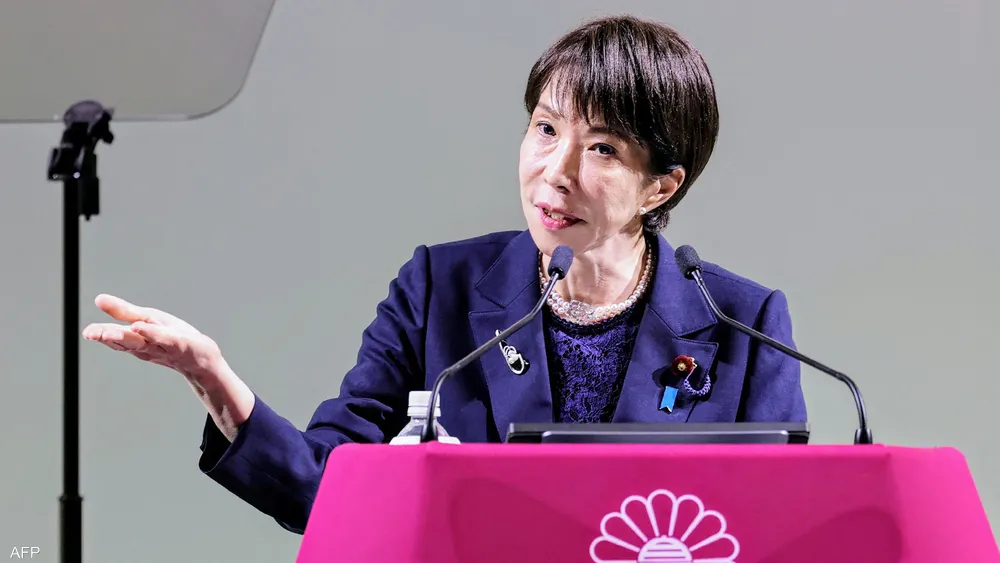
Prime Minister Sanae Takaichi reinforced the policy direction, arguing that Japan must modernize its defense posture while strengthening domestic industry.
"Until now, the transfer of domestically produced finished goods abroad was limited to search and rescue, transport, surveillance, and mine countermeasures,” Takachi wrote on the social media platform X. "With this revision, all defense equipment can now, in principle, be transferred.”
Economic and Strategic Rationale
Government officials and policy supporters argue the move will deepen Japan’s integration into global defense supply chains and expand cooperation with allied nations amid growing regional uncertainty in East Asia.
A senior official from Japan’s Ministry of Defense, speaking on condition of attribution, said the reform is intended to "ensure interoperability with partners and strengthen Japan’s industrial base in a highly competitive global defense market.”
Defense industry analysts in Tokyo described the policy shift as one of the most significant changes in Japan’s post-war security framework. Professor Hiroshi Tanaka, a security policy researcher at a Tokyo-based university, said the revision reflects "a strategic recalibration rather than a departure from Japan’s pacifist constitution.”
"This does not automatically mean large-scale arms exports, but it removes a structural barrier that limited Japan’s participation in multinational defense projects,” Tanaka said.
Public Debate and Domestic Concerns
The announcement has triggered debate within Japan, where post-war pacifism remains deeply rooted in public discourse. Critics argue the policy risks undermining Japan’s long-standing defensive-only posture.
Haruka Shigeru, a peace activist in Yokohama, expressed concern over what she described as "a gradual erosion of Japan’s post-war identity.”
"This decision moves Japan closer to global arms competition, and many citizens feel this shift has not been fully debated in public,” she said.
A commuter interviewed near Tokyo Station said opinions remain divided among ordinary citizens. "Some people think it strengthens security alliances, others worry it changes Japan’s identity,” he said during morning rush-hour observations, where crowds moved through one of the busiest transport hubs in the capital.
Security analysts note that Japan has already been expanding defense cooperation with partners including the United States and several European countries, particularly in joint development of missile defense and advanced radar systems.
Post-War Security Framework
Japan’s defense policy has been shaped by its post-1945 constitution and the adoption of strict export controls designed to limit military engagement abroad. These rules were historically intended to prevent Japan from re-entering military conflict as a major arms supplier.
Over the past decade, however, successive governments have gradually eased restrictions, particularly for joint development projects and limited transfers to allied nations.
The latest revision removes a key limitation that previously restricted exports of finished defense systems, marking a structural shift in policy implementation rather than a complete abandonment of existing oversight mechanisms.
Strategic Implications for the Region
Defense experts say the policy change could enhance Japan’s role in regional security cooperation at a time of rising geopolitical tensions in the Indo-Pacific. Increased collaboration may include technology sharing, joint production, and expanded defense procurement agreements.
However, regional observers caution that expanded Japanese arms exports could also alter perceptions among neighboring countries, potentially influencing broader security dynamics in East Asia.
A regional security analyst based in Seoul said the development will likely be "closely monitored by neighboring governments, particularly given Japan’s historical sensitivities and its evolving defense posture.”
Japan’s government maintains that all exports will continue to be subject to case-by-case screening and compliance with international legal frameworks.