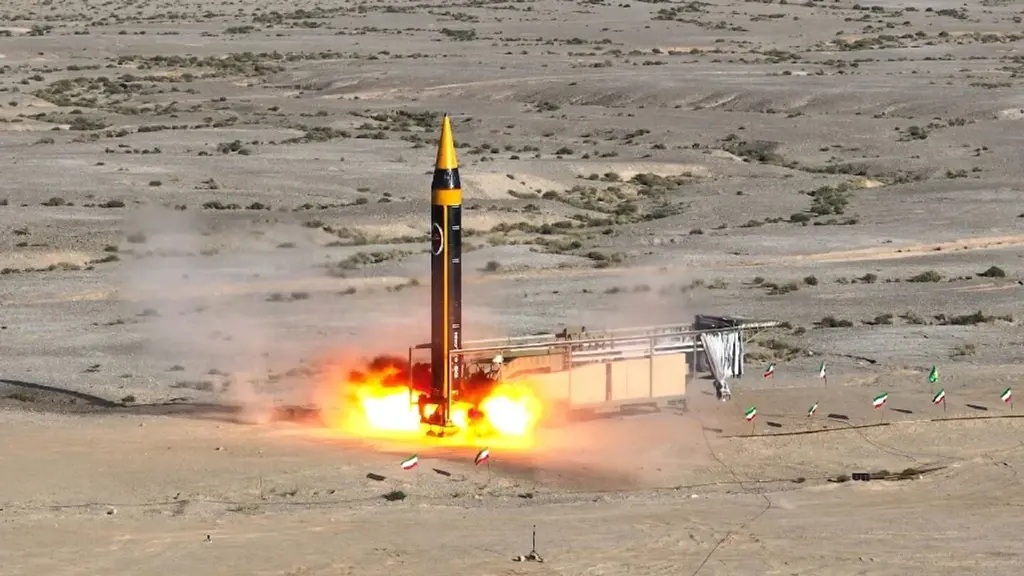
Tehran (Diplomat.so) – The Iranian military reported multiple explosions across Tehran and other major cities on Monday, April 6, following Israeli airstrikes, while Israel confirmed that Iranian ballistic missiles targeted northern regions, including Haifa, resulting in casualties and structural damage.
Explosions Across Iranian Cities
The Iranian Islamic Revolutionary Guard Corps (IRGC) confirmed that several locations, including Karg, Amirabad, and northwestern Tehran, experienced sequential explosions in the early hours of Monday. Iranian emergency services reported fatalities among civilians, including children, in southern Tehran.
Residents near Mehrabad Airport described hearing repeated detonations and witnessing significant smoke rising from surrounding areas. Iranian air defense units were mobilized to intercept incoming aerial threats, according to official briefings.
Other urban centers reportedly affected include Bandar Abbas, Qom, and Shiraz, where explosions caused disruptions in daily life and prompted heightened local emergency responses.
Northern Israel Impacts
Israeli officials confirmed that Iranian ballistic missiles targeted northern Israel, striking Haifa and the Upper Galilee. Emergency services reported the recovery of two bodies from a residential building in Haifa, while four additional individuals remained missing. "Search operations continue to locate those trapped beneath debris, and emergency shelters have been activated,” said Moshe Levy of Israel’s Home Front Command.
Residents in northern Israel described sirens and widespread evacuations. Several buildings sustained structural damage, and local authorities reported multiple injuries, including critical cases. Emergency medical teams provided immediate care and transported affected civilians to hospitals.
Targeting of Iranian Strategic Assets
Israeli military statements confirmed that airstrikes on Tehran targeted the IRGC’s Oil Headquarters, where senior officer Mohammad Reza Ashrafi Kahi was reportedly killed. The military characterized the site as a hub for financial and logistical support to Iran’s regional operations and allied groups in Lebanon, Yemen, and Syria.
Liat Meir, a Middle East security analyst, explained that the strikes on economic and operational infrastructure are designed to reduce Iran’s capacity to fund and equip regional proxies. "By disrupting revenue streams, Israel aims to weaken Iran’s operational reach without directly engaging broader civilian populations,” she said.
Civilian and Institutional Impacts in Tehran
Local reports confirmed damage to the Sharif University campus and surrounding areas in northern Tehran. Residents described streets filled with debris and disrupted communications. Leila Ahmad, a university staff member, reported to Diplomat News Network that "the explosions shook nearby buildings and prompted widespread concern among residents and students.”
Authorities confirmed multiple casualties in southern Tehran and Qom, with local hospitals receiving injured civilians. Emergency services were deployed across affected cities to coordinate medical care, evacuation, and fire suppression.
Rising Regional Tensions
The military escalation occurs amid heightened U.S.-Iran tensions over the Strait of Hormuz and critical energy infrastructure. Recent statements from Washington have emphasized potential military action should Iran fail to reopen strategic maritime routes. Analysts warn that such rhetoric contributes to regional instability and complicates diplomatic efforts.
Hassan Mahdavi, a regional security consultant, told Diplomat News Network that "the intensity and geographic spread of these strikes suggest both Iran and Israel are prepared for sustained engagement, raising risks to civilians and critical infrastructure.”
Response Measures
Observers in Tehran reported heavy traffic disruptions and mass evacuations from areas near blast sites. Iranian Red Crescent teams conducted search-and-rescue operations, while local authorities established temporary shelters for displaced families. In northern Israel, civil defense units coordinated emergency medical response and provided temporary accommodations for residents impacted by missile strikes.
Analysts emphasize that these events may prompt international diplomatic responses, given the potential for escalation and humanitarian consequences. The immediate effects include property damage, disrupted transportation, and civilian injuries, while long-term concerns focus on regional stability and energy security.
Strategic Insights
Security analysts highlight that targeting urban centers and strategic economic hubs is consistent with both countries’ broader military objectives. Dr. Miriam Alon noted that "the attacks aim to degrade Iran’s operational capabilities while sending a deterrent signal, though the risk to civilian populations remains significant.”
The ongoing strikes reflect the sixth consecutive week of heightened conflict in the region, with prior Israeli and U.S. actions in Iranian territory and corresponding Iranian missile launches escalating tensions. Observers caution that continued exchanges may further destabilize the Gulf and Levant, affecting global trade and energy supply chains.