Washington D.C. (Diplomat.so) – The U.S. Department of War confirmed on Monday, that over 50,000 American troops are actively supporting Operation "Epic Fury" in the Middle East, targeting Iranian military and industrial assets while diplomatic discussions continue with Tehran.
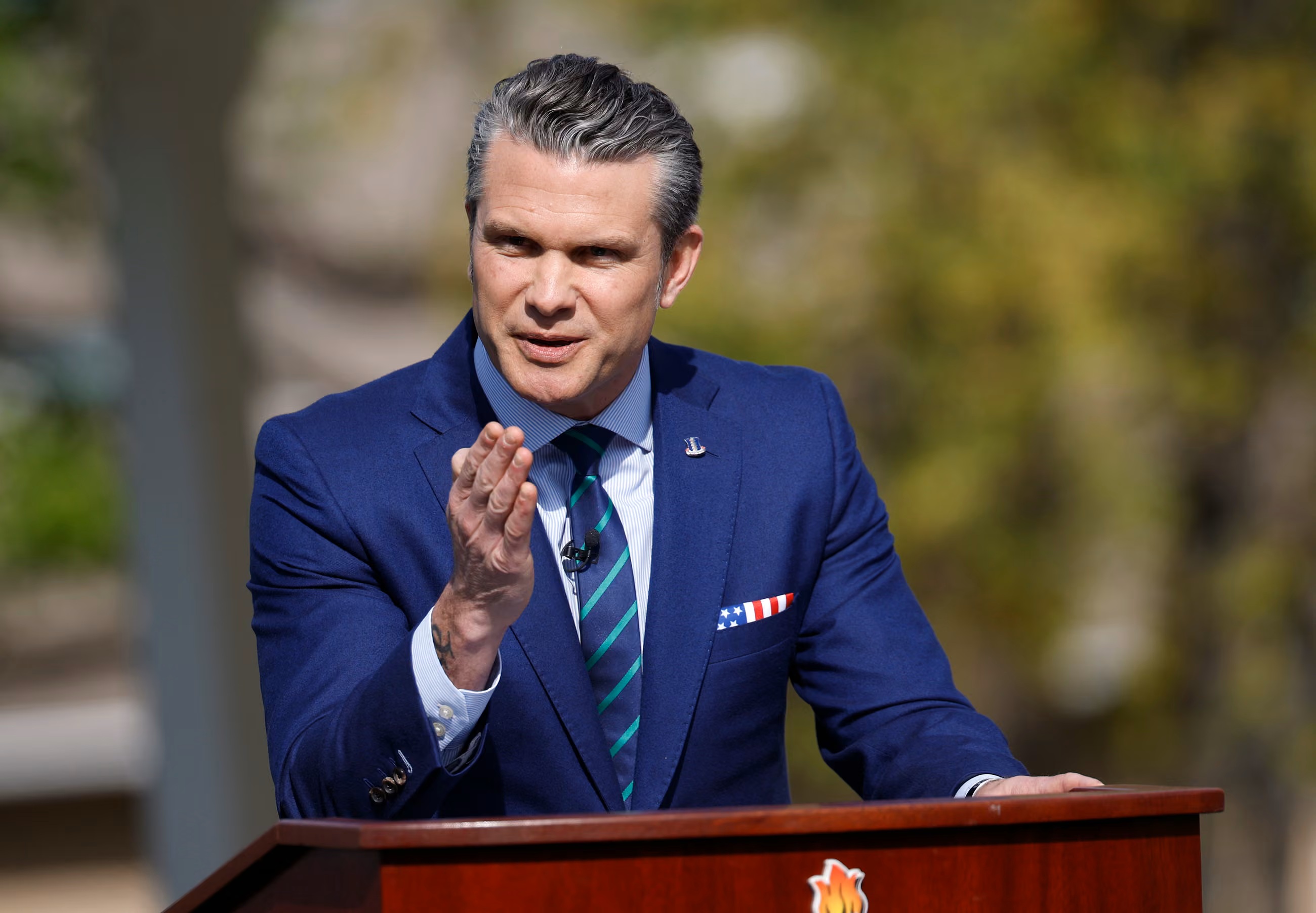
War Secretary Pete Hegseth stated during a Pentagon briefing that negotiations with Iran "are ongoing and gaining momentum,” emphasizing that the United States seeks a formal agreement but remains prepared to escalate military operations if diplomacy fails. "President Donald Trump is ready to make a deal,” Hegseth said, adding that all options, including the deployment of ground forces, remain on the table.
Expanded Military Campaign
Joint Chiefs of Staff Chairman General Dan Quin reported that U.S. forces have struck over 11,000 targets across Iran, achieving significant air superiority. "Our campaign has neutralized key elements of Iran’s military infrastructure,” Quin said, highlighting that all Iranian Jamaran-class frigates have been destroyed and approximately 150 vessels of the Iranian fleet have been sunk.
On the ground, Diplomat News Network correspondents in the Gulf observed large U.S. naval and air deployments, with aircraft carriers and B-52 bombers stationed in the region. Quin detailed that U.S. forces continue to focus on Iran’s mine-laying capabilities, missile production sites, and drone facilities, underscoring a comprehensive effort to undermine Iran’s defensive and offensive capacities.
Department of War spokesperson Kingsley Wilson confirmed the scale of the deployment, noting that the current force includes approximately 2,500 additional marines and 2,500 ground troops, raising the total U.S. presence to over 50,000 service members, nearly 10,000 above typical levels.
Strategic Maritime Operations
Secretary Hegseth addressed the strategic significance of the Strait of Hormuz, warning that global actors must prepare for potential disruptions. "The objectives are clear, and the United States has established the conditions necessary for success,” he said, while also acknowledging that rival states have provided intelligence to Iran regarding U.S. assets.
United States Secretary of State, Marco Rubio, highlighted the global implications of Tehran’s maritime control ambitions. "Iran seeks to assert authority over the Strait of Hormuz, which poses a direct threat to international shipping and energy security,” Rubio told, emphasizing that while the U.S. prefers diplomatic resolutions, military options remain viable.
Diplomatic Engagements
While military operations intensify, President Trump signaled cautious optimism about diplomatic channels. Speaking via the platform Truth Social, Trump indicated that talks with "a newer, more moderate Iranian administration” are making progress, though he warned that failure to reach an agreement could result in broader attacks on Iranian infrastructure, including electricity stations, oil wells, and desalination facilities on Kharg Island.
Experts caution that despite the substantial U.S. presence, the number of forces currently deployed may be insufficient for a full-scale ground campaign, noting that controlling a country of Iran’s size would require significantly larger troop deployments.
Regional and Operational Analysis
Analysts suggest that the combination of high-intensity strikes and ongoing negotiations reflects a dual strategy aimed at compelling Iran to yield while avoiding prolonged occupation. "The U.S. is leveraging overwhelming firepower to reinforce its negotiating position,” said Dr. Linda Mayer, a Middle East security analyst at Georgetown University. "The degradation of Iran’s naval and missile capacities increases U.S. leverage but also raises the stakes for regional stability.”
Locals in the Gulf reported increased military air activity and heightened maritime patrols, with vessels and aircraft visibly maneuvering near key shipping lanes. One maritime logistics officer, speaking on condition of attribution, told Diplomat News Network that "commercial traffic is being rerouted, and all crews are on high alert, reflecting the tense operational environment.”
The ongoing U.S.-Iran confrontation highlights a complex interplay between military force and diplomacy, with global energy routes, regional security, and international trade directly affected. As Operation "Epic Fury” continues, observers emphasize the importance of closely monitoring both military actions and negotiation developments, noting that the outcome will have far-reaching implications for Middle Eastern stability and U.S. strategic posture.