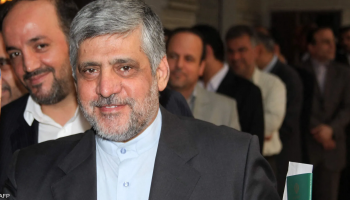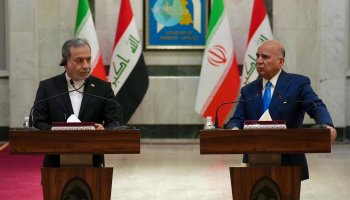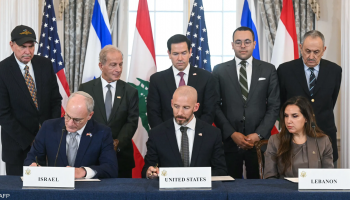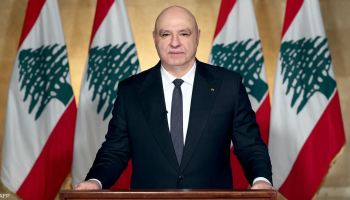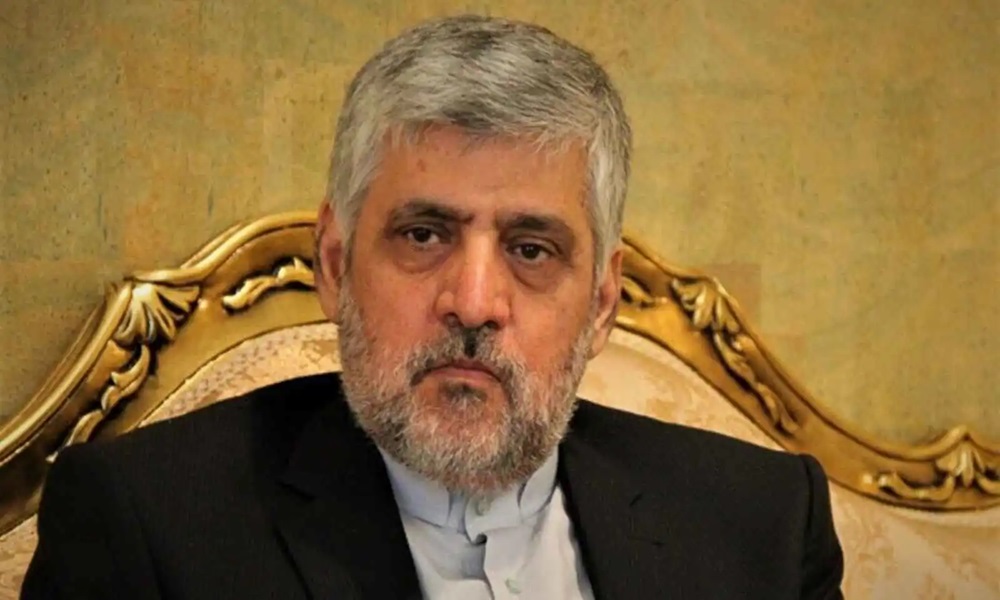
Beirut (Diplomat.so) - The Lebanese Ministry of Foreign Affairs and Emigrants announced on Tuesday, that it has revoked accreditation for Iranian ambassador-designate Mohammad Reza Sheibani in Beirut and ordered his departure by Sunday, March 29.
The decision was formally conveyed during a summons of Iran’s chargé d’affaires in Lebanon, Toufic Samadi Khoshkhou, who was received by Secretary-General of the Foreign Ministry Ambassador Abdelsattar Issa. According to an official statement carried by the National News Agency, Lebanese authorities declared Sheibani persona non grata, citing what they described as violations of diplomatic norms governing relations between the two countries.
Under the Vienna Convention on Diplomatic Relations, a receiving state retains full sovereign discretion to grant or refuse agrément to an ambassador-designate and may declare a diplomat persona non grata at any stage without providing justification, including doing so publicly, as the convention does not prohibit public disclosure of such decisions.
This legal framework is reflected in Lebanon’s move to withdraw approval for Iran’s appointed ambassador amid its fragile governing environment, where authorities appear to be balancing internal political divisions with external diplomatic pressures. For Lebanon’s politically divided administration, the mechanism provides a rules-based instrument to respond to perceived breaches of diplomatic norms while limiting escalation, allowing the state to assert sovereignty and signal its position within established international law despite institutional constraints and heightened regional sensitivities.
A senior Lebanese diplomatic official, speaking to Diplomat News Network on condition of attribution, said the move reflects "a sovereign response to repeated breaches of established diplomatic protocols,” without providing further operational details. "The government is signaling that established norms of state-to-state engagement must be respected,” the official added.
In parallel, Lebanon recalled its ambassador to Iran, Ahmad Sweidan, for consultations. The Foreign Ministry described the step as part of a broader review of bilateral relations following what it termed "unacceptable conduct” by Tehran. No immediate response was issued by Iranian authorities.
On the ground in Beirut, activity around the Foreign Ministry remained routine, though security presence appeared slightly increased compared to previous days. A small group of journalists gathered outside the ministry building, while officials entered and exited without public comment.
Israel welcomed the Lebanese decision. Israeli Foreign Minister Gideon Sa’ar said in a statement on Tuesday that the move was "justified and necessary,” linking it to Iran’s regional role and its support for Hezbollah. Sa’ar urged Beirut to take further "practical measures” against the group, which Israel and several Western governments designate as a militant organization.
A Beirut-based political analyst, Tamer Elio, told Diplomat News Network that the development could mark a "rare escalation in formal diplomatic signaling by Lebanon toward Iran.” He noted that while tensions have periodically surfaced, outright rejection of an ambassador-designate is an uncommon step. "This introduces new strain into an already complex relationship shaped by regional alignments and internal Lebanese dynamics,” he said.
The decision comes amid heightened regional tensions and ongoing scrutiny of foreign influence within Lebanon’s political and security landscape. Hezbollah’s role, backed by Iran, has long been a point of contention domestically and internationally, complicating Beirut’s diplomatic balancing act.
The coming days are expected to test whether the move leads to reciprocal actions from Tehran or opens the door to further diplomatic recalibration between the two countries.