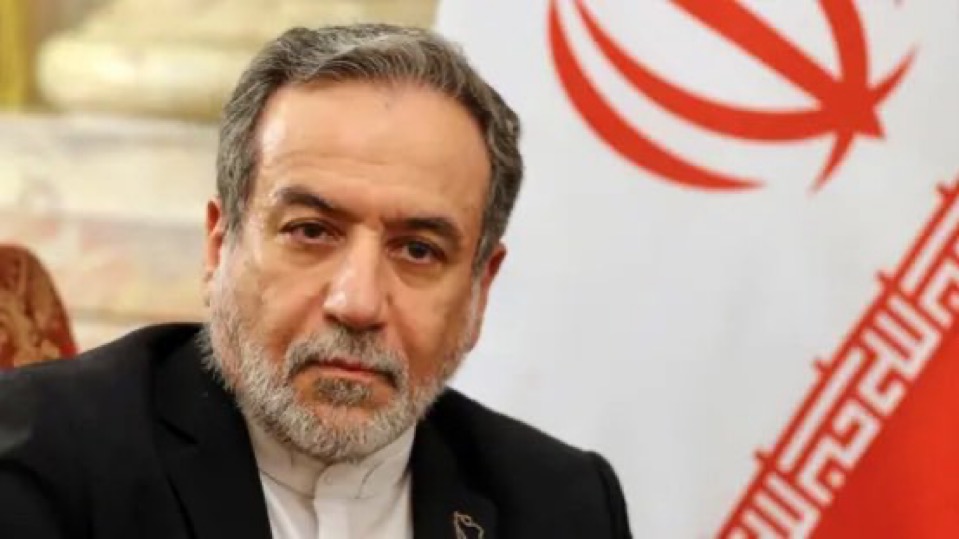
Tehran (Diplomat.so) – Iranian Foreign Minister Abbas Araghchi on Tuesday, condemned U.S. and Israeli military actions against Iran, asserting that international law is being undermined by Western double standards while acknowledging German President Frank-Walter Steinmeier's criticism of violations affecting Iranian citizens.
Araghchi made the remarks in a post on X, stating that global legal norms have lost practical effectiveness due to what he described as inconsistent Western responses to conflicts in Gaza and Ukraine. "International law is dead in practice—driven by Western double standards on Gaza vs. Ukraine and silence on Israel–U.S. aggression on Iran,” he wrote, adding that "those who value the rule of law should also speak up.”
International law is dead in practice—driven by Western double standards on Gaza vs. Ukraine and silence on Israel–U.S. aggression on Iran.
— Seyed Abbas Araghchi (@araghchi) March 24, 2026
Still, credit to President Steinmeier for condemning the violations against Iranians. Those who value the rule of law should also speak up pic.twitter.com/1QQwy5pIDE
His statement follows the February 28 escalation, when U.S. and Israeli strikes reportedly resulted in the deaths of Iranian leaders, political figures, military commanders, and civilians, while also damaging civilian infrastructure including schools, multiple football stadiums, public facilities, and other urban installations. The developments have intensified diplomatic tensions surrounding the confrontation between the United States and Iran, as Tehran continues to present the conflict as a question of international legal accountability and consistency in the application of global norms among major powers.In Berlin, German President Frank-Walter Steinmeier addressed a gathering of diplomats on the same day, sharply criticizing the U.S.-led military action against Iran. He described the conflict as a violation of international law and questioned the justification for claims of an imminent threat from Iran. ""There is no credible basis for the claim that an imminent threat from Iran justified the United States’ decision to carry out attacks,” Steinmeier said.On-site observations from Berlin indicated a formal diplomatic environment with heightened attention from foreign policy officials and staff. Attendees described a reserved but focused atmosphere as Steinmeier delivered remarks that deviated from his typically ceremonial role. A German foreign policy staff member, speaking on condition of attribution, noted that discussions following the speech reflected "growing concern over long-term security and Europe’s strategic direction.”Chancellor of Germany, Friedrich Merz, has maintained a more cautious position compared with Steinmeier’s direct criticism. While Merz has expressed concerns about the absence of a clear exit strategy in the conflict, he has not explicitly labeled the war illegal, underscoring differences within Germany’s governing coalition and broader European policy debates.Analysts say the exchange of statements highlights contrasting diplomatic narratives: Iran emphasizing perceived inconsistencies in international law enforcement, and Germany signaling internal reassessment of transatlantic relations. The developments also reflect broader geopolitical considerations, including Europe’s defense posture and reliance on U.S. technology and security frameworks.Diplomat News Network reporting indicates that policymakers in Europe are increasingly evaluating strategies aimed at strengthening regional autonomy amid ongoing uncertainty in global alliances.