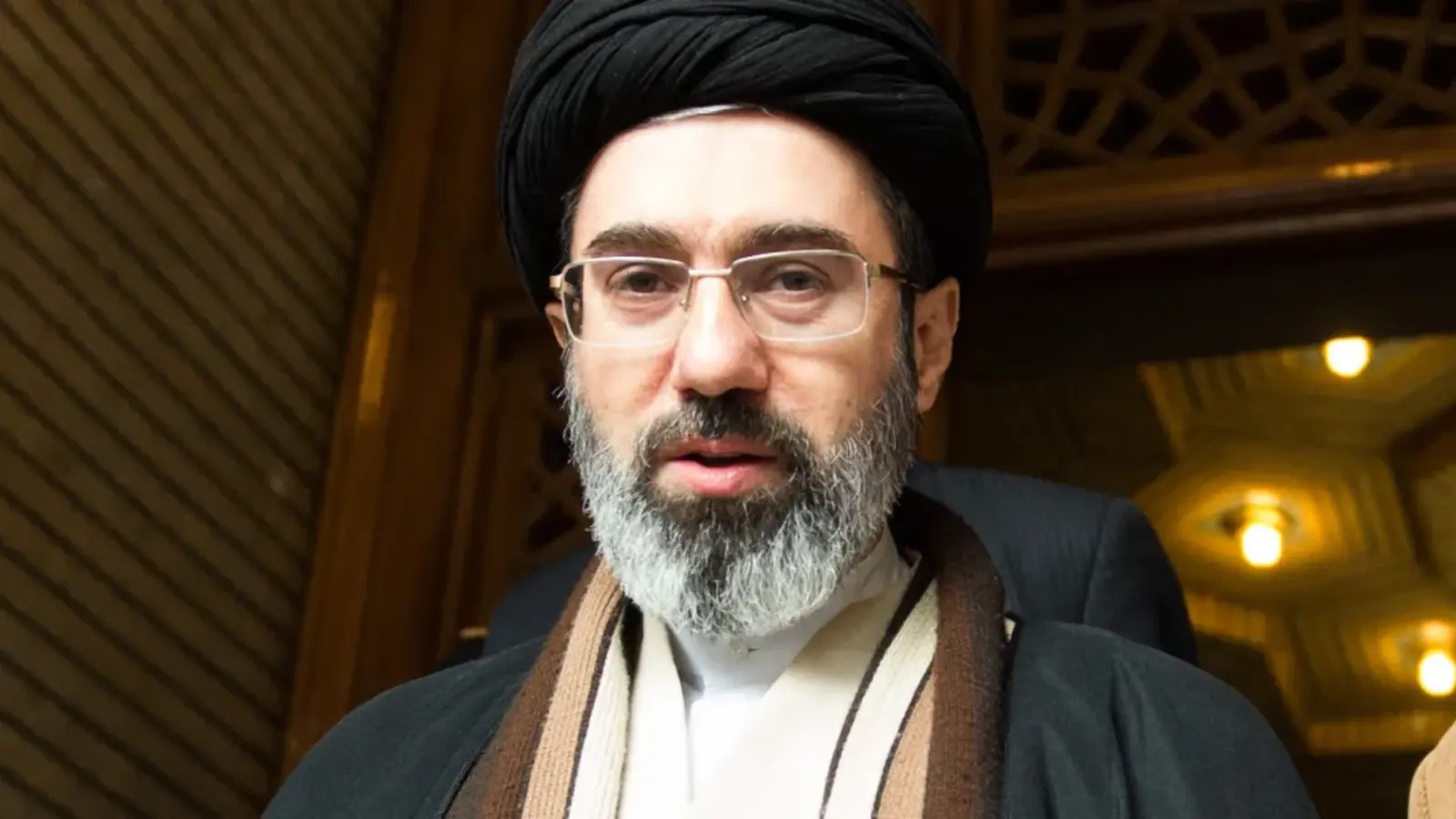
Tehran (Diplomat.so) - Intelligence agencies including the Central Intelligence Agency, Mossad, and other international services monitored Iran's Nowruz observances on Friday to assess whether Mujtaba Khamenei would appear publicly or deliver a speech marking the Persian New Year, as uncertainty continues over his status and role.
Reports attributed to the U.S.-based news outlet Axios indicate that Mujtaba Khamenei did not make any visual public appearance during the holiday and instead issued a written statement. This absence marks a deviation from longstanding expectations that senior political figures in Iran appear publicly during major national and cultural events such as Nowruz.
The lack of a public appearance has contributed to increased scrutiny regarding his health, security posture, and current location. Intelligence agencies are understood to be analyzing indirect indicators of authority within Iran’s political system, particularly amid limited direct visibility of top leadership figures.
A senior Israeli official quoted in reporting stated, "We have no evidence that he is the one actually issuing orders.” A separate U.S. official added, "It’s very unusual. We don’t think the Iranians would go to all this trouble to select a dead man as leader, but at the same time, we have no evidence that he has taken control.” These remarks reflect ongoing uncertainty rather than confirmed conclusions about leadership succession or authority.
U.S. officials also indicated that the national security team of President Donald Trump is continuing efforts to identify who currently holds effective decision-making power in Tehran. The issue is being examined through intelligence assessments that consider communication patterns, visible leadership activity, and institutional behavior.
Defense-related commentary attributed to United States Secretary of War Pete Hegseth suggested that Mujtaba Khamenei may have sustained injuries in a previous strike that reportedly killed his father. However, these claims remain unverified independently and have not been corroborated by publicly available evidence.
Background context provided in reporting highlights that Iran’s leadership structure has undergone significant strain following the deaths of senior figures. Observers note that the Islamic Revolutionary Guard Corps has assumed a more prominent operational role in maintaining continuity of governance, particularly in security and strategic decision-making functions.
On-the-ground observations during Nowruz celebrations showed routine public activity across urban centers, with residents engaging in customary festivities. No widespread disruptions were reported in connection with the political uncertainty, and daily life appeared to continue under normal conditions.
The evolving situation carries implications for regional stability and international policy analysis. Analysts assessing Iran’s internal dynamics emphasize that reduced visibility of leadership, combined with constrained communication among senior officials, complicates efforts to determine how authority is exercised and coordinated within the state apparatus.
Mojtaba Khamenei Rejects External Pressure
Mojtaba Khamenei, Iran’s Supreme Leader, said on Friday in Tehran that adversaries misjudged the country’s internal cohesion and expected a rapid collapse of the Islamic system, while outlining a broader narrative of sustained external pressure and domestic resilience.
In his Nowruz address, Khamenei characterized the past year as one marked by what he described as three separate conflicts, framing them as part of a coordinated effort to weaken Iran politically and socially. He stated that expectations of internal unrest following pressure campaigns and targeted strikes had not materialized, asserting that public participation in national events demonstrated continued support for state institutions.
According to his remarks, foreign actors had assumed that leadership losses would trigger widespread instability. "They believed that removing key figures would lead to disintegration within a short period,” he said, adding that the outcome instead reflected strengthened internal alignment and continuity of governance structures.
He denied that the attacks in Turkiye and Oman were carried out by Iranian armed forces "in any way,” considering them "orchestrated by the Zionist enemy with the aim of sowing discord among the nation.”
Khamenei also urged Iranian media institutions to maintain focus on national cohesion and avoid amplifying internal weaknesses, positioning information control as part of broader state resilience. Beyond security framing, he highlighted economic priorities, calling for increased domestic production capacity and reduced dependence on external systems, aligning with long-standing policy themes emphasizing self-reliance under sanctions and geopolitical pressure.
President Masoud Pezeshkian Reaffirms Governance Continuity
Masoud Pezeshkian, Iran’s President, said Friday that recent strikes had targeted senior officials and civilians, describing the attacks as part of an effort to destabilize the state. He stated that Iran’s leadership transition mechanisms had functioned effectively, noting that the Assembly of Experts moved quickly to ensure continuity at the top of the political structure.
Pezeshkian reiterated that Iran does not pursue nuclear weapons and emphasized that national defense forces remain committed to protecting territorial integrity. He also called for the development of a regional security framework involving neighboring countries, suggesting that cooperation could reduce tensions and improve stability across the region.
In Tehran, heightened security measures were visible, including increased patrols and checkpoints near key government areas. Public gatherings for seasonal celebrations continued, with residents maintaining daily routines under a noticeable security presence.
"I see more security than usual, but people are still going about their lives,” said a local resident in central Tehran. "There is concern, but also a sense of continuity.”
Since late February, the region has experienced sustained exchanges involving Iran, Israel, and the United States, with reported strikes and retaliatory actions contributing to rising tensions. Iranian officials say their responses have targeted military-linked assets, while the broader situation has raised concerns among neighboring states about potential spillover effects.
Analysts assess that Khamenei’s messaging reflects an effort to consolidate domestic unity while signaling deterrence externally, whereas Pezeshkian’s statements emphasize institutional stability and diplomatic openness. Together, the messaging highlights Iran’s dual approach of maintaining internal cohesion while navigating an increasingly complex regional security environment.