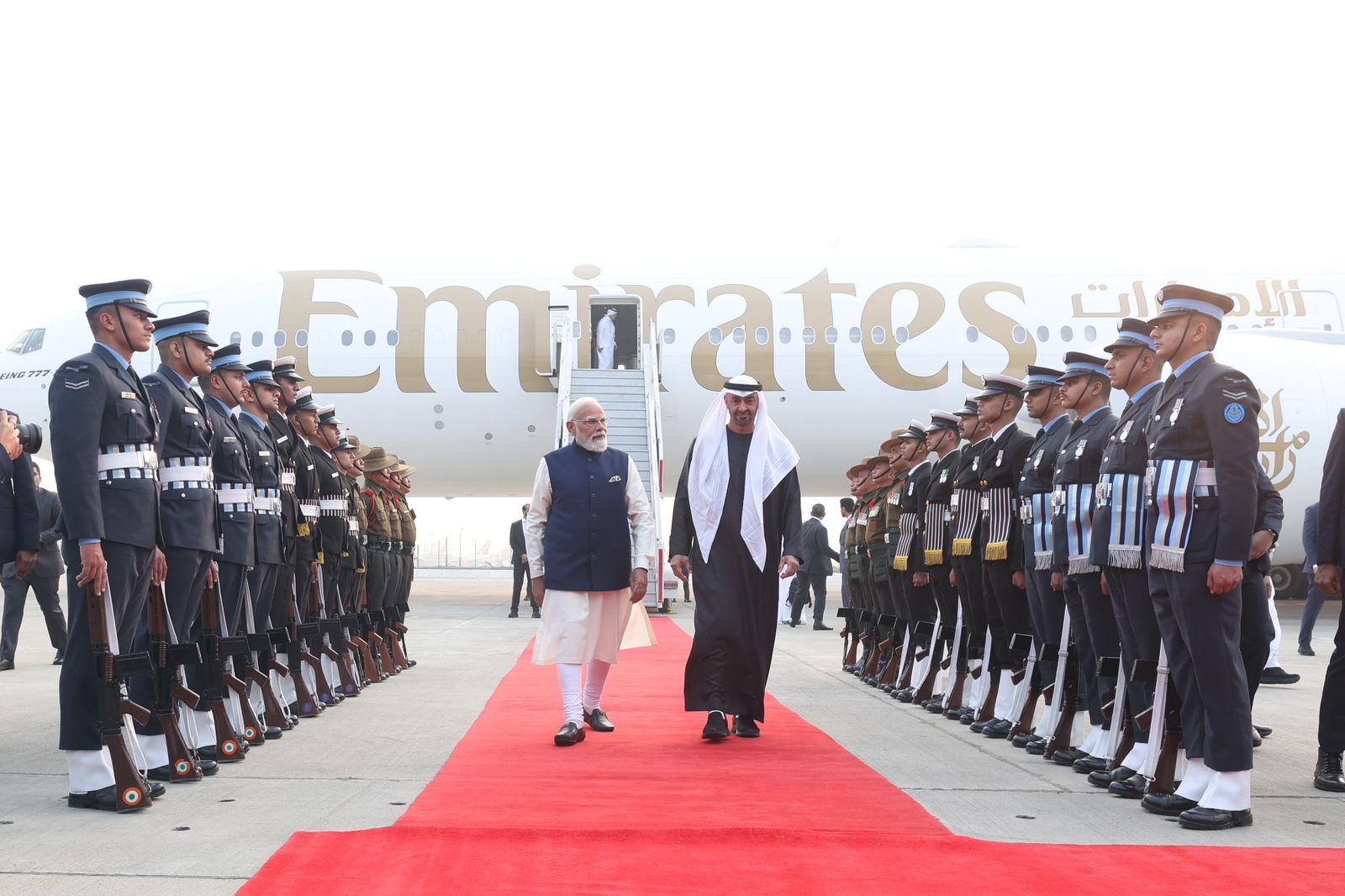
New Delhi (Diplomat.so) - Indian Prime Minister Narendra Modi welcomed Mohamed bin Zayed Al Nahyan, President of the United Arab Emirates, upon his arrival in New Delhi on Monday. The visit, held at the invitation of the Prime Minister, highlights the growing strength of India-UAE relations and marks Sheikh Mohamed's third official trip to India since assuming office.
Modi said in a post on his X account that he went to the airport to receive "my brother” Sheikh Mohamed. He added that the visit reflects the importance the UAE leader attaches to a strong India-UAE friendship and expressed anticipation for their discussions. The gesture of personally welcoming the UAE President underscores the warmth and symbolism of the bilateral relationship.
The two leaders are expected to hold wide-ranging talks covering trade, investment, energy, and defense cooperation. India and the UAE are already among each other’s top trading partners, supported by frameworks such as the Comprehensive Economic Partnership Agreement (CEPA), the Local Currency Settlement system, and a Bilateral Investment Treaty. Their collaboration also extends to renewable energy, infrastructure, and emerging technologies, areas where both countries see opportunities for long-term growth.
Analysts note that the timing of the visit is significant. With global energy markets in flux and geopolitical tensions affecting supply chains, India’s partnership with the UAE provides a measure of stability and diversification.
For the UAE, closer ties with India strengthen its outreach to South Asia and expand its role as a hub for trade and investment. The visit also reflects a broader trend of Gulf states deepening ties with Asian powers to balance traditional alliances with the West.
Beyond economics, the engagement carries strategic weight. Both countries share converging views on regional stability, counterterrorism, and multipolar diplomacy.