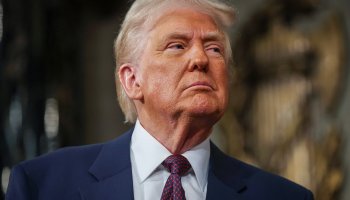
Washington DC (Diplomat.so) - U.S. President Donald Trump said on Thursday, May 7, that he held a "great" telephone call with European Commission President Ursula von der Leyen in which they discussed Iran's nuclear program and unresolved transatlantic trade commitments affecting tariffs, investment flows, and regulatory alignment between the United States and the European Union.
U.S. President Donald Trump described the conversation as constructive but warned that Washington would proceed with higher tariffs if Brussels failed to meet agreed trade obligations.
"We had a very good discussion, but the European Union must deliver on its commitments,” Trump said, adding that both sides reaffirmed that Iran must not be allowed to acquire nuclear weapons.
The U.S. President stated that the EU had until July 4 to comply with terms linked to a previously negotiated trade arrangement before tariff adjustments would be imposed. "I have been very patient, but the agreement must be respected,” he said, referencing what he described as a landmark framework concluded earlier in Scotland.
An official from the European Commission, speaking on condition of attribution, said discussions between both sides remain ongoing. "We continue to engage with U.S. counterparts to clarify implementation issues and ensure stability in transatlantic trade relations,” the official said.
A separate EU trade adviser noted that internal reviews were underway to assess Washington’s claims regarding unmet commitments. "There are differing interpretations of certain tariff provisions, and these require technical resolution,” the adviser said.
The announcement came alongside renewed U.S. tariff threats targeting European automotive exports, with the U.S. President indicating duties could rise from 15% to 25% within days. Industry analysts in Washington warned that such a move could significantly affect supply chains across Germany, France, and Italy, particularly in the premium vehicle sector.
Beyond trade, the call also touched on Middle East security. The U.S. President reiterated concerns over Iran’s nuclear capabilities and linked diplomatic efforts to broader regional stability, including maritime security near the Strait of Hormuz.
Diplomatic observers told Diplomat News Network that the simultaneous focus on tariffs and Iran reflects an increasingly intertwined approach between economic pressure and security diplomacy. One Washington-based analyst said, "Trade leverage is now being directly connected to strategic negotiations, which raises the stakes for both Brussels and Tehran.”
The developments underscore rising tensions between Washington and Brussels at a time when both sides are seeking to balance economic cooperation with competing geopolitical priorities.