Tel Aviv (Diplomat.so) - Israel Defense Forces Spokesperson's Unit confirmed on late Sunday evening, June 28, that troops destroyed a fortified underground Hezbollah tunnel network in Majdal Zoun, southern Lebanon, during a coordinated overnight engineering operation.
Underground infrastructure destroyed
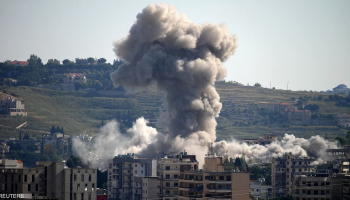
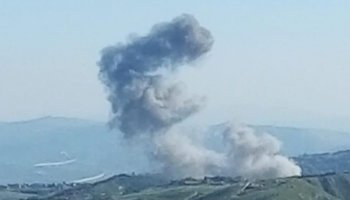
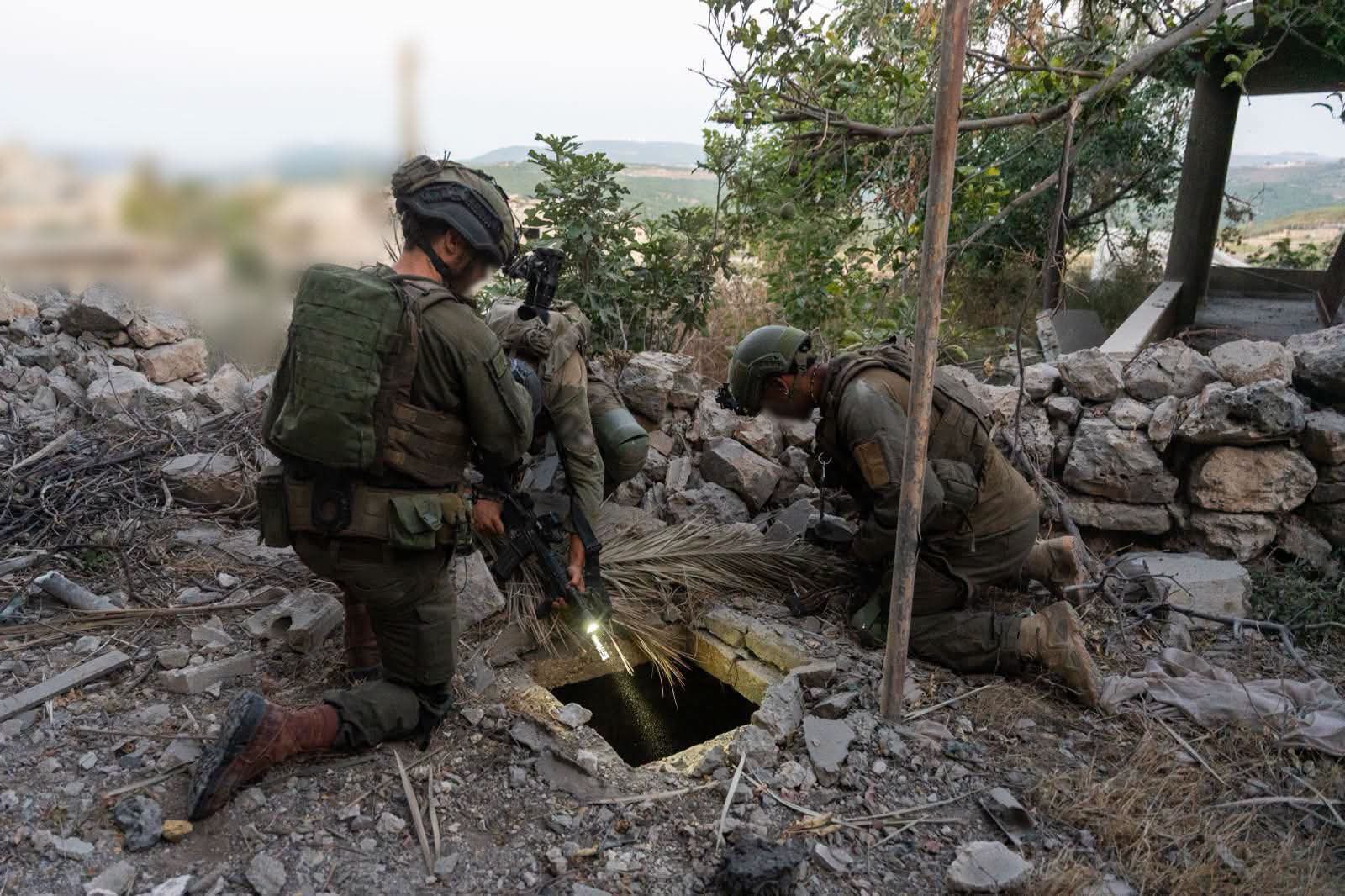
The Israel Defense Forces (IDF) said a powerful explosion was triggered after troops demolished an extensive underground complex in the southern Lebanese village of Majdal Zoun. The blast, heard across northern Israel, followed the destruction of what the military described as a deeply fortified tunnel system built more than 25 meters underground and extending over 200 meters in length.
According to the IDF, the site contained weapons including drones, warheads, explosives, and multiple launch shafts directed toward Israeli territory. The compound was discovered during ongoing operations in the area and later prepared for demolition after mapping and clearance procedures.
Residents in northern Israel reported hearing the explosion late Sunday evening, with some local councils warning in advance that seismic-like alerts could be triggered due to the force of the detonation.
Military description
"The compound was built using technology and knowledge from the Iranian regime,” the IDF Spokesperson’s Unit said in a statement, underscoring what Israeli officials describe as external support for Hezbollah’s military infrastructure development in southern Lebanon.
Military officials said the tunnel system formed part of a wider network used for weapons storage and cross-border attacks. The IDF said the infrastructure included blast-resistant doors, multiple chambers, and launch positions embedded within civilian-adjacent terrain.
The military described Majdal Zoun as one of several "preparedness villages,” which it alleges Hezbollah has used for military entrenchment while maintaining civilian cover.
Operational units and findings on the ground
The operation was carried out by troops from the 551st Brigade Combat Team alongside Yahalom, the IDF’s elite combat engineering unit, under the command of the 91st Division.
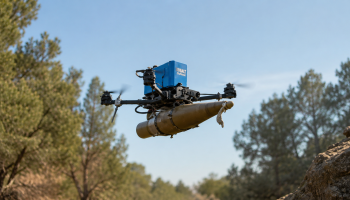
Military personnel reportedly located hundreds of weapons inside the underground structure, including dismantled drones, aircraft components, explosives, and warheads. Officials said four launch shafts were identified as being oriented toward Israeli communities in the Galilee region.
The IDF stated that the site contained at least 12 rooms used for storage and operational preparation. Engineering teams spent hours securing the area before initiating the controlled demolition.
Casualties and wider border clashes
The demolition came amid broader tensions along the Israel-Lebanon border. Earlier on the same day, the IDF confirmed the death of Capt. David Hazzut, 21, a platoon commander in the Golani Brigade’s 12th Battalion, during combat operations in southern Lebanon.
According to military accounts, troops encountered a Hezbollah operative near Deir Siryan during a nighttime sweep, resulting in an exchange of fire. The IDF later said the attacker was killed during subsequent operations.
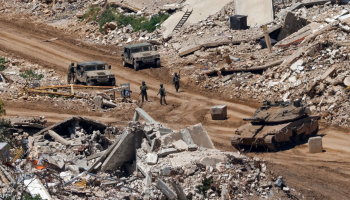
Field-level reports described heightened military movement, with armored units and engineering teams operating in coordinated formations across multiple sites in southern Lebanon.
Civilian alerts in northern Israel
Regional councils in the Western Galilee and Upper Galilee issued advance notices to residents ahead of the demolition. The Ma’ale Yosef Regional Council warned that the explosion could trigger independent seismic alerts not linked to official earthquake systems.
"There is no danger to civilians in the north,” the council said.
The Upper Galilee Regional Council separately stated: "This is activity by our forces as part of the completion of the destruction of enemy infrastructure in Lebanon. It is important to emphasize that this is not an earthquake and that no danger is posed to residents.”
Residents described brief tremors and a deep, distant boom felt across multiple communities near the border.
Official statements
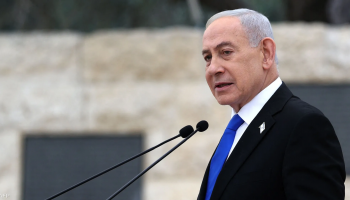
Israeli Prime Minister Benjamin Netanyahu and Defense Minister Israel Katz said the operation, codenamed "Sof Pasuk,” targeted a major Hezbollah underground infrastructure site.
"The route, more than 200 meters long and more than 25 meters deep, contained hundreds of weapons and several launch shafts intended to strike the territory of the State of Israel and its citizens,” they said.
They also confirmed that Israel had informed the United States and American representatives in Lebanon prior to the demolition.
Netanyahu described the wider military campaign in southern Lebanon as a "severe blow to Iran and Hezbollah,” according to remarks circulated through official channels.
Context of ongoing cross-border conflict
The Majdal Zoun tunnel network is part of a broader pattern of military infrastructure Israel says has been developed by Hezbollah over years in southern Lebanon. Israeli officials argue that such systems are embedded within civilian villages and designed for both storage and offensive operations.
Hezbollah has not publicly commented on the specific destruction of the tunnel network. The group has previously denied using civilian areas for military infrastructure in the manner described by Israeli authorities.
Security outlook
The destruction of the underground complex reflects continued escalation along the Israel-Lebanon frontier, where cross-border strikes, artillery exchanges, and covert operations have intensified over recent months.
Security analysts note that underground infrastructure remains a central feature of asymmetric warfare in the region, complicating efforts to distinguish between civilian and military spaces.
The operation also highlights the ongoing role of engineering units in modern conflict, where precision demolition is used alongside intelligence mapping to neutralize hidden networks.
Military and civilian authorities on the Israeli side continue to prepare for possible further escalation, while repeated strikes and counterstrikes across the frontier leave Lebanese border communities facing ongoing uncertainty.