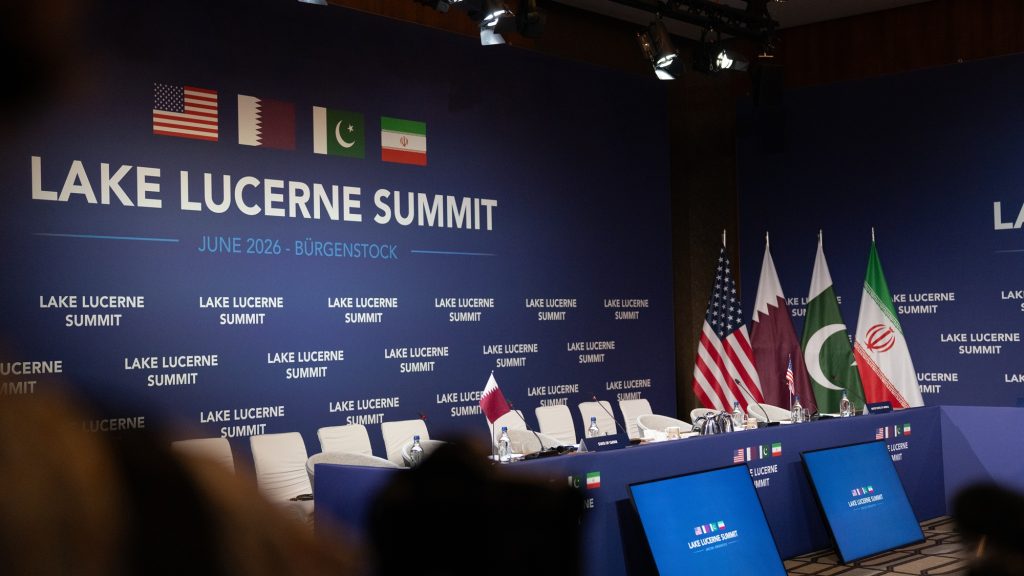
Bürgenstock (Diplomat.so) - Pakistan Prime Minister Shehbaz Sharif announced on Monday, June 22, the conclusion of the first high-level committee meeting under a memorandum of understanding on United States–Iran talks in Switzerland, confirming a 60-day roadmap toward a final agreement.
The statement outlined multiple procedural outcomes emerging from the negotiations held at the Bürgenstock resort, including the establishment of a conflict-monitoring mechanism for Lebanon referred to as a "Unit for Monitoring Conflict,” and the creation of a hotline to manage incidents linked to the gradual reopening of the Strait of Hormuz.
The discussions also produced a memorandum between Iran and Qatar on the release of frozen Iranian assets, alongside 60-day exemptions issued by the United States Treasury’s Office of Foreign Assets Control covering oil and petrochemical transactions. Delegations further agreed to form three technical committees focused on nuclear issues, sanctions, and monitoring mechanisms.
Pakistan Prime Minister Shehbaz Sharif said, "Discussions were held in a constructive and positive atmosphere and have resulted in encouraging progress, including a roadmap toward a final agreement within 60 days.”
He added that the process reflected coordinated engagement among participating parties, noting that "a high-level committee has been formed to oversee political direction and to initiate a further round of technical negotiations,” while acknowledging the involvement of multiple regional partners in facilitating dialogue.
At the Bürgenstock venue, heightened security measures were visible throughout the negotiations, with restricted movement between meeting zones and controlled access for media personnel. Delegates from the United States, Iran, Qatar, and Pakistan were observed moving between secured facilities as technical teams continued drafting procedural frameworks into the early hours of Monday. Journalists gathered outside designated perimeters awaiting official briefings as discussions extended beyond scheduled sessions.
The negotiations form part of broader diplomatic efforts addressing long-standing disputes between Washington and Tehran, particularly over nuclear enrichment limits, sanctions enforcement, and maritime security in the Gulf region. Regional actors have increasingly played intermediary roles in attempts to stabilize communication channels amid recurring tensions affecting energy routes such as the Strait of Hormuz and political dynamics in Lebanon.
The introduction of structured committees and temporary financial exemptions signals an attempt to create managed dialogue pathways while reducing immediate escalation risks. Analysts view the involvement of multiple mediators as an indication of widening regional investment in preventing disruption to global energy flows and maintaining diplomatic continuity.
Further technical meetings are expected to continue within the 60-day framework, with progress dependent on implementation of monitoring mechanisms and sustained engagement among all participating delegations.