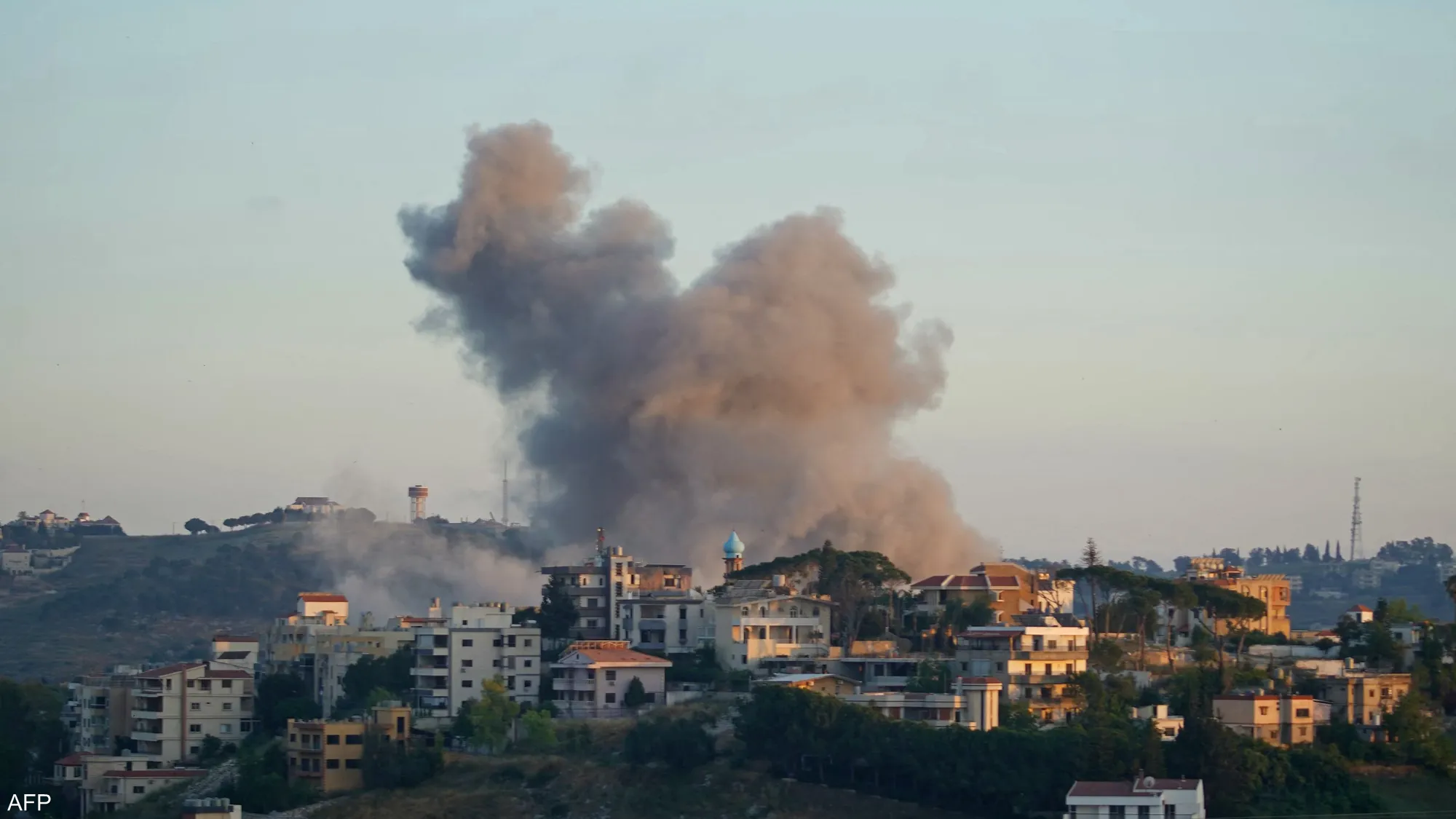
Beirut (Diplomat.so) – Israel Defense Forces launched airstrikes on Hezbollah-linked targets in Beirut's southern suburbs on Sunday, June 14, after Israeli authorities reported multiple suspected drone incursions from Lebanon into northern Israel, escalating tensions along the border despite ongoing ceasefire arrangements.
The Israeli military said in a statement that it had carried out a "precise strike” against infrastructure belonging to Hezbollah in Beirut’s southern suburbs, commonly known as Dahiya. The operation was conducted under directives from Prime Minister Benjamin Netanyahu and Defense Minister Israel Katz, according to the military.
"Under the instructions of Prime Minister Benjamin Netanyahu and Defense Minister Israel Katz, the Israel Defense Forces is currently striking targets belonging to the Hezbollah organization in the Dahiya area of Beirut,” the military said, describing the action as a response to gunfire and aerial threats directed toward Israeli territory.
Earlier on Sunday, the Israeli military reported that three drones suspected of being launched by Hezbollah entered Israeli airspace in separate incidents. Two of the drones crashed in northern Israel near the Lebanese border without causing casualties, according to military officials. In a later statement, the army said another "hostile aircraft” had also breached Israeli airspace in northern Israel.
Israeli authorities did not immediately report injuries or significant damage from the drone incidents. Military officials stated that defensive and offensive forces remained on heightened alert and were prepared for multiple operational scenarios.
In a joint statement released after the incidents, Netanyahu and Katz said Israel would continue responding to attacks originating from Lebanon. "Israel will not tolerate fire directed at its territory,” the statement said, reiterating a policy repeatedly communicated by Israeli leaders in recent months.
The strikes were preceded by calls from senior members of Israel’s right-wing coalition government for a forceful response against Hezbollah strongholds in Beirut. Finance Minister Bezalel Smotrich wrote on social media that attacks on northern Israeli communities should trigger implementation of what he described as the "Dahiya Doctrine,” a reference to Israel’s strategy of targeting Hezbollah infrastructure in Beirut’s southern suburbs following attacks from Lebanon.
"I call on the prime minister to implement it firmly and decisively and bring down buildings in Dahiya,” Smotrich said.
National Security Minister Itamar Ben-Gvir also called for stronger military measures, writing that "for every drone or rocket, and for every violation of the ceasefire, Dahiya must tremble.”
Residents in Beirut’s southern suburbs reported hearing several explosions as Israeli aircraft struck designated targets. Emergency responders and civil defense teams were observed moving into affected areas shortly after the attacks. No immediate casualty figures were released by Lebanese authorities.
According to Axios, Israeli military officials informed U.S. Central Command before carrying out the strike, underscoring continuing security coordination between Israel and the United States.
Israeli officials, including Netanyahu, have repeatedly warned that Beirut’s southern suburbs would be targeted if Hezbollah, the Iran-backed Lebanese armed group, attacked civilian population centers in northern Israel. Israeli leaders have said this position enjoys support from Washington, though U.S. officials have not publicly commented on Sunday’s operation.
The latest exchange highlights the fragile security situation along the Israel-Lebanon frontier, where intermittent cross-border attacks continue to threaten regional stability. Security analysts say the incident demonstrates how quickly localized confrontations can escalate into broader military exchanges, raising concerns among regional governments and international mediators seeking to prevent a wider conflict.