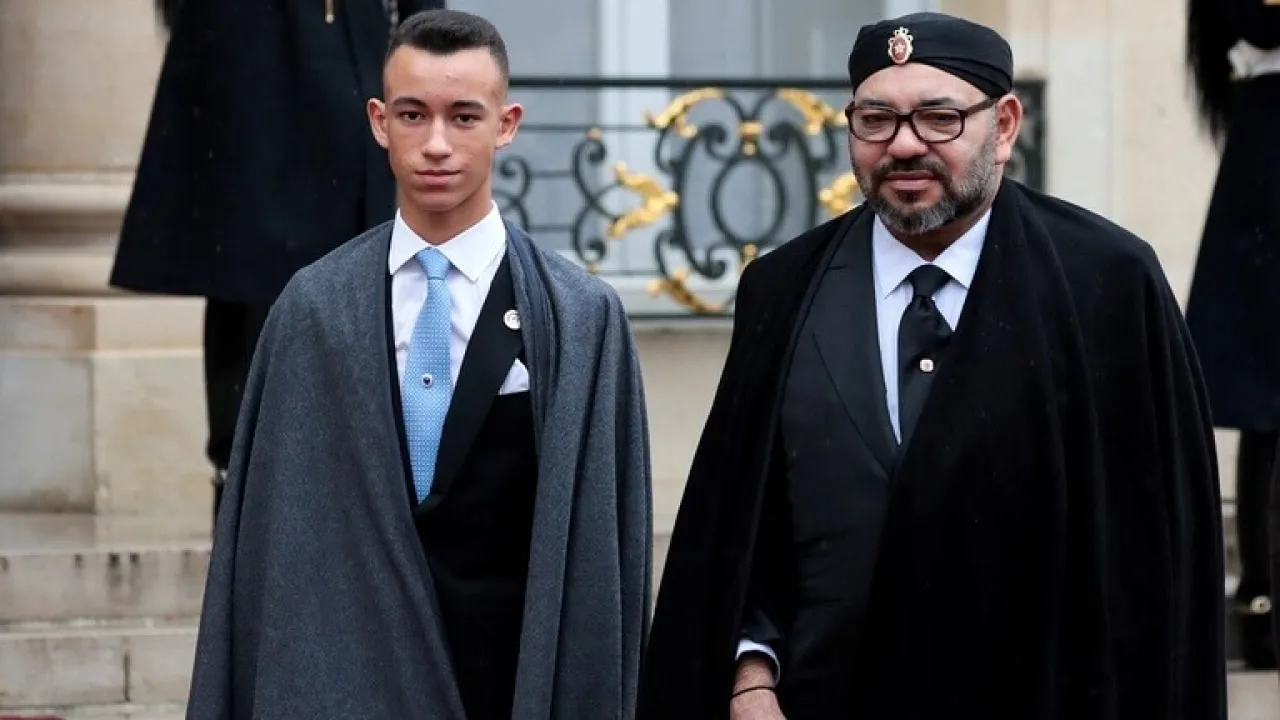
Rabat (Diplomat.so) - Royal Court of Morocco announced that King Mohammed VI appointed Crown Prince Moulay Hassan as coordinator of the General Staff offices and services of the Royal Armed Forces on Saturday, May 2, in Rabat, marking a significant administrative military transition within the kingdom's defence structure.
Royal Decree
King Mohammed VI issued a royal decree assigning Crown Prince Moulay Hassan to the position of coordinator of the offices and services of the General Staff of the Royal Armed Forces, a role previously held by the monarch himself since 1985 when he was Crown Prince under King Hassan II.
The announcement, released through an official communiqué, stated that the appointment reflects continuity within the military institution and reinforces institutional oversight over strategic defence structures. The statement highlighted that the Royal Armed Forces operate under a framework of discipline, integrity, and national responsibility.
A senior palace official, speaking in the communiqué, said: "This appointment reflects the confidence placed in the Crown Prince to contribute to the administrative coordination of the Armed Forces, in line with the values of professionalism and dedication that define the institution.”
Another defence source, described as a military analyst familiar with Morocco’s command structure, told Diplomat News Network: "The coordination role is not operational command but it is central to ensuring cohesion between intelligence, logistics, and strategic planning units.”
Role Within the Armed Forces Structure
The position of coordinator of the General Staff offices is widely regarded as an administrative and operational link between Morocco’s military branches, including intelligence services, logistics units, medical services, and strategic operations departments. The role ensures the implementation of high-level directives issued by the Commander-in-Chief.
According to the royal communiqué, the Armed Forces rely on a system of values including competence, discipline, integrity, and strong national commitment. These principles, the statement added, underpin both operational readiness and humanitarian missions carried out by military units domestically and abroad.
Military observers note that the coordination function plays a crucial role in maintaining alignment across multiple command structures. It also supports readiness in personnel management and equipment deployment, ensuring efficiency across diverse military branches.
Constitutional and Institutional Context
The Moroccan constitution, under Article 53, designates the King as Supreme Commander and Chief of the General Staff of the Royal Armed Forces, granting him authority over military appointments and strategic oversight. The provision also allows delegation of specific responsibilities, reinforcing a structured hierarchy within the armed forces.
Historically, the coordination post was held by King Mohammed VI himself prior to his accession to the throne. His previous experience in this role is viewed by analysts as part of institutional continuity in military governance.
A Rabat-based political observer commented: "This appointment signals a gradual institutional preparation for future leadership responsibilities, while preserving the centralized command structure of the armed forces.”
Observations and Institutional Setting
The announcement was made in an official royal communiqué circulated through state channels, with no public ceremony reported at the time of release. Government offices in Rabat maintained normal operations, while state media carried the statement with emphasis on institutional stability and continuity.
Military compounds and administrative headquarters in the capital remained calm, with no reported public gatherings related to the announcement. The communication was strictly formal, reflecting the structured nature of royal military decisions in Morocco.
Strategic and Regional Implications
Analysts suggest the appointment reinforces continuity in Morocco’s defence governance model, which balances centralized command with structured administrative delegation. The Royal Armed Forces have increasingly expanded roles in regional security cooperation, peacekeeping operations, and humanitarian missions across Africa.
The decision also highlights the gradual integration of Crown Prince Moulay Hassan into state institutions, a development viewed as part of long-term leadership preparation within the monarchy.
A regional security analyst told Diplomat News Network: "Morocco maintains a highly centralized but institutionally layered military structure. Introducing the Crown Prince into a coordination role reflects both training and symbolic continuity.”
The development underscores the monarchy’s approach to ensuring institutional stability within one of the region’s most structured military establishments, while reinforcing the continuity of command traditions that have shaped Morocco’s defence system for decades.