Beirut (Diplomat.so) - Hezbollah's Islamic Resistance said on Saturday, May 2, that its fighters targeted Israeli army vehicle gatherings at Jneigl hill in Qantara in southern Lebanon using artillery shells and released videos of drone interceptions and armored breaches. The group also published footage it said showed the downing of an Israeli Hermes 450 drone over Nabatieh with a surface-to-air missile.
Escalation
Hezbollah-aligned media channels reported continued exchanges of fire along the southern Lebanese border, including shelling near Bent Jbeil and Konin, where residents said heavy machine-gun bursts and intermittent artillery fire were heard throughout the day.
A resident of Bent Jbeil, speaking on condition of anonymity due to security concerns, described sustained nighttime activity. "The sound of explosions and gunfire has not stopped since early evening. Families are staying indoors, and movement outside is extremely limited,” the resident said.
Another witness in Konin reported that "armored vehicles positioned near the outskirts fired several rounds toward the hills,” adding that the situation remained tense with sporadic aerial activity overhead.
Airstrikes and Drone Activity
Multiple local reports indicated Israeli air and drone operations across several southern villages, including Smaiyeh, Zibdin, Majdal Salm, Yater, and the Ghaziyeh and Ghindariyah outskirts. Witnesses described low-flying drones circling for extended periods before at least one reported strike on open terrain near agricultural zones.
A farmer in Zibdin said airstrikes forced residents to abandon fields during the afternoon. "We saw drones above us for hours before the explosion. Everyone ran toward safer areas,” he said.
No official casualty figures were immediately confirmed by independent monitors, though Lebanese officials have previously warned that repeated strikes are affecting civilian infrastructure and rural livelihoods.
Lebanese Political and Religious Reactions
Lebanese political and religious leaders issued statements condemning the ongoing escalation and calling for restraint.
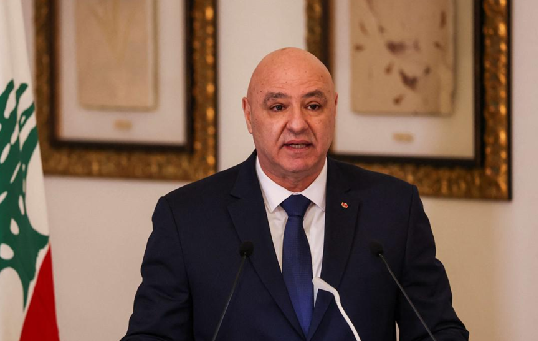
State Minister for Administrative Development Fadi Maki told that recent strikes have intensified pressure on civilian communities. "Since yesterday and today, Israeli attacks have continued, affecting villages such as Haboush and resulting in civilian casualties, including women and children,” he said. "We renew our call on the international community to assume its responsibilities and work to halt this aggression immediately.”
Parliament Speaker Nabih Berri also warned against internal fragmentation, stating that "the enemy is the only beneficiary of Lebanese division,” while urging citizens to avoid "falling into the trap of sedition.”
Deputy head of the Higher Islamic Shia Council Sheikh Ali al-Khatib condemned what he described as escalating media and sectarian tensions, stressing that "our battle with the Israeli enemy requires unity and restraint from internal provocation.”
President Joseph Aoun separately denounced attacks on religious authorities, saying such actions "undermine national unity and are punishable under applicable laws,” while calling for disputes to remain within political discourse.
Civilian Impact
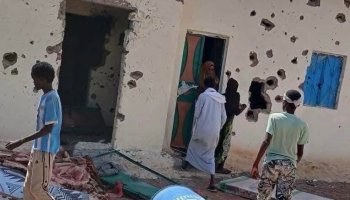
In Beirut’s southern suburbs and parts of the south, residents continued inspecting damaged property amid intermittent calm periods. In Bent Jbeil and surrounding villages, some families were seen returning briefly to homes during pauses in shelling to assess damage and retrieve belongings.
A volunteer worker assisting displaced families said local shelters were receiving intermittent arrivals. "People come in waves depending on the intensity of strikes. Some return home when it quiets, then come back again at night,” she said.
Visual observations from affected areas showed damaged roads, scattered debris near agricultural land, and increased military presence on secondary routes.
Military Engineering
The Lebanese Army Engineering Regiment reported the controlled detonation of an old mine near the Hermel region, close to the main road linking the Souk al-Khan junction and Ibl al-Saqi. Security sources said the operation was precautionary and carried out to ensure civilian safety in an area with unexploded ordnance risks.
Separately, intermittent firing was reported near the outskirts of Bent Jbeil and Konin, where armored activity was observed by residents during the early hours of the morning.
Fragile Ceasefire Landscape
The latest escalation comes amid a fragile and repeatedly tested security environment along the Lebanon-Israel border, where cross-border exchanges have intensified in recent periods. Southern Lebanon has remained a focal point of military tension, with periodic airstrikes, drone surveillance, and artillery exchanges reported across multiple districts.
Observers note that the density of civilian settlements near active zones continues to complicate de-escalation efforts, particularly in areas where agricultural and residential zones overlap with strategic terrain.
Regional Implications
The continued exchange of claims and counterclaims between Hezbollah and the Israeli military underscores the persistence of a high-risk security dynamic along the southern Lebanese frontier. The use of drones, artillery, and targeted strikes reflects a shift toward more technologically driven engagements, increasing the likelihood of miscalculation.
Regional analysts caution that sustained escalation could further strain Lebanon’s already fragile political and economic systems, particularly as border communities face recurring displacement pressures and infrastructure disruptions.
The situation also places additional pressure on diplomatic channels attempting to stabilize the border environment, as local leaders emphasize the need for de-escalation while armed actors maintain operational postures across contested areas.