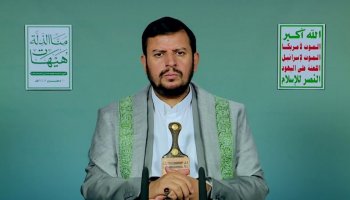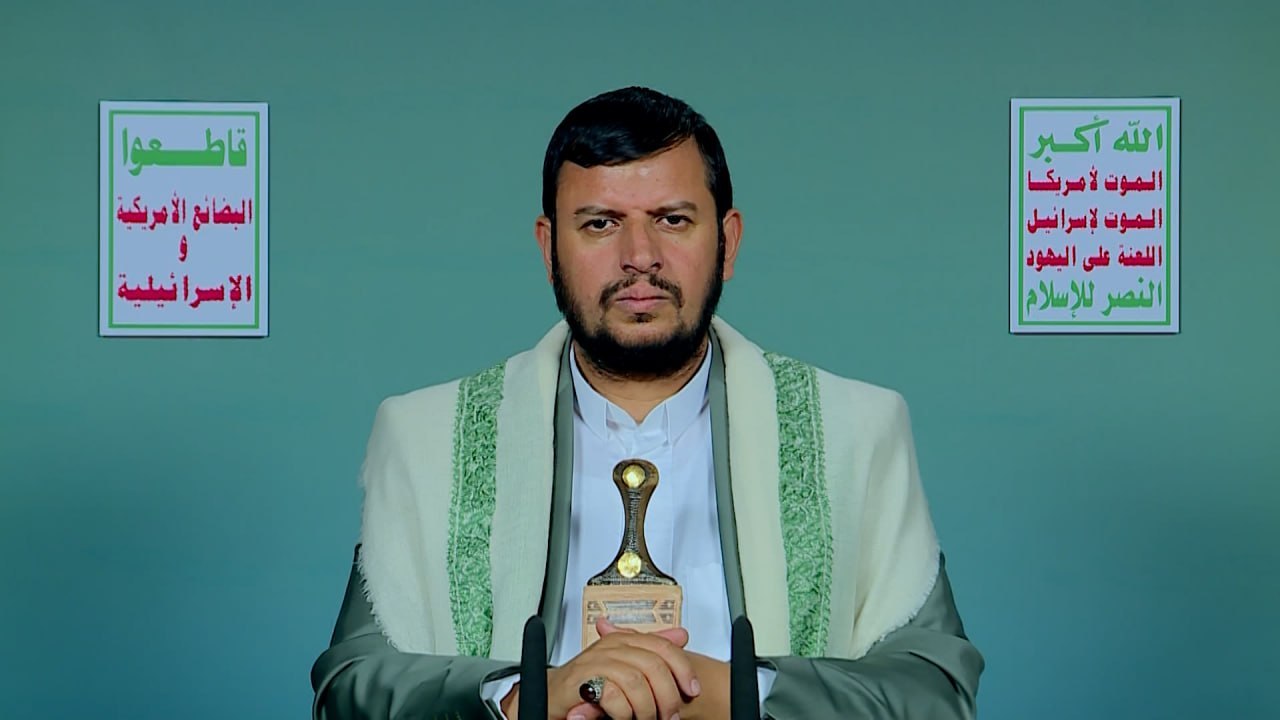
Sana'a (Diplomat.so) – Leader of Ansarullah, the Houthi armed and political group in Yemen, Abdul-Malik al-Houthi stated on Tuesday, April 21, during a televised address marking the anniversary of the "Scream against the Arrogant," that Yemen is in direct confrontation with the United States and Israel and will escalate if escalation continues.
Political and Ideological Framing
Al-Houthi used the anniversary of the slogan launched by Hussein Badr al-Din al-Houthi in 2002 in Saada province to reaffirm what he described as the "Qur’anic project,” presenting it as a comprehensive ideological, political, and mobilization framework guiding Ansarullah.
He said the slogan marked a "practical transition from stagnation to a correct stance,” arguing it represents awareness-building, religious mobilization, and political positioning against what he called external domination over the Muslim world.
He linked the anniversary to the 17 January 2002 lecture at Imam al-Hadi School in Marran, describing it as a historical launch point for political consciousness within the movement.
Regional Positioning
Al-Houthi reiterated that Ansarullah is in confrontation with the United States and Israel, describing both as central actors in regional conflict.
"We are in confrontation with the Israeli enemy and its American partner, and our direction is escalation if escalation returns,” he said, adding that Yemen’s position is not neutral in what he described as a broader regional struggle.
He also included Iran in his framing of regional alignment, rejecting what he described as narratives of isolation or targeting, and arguing that regional conflicts are shaped by resistance to Western and Israeli influence.
A political analyst in Sana’a told Diplomat News Network that the speech "reinforces a long-standing positioning strategy linking Yemen’s internal narrative to wider regional conflict structures, particularly in Gaza and the Red Sea.”
Ideological Structure
Al-Houthi described the "Scream against the Arrogant” as a foundational step in what he called a Qur’anic project, stating it represents a shift toward "faith-based awareness and structured political action.”
He said the slogan carries cultural, ideological, and operational meaning, aimed at breaking silence, countering domination, and shaping public consciousness.
He argued that the slogan dismantles narratives used by external powers to justify intervention, while reinforcing what he described as divine guidance in identifying enemies and responsibilities.
Criticism of Arab Governments
Al-Houthi accused several regional governments and political elites of aligning with the United States and Israel, describing such alignment as "one of the worst forms of regression.”
He said many Arab governments responded to Western-Israeli pressure with "submission and loyalty,” which he characterized as a betrayal of Islamic principles.
He added that this alignment strengthens external aggression against the region and weakens collective resistance, arguing that genuine Islamic responsibility requires rejection of foreign domination.
A regional researcher said the remarks reflect "a recurring narrative within Ansarullah discourse framing regional governments as part of a broader political compliance structure.”
Media Control
Al-Houthi claimed that regional and international media outlets work to suppress opposition narratives and promote what he described as distorted representations of resistance movements.
He said there are efforts to criminalize criticism of Israel, even in cases involving civilian casualties, and to silence expressions of solidarity with Palestine and Lebanon in some Gulf countries.
He alleged that public expression of political dissent, including social media posts, has been restricted or penalized in parts of the region.
A media analyst based in the Middle East said such claims "reflect an intensifying information contest across regional conflicts, particularly involving Gaza and Lebanon.”
Historical References
Al-Houthi referenced what he described as Arab and Islamic failures to respond collectively to regional conflicts, citing Gaza as an example of ongoing violence supported by Western military assistance to Israel.
He also referenced Hezbollah’s 2000 withdrawal from southern Lebanon and the 2006 conflict, stating that regional media often minimized or distorted these outcomes.
He argued that resistance movements have repeatedly been subjected to psychological and media campaigns aimed at undermining their perceived legitimacy.
Strategic Dimensions
Al-Houthi called for boycotts of US and Israeli products, framing economic resistance as part of what he described as broader confrontation strategies.
He said such actions support self-sufficiency and reduce dependency on external powers, linking economic behavior to political independence.
He also emphasized what he described as the importance of "unity of fronts,” arguing that coordinated resistance across regions represents a model for broader Islamic cooperation.
Historical and Political Comparisons
Al-Houthi referenced the Iranian Revolution, describing it as a "principled stance against American and Israeli influence,” contrasting it with earlier regional regimes that maintained alliances with Western powers.
He criticized the former Shah of Iran for being respected by Arab governments due to alignment with the United States and Israel, while stating that post-revolution Iran was politically isolated for opposing them.
He also referenced alleged Western offers in 2007 to integrate Ansarullah into political structures in exchange for abandoning its slogan, stating that the movement rejected such proposals.
Internal Struggle Narrative
Al-Houthi recalled six rounds of war in Yemen, stating that Ansarullah faced imprisonment, job dismissals, and military campaigns supported by external powers, including what he described as US, Israeli, and British involvement.
He said the movement maintained its position despite military pressure, political isolation, and offers of political integration conditioned on ideological compromise.
He described the "Qur’anic project” as having remained consistent without retreat under pressure, incentives, or conflict.
Analytical Context
The speech reflects continued ideological consolidation by Ansarullah, combining religious framing, regional conflict positioning, and political messaging tied to ongoing wars in Gaza and broader Middle Eastern tensions.
Analysts say the address reinforces the group’s dual domestic and regional messaging strategy, positioning itself as both a governing authority in northern Yemen and part of a wider resistance axis.
Diplomat News Network understands that regional governments and international stakeholders continue to assess the implications of such statements amid ongoing maritime and security concerns in the Red Sea corridor.